Six Out-of-Control Alberta Wildfires Put 500,000 Bopd of Oil Sands Production at Risk
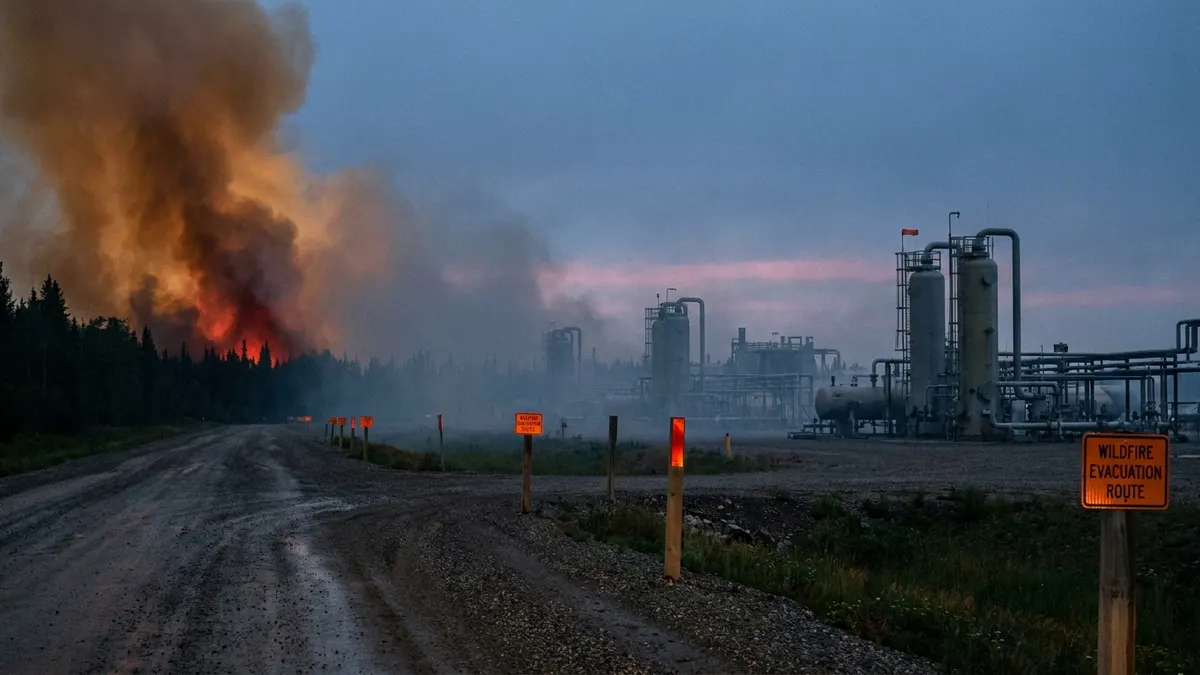
According to a Bloomberg report via World Oil, six out-of-control wildfires are burning in Alberta’s Lac la Biche region, with large blazes now within 20 kilometers of approximately 500,000 barrels per day of oil sands production, as of May 30, 2026.
Production at Risk as Fires Close In
The largest active fire covers 1,000 hectares, according to Alberta Wildfire data cited by World Oil. Major in-situ oil sands operations, including Cenovus Energy’s Christina Lake, Canadian Natural Resources’ Jackfish and Kirby North facilities, and ConocoPhillips’ Surmont, are located between 11 and 19 kilometers from fires larger than 10 hectares, based on Alberta Energy Regulator and Alberta Wildfire data. The approximately 229 residents of Conklin, a community near several of these wellsites, have been placed on evacuation readiness notice.
The fires come as global crude prices have climbed above $100 per barrel at times over the past three months, tied in part to curtailments affecting as much as 20% of world oil supplies from the Middle East. Canada is the world’s fourth-largest oil producer, with most output coming from Alberta oil sands and flowing south to the US. For historical context, the report notes that wildfires last summer temporarily shut roughly 7% of Canada’s national oil output, while the 2016 Fort McMurray fires halted more than one million barrels per day for several weeks.
What It Means for Subcontractors
- Evacuation and standby plans matter now. Field service companies with crews or equipment near the Lac la Biche region should review their emergency response protocols immediately, given the evacuation readiness order already issued for Conklin.
- Work stoppages are a real near-term risk. History shows Alberta wildfires can shut significant volumes of production quickly. Subcontractors relying on continuous site access at Christina Lake, Jackfish, Kirby North, or Surmont should be in contact with operators about contingency plans.
- Emergency response contracting may open up. Fire events of this scale typically generate demand for firewatch personnel, equipment relocation, site security, and rapid-response maintenance once fires are controlled. Companies with wildfire or emergency response capabilities should be positioning now.
- Document everything for force majeure. If fires trigger site shutdowns, subcontractors should ensure contracts and daily records are current to support any force majeure or standby rate claims.