Secondary Stress Failures in Piping and Pressure Vessels: What Field Teams Need to Know
According to Inspectioneering Journal, a technical article in its November/December 2025 issue examines how secondary stresses, those caused by welding, temperature changes, and mechanical displacement rather than straightforward pressure or weight loads, are responsible for a significant share of piping and pressure vessel failures in oil and gas facilities.
Why These Failures Keep Happening
The article, authored by Ana Benz, Chief Engineer at IRISNDT, and Glenn Roemer, Senior Materials Engineer at Apave Canada, argues that secondary stresses are routinely underestimated because they are harder to visualize than primary loads like internal pressure or dead weight. Welding residual stresses, thermal expansion constraints, and post-weld heat treatment (PWHT) gaps all create stress fields that can drive cracking long after installation.
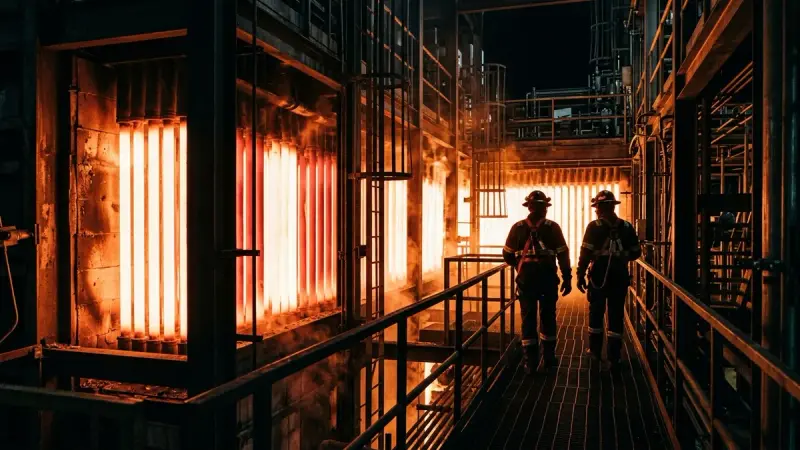
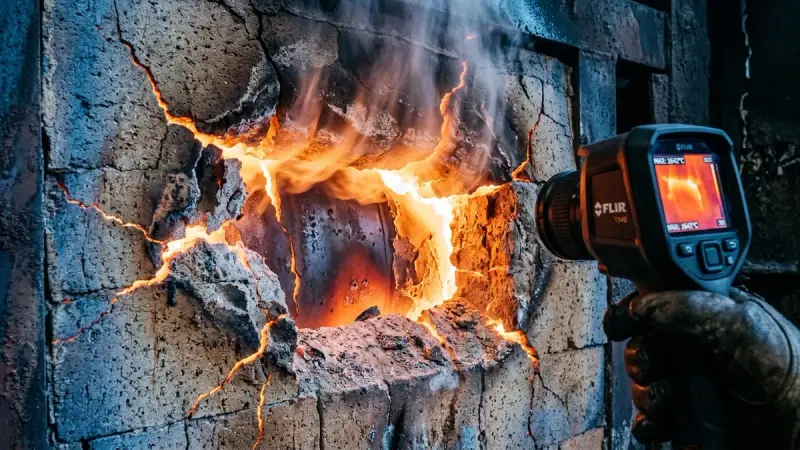
The authors walk through several documented failure cases, including a PWHT carbon steel pipe in caustic service, a high-temperature austenitic radiant tube assembly, and a boiler feed water line that failed through environmental stress cracking. Each case points to the same pattern: secondary stresses were present, not fully accounted for, and eventually caused a failure that primary stress analysis alone would not have predicted.
The piece also notes that hydrostatic testing can introduce compressive residual stresses at weld locations, which the pipeline industry has linked to reduced stress-corrosion crack propagation rates, a detail relevant to how field teams plan and document hydrotest procedures.
What It Means for Subcontractors
- PWHT compliance is not optional. Skipping or improperly executing post-weld heat treatment on pressure piping leaves residual tensile stresses in place. Inspectors and welding supervisors should verify PWHT records before sign-off on any caustic, high-temperature, or high-pressure service line.
- Document thermal expansion paths during tie-ins. When connecting new piping to existing systems, confirm that expansion loops or flexible supports are in place. Rigid connections in high-temperature service are a common source of secondary stress that shows up as cracking months or years later.
- Hydrotest records have integrity value beyond pressure confirmation. The compressive residual stress benefit at weld zones is a legitimate reason to retain detailed hydrotest pressure and hold-time data as part of your fitness-for-service (FFS) documentation.
- Know your failure modes before bidding inspection scope. If your company provides NDE or inspection services on pressure equipment, understanding secondary stress mechanisms, particularly stress corrosion cracking (SCC) and fatigue cracking at welds, helps you recommend the right techniques (TOFD, phased array UT) rather than defaulting to visual or basic UT methods that may miss subsurface cracking.