Ottawa Commits $200M to Woodfibre LNG Expansion in Squamish
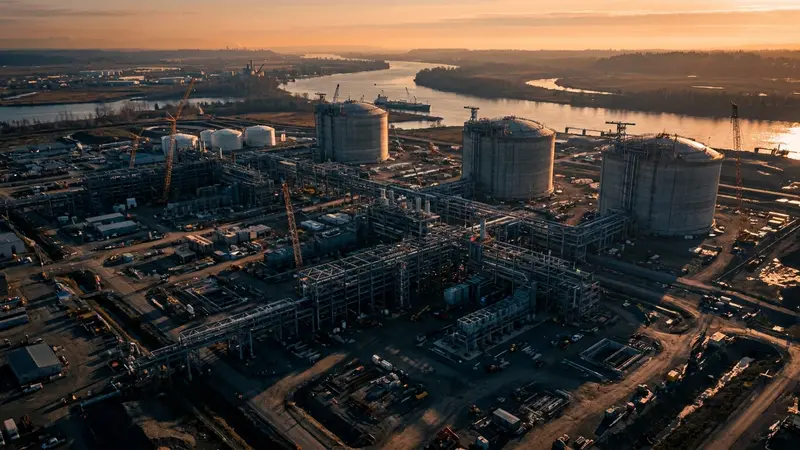
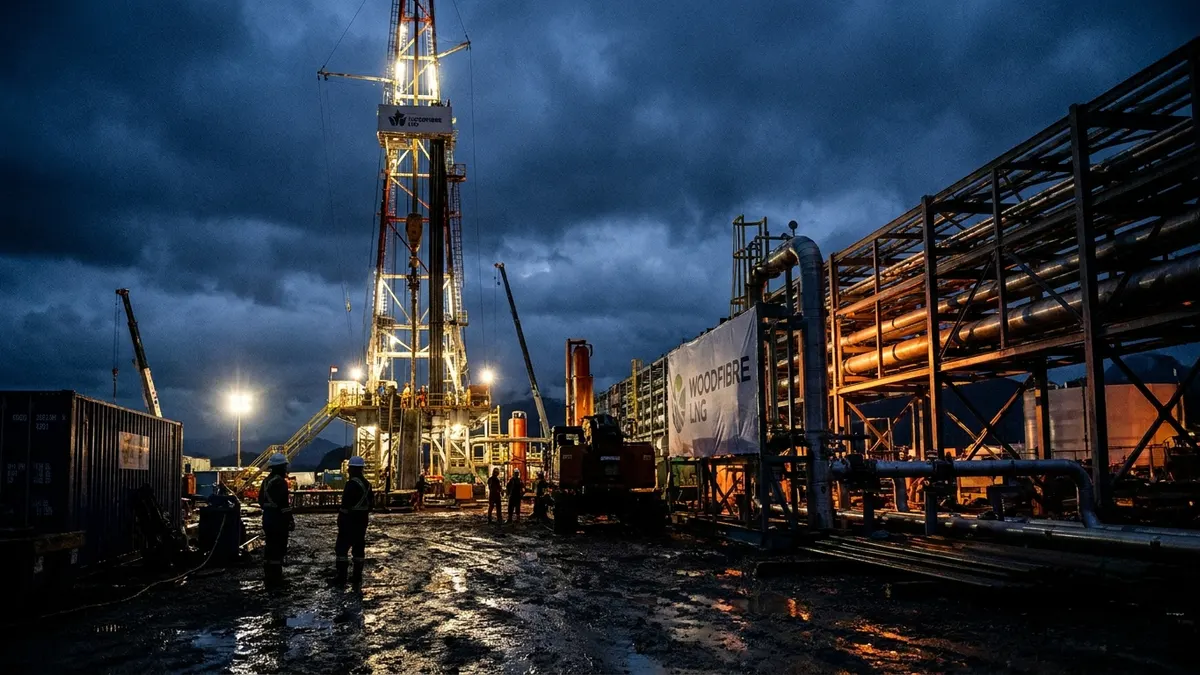
Ottawa will put $200 million over three years into Woodfibre LNG in Squamish, B.C., Energy Minister Tim Hodgson announced, according to a Canadian Press report carried by the Journal of Commerce.
Market Impact
Hodgson made the announcement at a news conference in Vancouver on Nov. 13. He said the money will support a near-25% increase in the project’s capacity, from 2.1 million to 2.6 million tonnes of LNG per year. That is an added 0.5 million tonnes annually. Spread evenly, $200 million over three years works out to roughly $67 million a year, though the source does not say how the funds will be paid out. Hodgson also said the project is being advanced in collaboration with the Squamish Nation.
B.C. Premier-designate Lorne Doerkson called the investment welcome news for the region and the provincial economy. He said the project demonstrates what is possible “when governments, First Nations and industry work together.” The project’s operators say it will be substantially completed next year, per the report. The source does not name contractors, work packages or a procurement portal, and it does not mention other B.C. LNG or pipeline projects.
From a risk standpoint, a federal commitment tied to a defined capacity target gives the remaining build and the expansion scope a funding backstop. That reading is our inference, not a claim from the source. Whether it signals more federal support for other B.C. projects is also inference, since neither Hodgson nor Doerkson addressed that in the reported remarks.
What It Means for Subcontractors
- Plan for a 2027 completion window. With substantial completion expected next year, the work shifts toward commissioning, punch-list closeout and turnover. Mechanical, E&I and pipefitting crews may see demand peak and then taper at the Squamish site through 2027, though the source does not give a staffing forecast.
- Expect scope tied to the 0.5 million tonne increase. The 2.1 to 2.6 million tonne uplift is the specific capacity the federal money backs. Trades that service process equipment, such as mechanical, instrumentation and electrical firms, should ask the operator whether the added capacity is a separate scope from the base build, and whether it falls inside the 2027 completion date.
- Budget for the three-year funding horizon. The $200 million runs over three years, which could extend project activity past the substantial completion date. Firms planning crews and equipment for 2028 and 2029 should not assume Squamish work ends when the 2027 milestone is declared. That is our reading, not a stated schedule.
- Treat Squamish Nation involvement as a bid factor. Hodgson described the project as advanced in collaboration with the Squamish Nation. Local and regional contractors pursuing Squamish-area work should document any Indigenous partnership, employment or business arrangements before the next bid cycle.
- Use this as a benchmark for B.C. LNG pursuits. Federal money flowing to a project already under construction may suggest Ottawa is backing work that is advancing, though that is our inference. Firms targeting other B.C. LNG or pipeline opportunities should ask each owner whether it has a comparable federal or First Nations partnership in place, though the source does not say Woodfibre is a template for other projects. That is our inference.