Budget 2026 Tax Cut Targets Pipeline, LNG and Power Capital
Ottawa’s Productivity Mega Deduction is meant to cut the marginal effective tax rate on new business investment from roughly 13% to 6.4%. The 2026 federal budget pairs it with named support for the Pacific Link oil pipeline, a second phase of LNG Canada and an electricity strategy worth more than $50 billion, BOE Report says. None of the projects has reached final investment approval, so the work is still ahead of subcontractors, not under contract.
Background
Finance Minister François-Philippe Champagne tabled the budget on Thursday. BOE Report says the government is targeting $400 billion in capital investment over six years, using tax incentives, infrastructure spending and faster regulatory reviews.
The energy items in the budget, as BOE Report describes them:
- Pacific Link: a proposed oil pipeline of about 1,250 kilometers, designed to move roughly one million barrels per day from Alberta to the West Coast.
- Pathways: a proposed carbon capture project that would move CO2 from major oilsands facilities to underground storage.
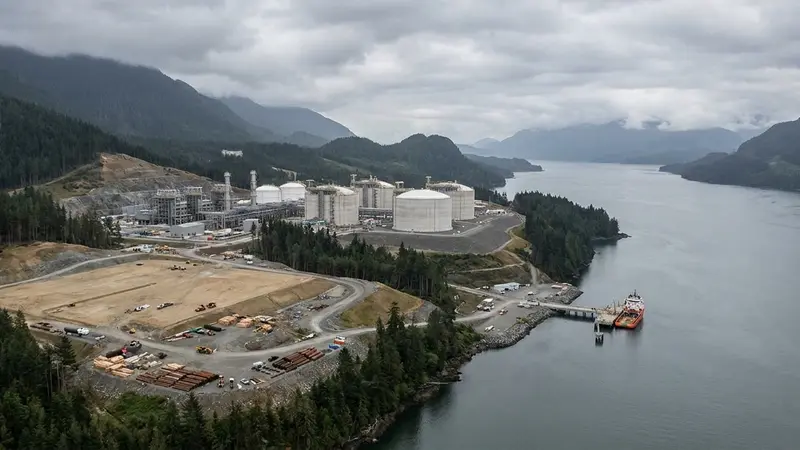
- LNG Canada Phase 2: a proposed expansion at Kitimat, B.C., that would double nameplate capacity to about 28 million tonnes per year if approved and built.
- Electricity: more than $50 billion in measures, with a goal of doubling grid capacity by 2050. It covers transmission, new generation and an extension of clean electricity and clean technology investment tax credits through 2040.
- Nuclear: $518.5 million for a nuclear energy strategy focused on Canadian supply chains.
- Approvals: a target of about one year for major-project review and decisions after a complete application. The government has identified 28 nation-building initiatives, including 18 projects representing more than $194 billion in potential investment.
BOE Report is clear that the budget is not a final investment approval for any of these. Development still depends on commercial agreements, regulatory processes, financing and proponent decisions.
Analysis
The tax measure matters most in the near term. Pipelines and LNG trains take years to reach a sanction decision. The Productivity Mega Deduction applies to machinery, equipment, technology and other productive assets, so it can change spending decisions on smaller projects sooner. BOE Report says it could improve the economics of qualifying equipment purchases, processing facilities and technology upgrades. It adds that the benefit could extend to oilfield service companies and pipeline operators. That points to a possible pickup in owner-funded capital programs ahead of the megaprojects.
The source warns that tax treatment will vary. It says treatment depends on the type of investment, with some assets and expenditures subject to exclusions or specialized rules. It does not say how the deduction is structured or how quickly it can be claimed. That detail will decide whether an owner moves a project up, so contractors should not assume every scope qualifies.
The gas-fired power language helps Alberta and Saskatchewan. Ottawa is proposing more regulatory flexibility for existing electricity facilities and natural gas-fired generation, while keeping the net-zero electricity goal for 2050. BOE Report notes that flexibility could matter in provinces where gas plays a large role in generation. In our reading, this keeps conventional power work in play alongside transmission and renewables. The source does not say which projects or utilities will get funding, so we are not assigning dollars to any trade.
Pipeline and LNG timelines are long-lead. Pacific Link and LNG Canada Phase 2 are both described as proposed. Phase 2 would add demand for Montney gas in northeastern B.C. and northwestern Alberta, according to the source. The one-year review target and the $10 billion Indigenous Loan Guarantee Program could shorten the path to financing. BOE Report says Indigenous participation in Trans Mountain and Pacific Link could create long-term equity ownership. Those are signals about project structure, not construction schedules.
Execution is the open question. BOE Report’s own conclusion is that the next test is whether commitments turn into final investment decisions and construction. That is a fair read. The budget lowers the cost of capital and promises faster approvals, but owners still need commercial agreements and financing before they award work.
What It Means for Subcontractors
-
Pre-qualify now in Western Canada (by Q1 2027). Get current safety, insurance and financial documents in front of the owners and EPC firms behind the proposed Pacific Link, LNG Canada Phase 2 and Pathways projects. These are all pre-FID, so prequalification lists are the likely first procurement step. Target Alberta and northeastern B.C. for pipeline, civil and mechanical work, and Kitimat for LNG-related scopes.
-
Ask owners how the Productivity Mega Deduction affects their capital timing. Source materials do not detail the deduction schedule, so ask clients directly. Equipment-heavy trades such as mechanical, E&I and fabrication should expect owners to weigh deduction timing against schedule. Review that timing in bids, and ask whether your scope is a qualifying asset or one of the excluded categories BOE Report mentions.
-
Pitch oilfield service and facility upgrades to owners. BOE Report says processing facilities, equipment purchases and technology upgrades could qualify. Contractors doing facility retrofits, instrumentation and process equipment installs should approach Alberta and Saskatchewan operators about upgrade programs before their 2027 capital budgets are set.
-
Add transmission and gas-fired generation to your target list. The $50 billion-plus electricity strategy covers transmission, new generation and extended tax credits through 2040. Electrical, line construction and civil contractors in Alberta and Saskatchewan should track utilities’ upcoming transmission and generation announcements. The source gives no project list or procurement dates, so these are bid-pipeline targets, not committed work.
-
Plan for a long Pacific Link and LNG Canada Phase 2 timeline. With no final investment decision, no construction start date appears in the source. Do not add crews or equipment against these projects until an owner announces a sanction decision or awards packages.
-
Northern and Indigenous-partnered work needs relationship building. The Mackenzie Valley Highway, about 800 kilometers in the Northwest Territories, is to be fully funded. The Indigenous Loan Guarantee Program is now $10 billion. Civil, earthworks and logistics contractors should explore joint ventures with Indigenous-owned firms, since the source points to Indigenous ownership as a growing part of major project structures.