Oilsands Growth Now Hinges on Capital Discipline, Not Policy
Premier Danielle Smith wants oilsands output doubled within a decade, but the policy wins operators asked for do not guarantee a sanctioned project. A Canadian Press report via BOE Report quotes R.J. Johnston of the University of Calgary’s School of Public Policy calling the industry “the dog that got the car,” with the pressure now on to invest. For subcontractors, the question is no longer whether the rules allow growth. It is when the first final investment decisions land.
Background
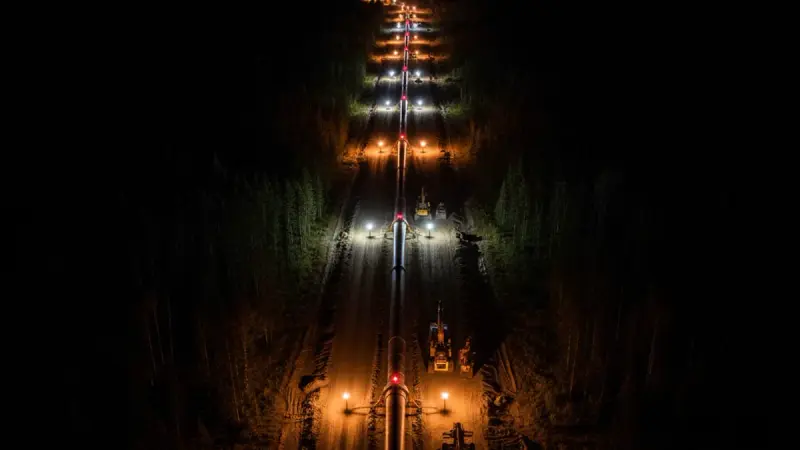
The Canadian Press lists the policy changes behind the shift. Ottawa has reversed a host of Trudeau-era environmental policies and made more investments eligible for immediate tax deductions, permanently. Alberta announced a new royalty program on Friday. Both governments are carrying the bulk of the investment in the proposed Pacific Link pipeline to southern B.C., which would enable greater exports to Asia.
Johnston cautioned that expecting massive investment may be “a little unrealistic.” Any big upstream spending will compete for capital with the dividend growth and share buybacks investors have come to expect, and it must avoid the cost overruns of the past. Chris Seasons of ARC Financial, a former head of Devon Canada, described a “go go go” mindset from around 2000 to 2014. Companies spent more than their cash flow, projects were rushed, and “capital costs went up and the economics went down.”
Michael Berger, a senior analyst at Enverus, expects producers to keep prioritizing debt reduction and shareholder returns in the coming years. He also sees an appetite for growth and expects a mix of redevelopments, bolt-on expansions and greenfield builds “all at different paces.” In his words, it is “just the cadence at which capital gets deployed.”
Analysis
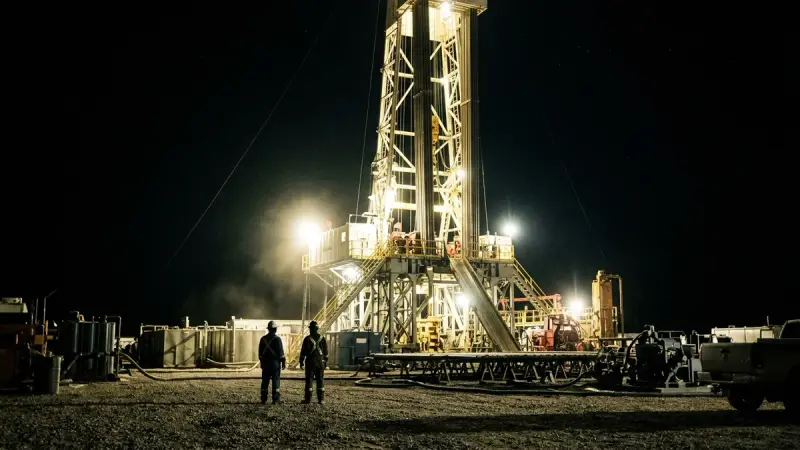
The pattern across the executive comments is conditional optimism. None of the operators quoted has announced a sanctioned project. Imperial Oil CEO John Whelan said the company can double its gross operated upstream production with three steam-driven developments: Aspen, Clarke Creek and Corner. A 150,000 bbl/d final decision at Aspen had been under consideration for the end of the decade, but it may come sooner. Whelan said the decision depends on technology, project economics and the fiscal environment. Suncor CEO Rich Kruger said a half dozen in-situ projects over the next decade is the base case, and the company is doing preliminary work on going bigger or faster without having “landed on that yet.”
Read together, the base cases are multi-year phased programs, not a sudden wave. Seasons said the post-2014 cost discipline “will stay in place.” That suggests operators will favor stepwise sanctioning over rushed, compressed schedules. For contractors, that usually means fewer boom-style crunches, but steadier and better-defined packages if the economics hold.
The Cenovus deal shows where near-term work may emerge first. Cenovus has proposed a $5.7 billion acquisition of Athabasca Oil Corp. It says Athabasca’s oilsands production could grow from 40,000 boe/d to 115,000 boe/d by 2032. That is a 75,000 boe/d increase, using the source’s own figures. Cenovus gets an undeveloped prospect at Corner and sees room to expand Leismer. CEO Jon McKenzie said recent tax, royalty, pipeline and regulatory steps will have a “meaningful impact” on its ability to advance both. A company that has just spent $5.7 billion on assets has a clear reason to move them forward. It also has to justify that spending to shareholders, which favors visible, staged progress.
The biggest swing factor is the link between Pacific Link and the Pathways carbon storage project. Under the energy accord signed between Ottawa and Alberta last year, each project is a condition for the other. Pathways has been scaled down since it was first proposed in 2021, and top producers are in intensive talks with both governments on terms. Canadian Natural Resources president Scott Stauth said the company’s growth plans depend on the outcome of those negotiations. Until that deal is settled, expect the largest producers to hold back on firm commitments, even if early engineering continues.
What It Means for Subcontractors
- Fabrication and modular shops: Imperial’s Aspen decision is the biggest scheduling variable in the source. The 150,000 bbl/d project had been eyed for a final decision at the end of the decade, with a possible earlier date. Keep shop capacity flexible for steam-driven in-situ work. Any pull-forward would move procurement and fabrication slots earlier.
- Civil and site prep: Cenovus says Corner is undeveloped and Leismer can be expanded, with Athabasca-linked production targeted at 115,000 boe/d by 2032. Greenfield and expansion work at those sites would start with civil scopes. Contact Cenovus supplier-relations channels after the Athabasca deal closes, since the acquisition is still described as proposed.
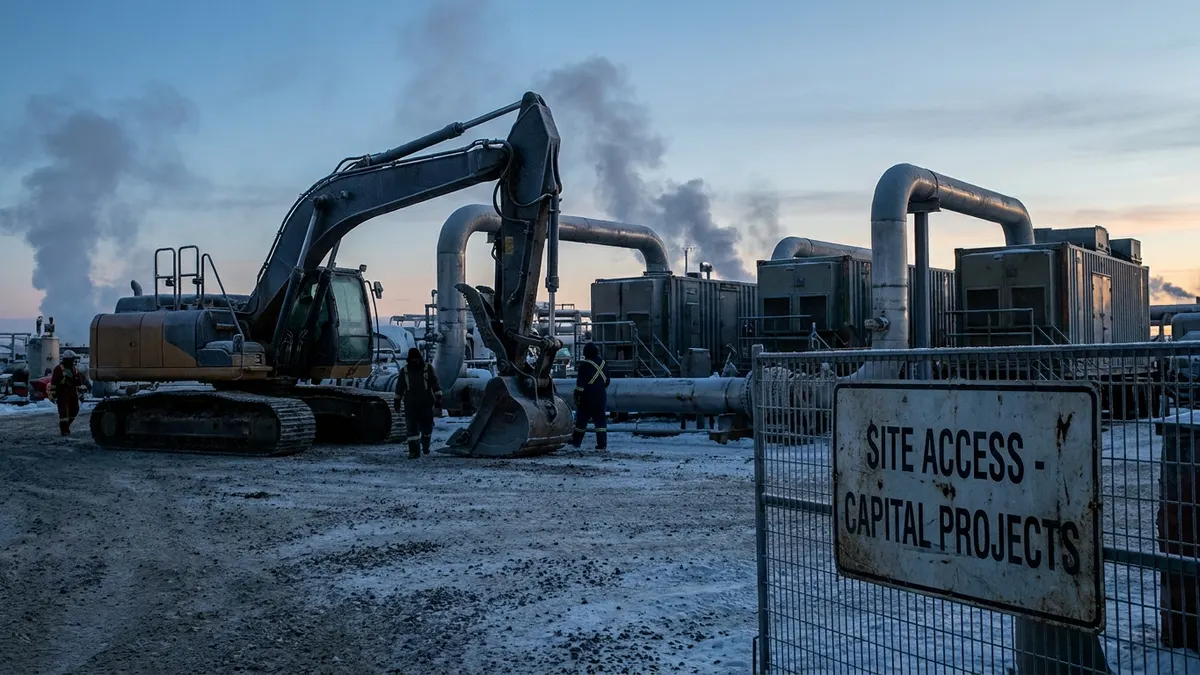
- Maintenance and turnaround crews: Berger expects redevelopments and bolt-on expansions alongside new builds. That work is tied to existing operations and typically moves faster than greenfield sanctioning. Position for brownfield tie-ins at existing Cenovus and Imperial sites before pursuing greenfield packages.
- Contractors tied to carbon capture: Canadian Natural’s growth plans depend on the Pathways and Pacific Link negotiations. Do not budget on a firm date for Canadian Natural growth work until the governments and producers announce a deal. That announcement is the trigger to start bidding preparation.
- Cash-flow planning: Seasons said the 2000 to 2014 rush drove costs up and economics down. Expect operators to push for tighter scopes and cost-control provisions on any new package. Price carefully, and do not add staff until a final investment decision is public.
- Suncor pipeline: Suncor’s base case is six in-situ projects over the next decade, and Kruger said it has not decided to go faster. Treat that as a steady, long-horizon pipeline. Listen for any change in pace on the next round of quarterly calls.