New 3.2MW Gas Turbine Aims to Replace Diesel on D&C Pads
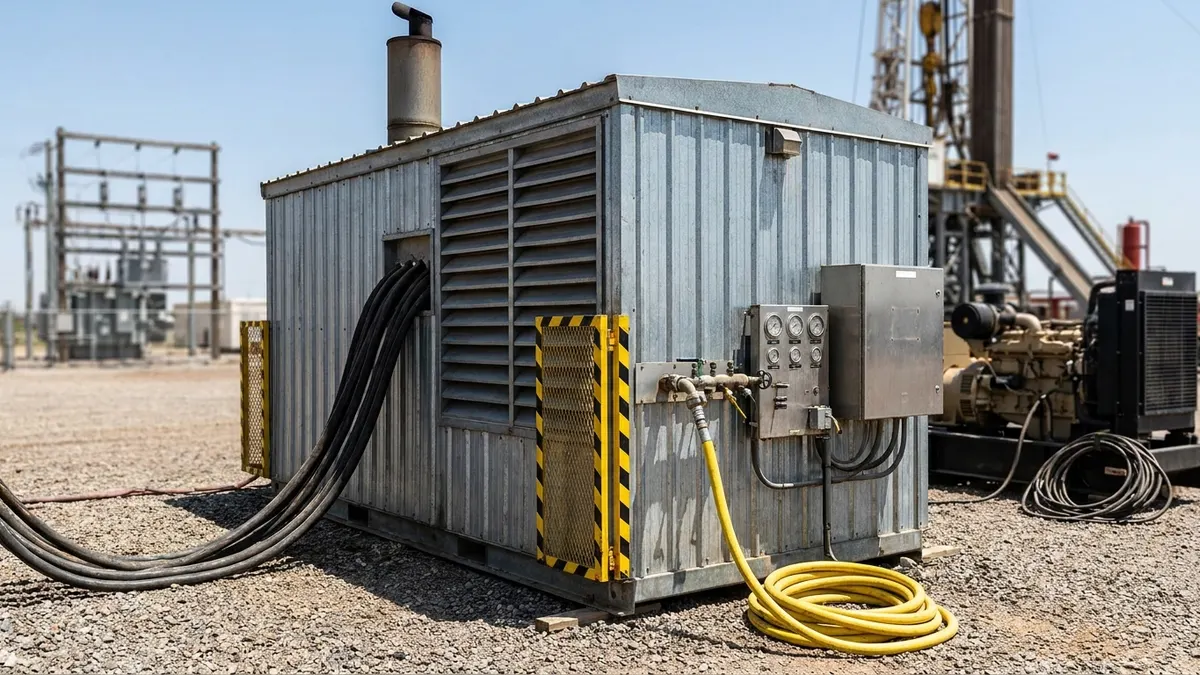
BOE Report reports that Evolution Power is rolling out a mobile 3.2MW natural gas turbine for drilling and completions operations, a unit the company says delivers power equivalent to roughly 4,300 HP of diesel generation for remote upstream sites.
Market Impact
The turbine’s deployment reflects a broader shift underway in Western Canada’s oil and gas sector as pad electrification expands and operators look to cut the operating costs tied to diesel power. Historically, heavy-duty diesel reciprocating generators have been the default choice for remote pad power because of their portability and quick transient response. But according to BOE Report, rising costs tied to diesel fuel, fuel transportation logistics, and emissions are pushing operators toward alternatives.
On the drilling side, the 3.2MW turbine can supplement an AC rig and power the rig itself along with the boiler, centrifuge, waste processing units, lights, and site shacks, running on either an operator’s own fuel gas or third-party natural gas. On completions, operators can apply similar diesel-displacement strategies, such as powering a pump-down unit, to capture fuel savings. BOE Report notes that Evolution Power’s turbine uses a rotational single-shaft design with fewer moving parts than diesel reciprocating engines, which the company says reduces routine maintenance to basic fluid top-offs and avoids wet-stacking issues common with diesel units running continuous prime power.
What It Means for Subcontractors
- Drilling contractors running AC rigs in Western Canada should ask operators whether upcoming pad electrification packages will spec natural gas turbine power in place of diesel gensets, since the fuel and logistics arrangement changes site setup and supply requirements.
- Completions crews handling pump-down units and other high-draw equipment should factor turbine-based power options into equipment bids, particularly for multi-well campaigns where per-well fuel savings are the stated selling point.
- Maintenance and mechanical trades servicing diesel reciprocating generators on remote pads may see reduced routine service calls (oil changes, fuel filter swaps, injector overhauls) if turbine units replace diesel gensets on a site, and should track which operators in their service areas are adopting the technology.
- Field service companies supplying diesel fuel transport and logistics to remote pads should watch for contract volume shifts if operators move to field gas or third-party natural gas sourcing, since Evolution Power markets fuel flexibility as a core advantage.
- Evolution Power markets the turbine through Enterprise Group; contractors evaluating the technology can review technical specifications through that channel, per BOE Report.