NeuVentus Grows Texas Salt Cavern Gas Storage Phase I to Three Caverns
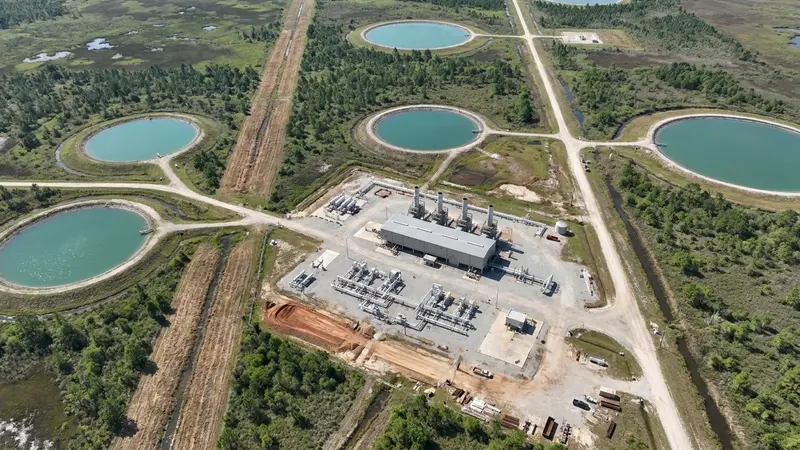
NeuVentus is expanding Phase I of its Texas Reliability Underground salt cavern gas storage project in Liberty County to three caverns, announced Tuesday, Oct. 13, Permian Basin Oil & Gas Magazine reports.
Market Impact
The Austin-based, privately owned pipeline and storage developer said the expanded first phase raises total capacity from 20 billion to 28 billion. The source labels both figures “cfd,” which is an unusual unit for storage volume, so treat the unit as unconfirmed. Injection capacity rises to 840 million cfd from 600 million cfd. Phase I also includes a 35-mile natural gas header with 10 interconnections to interstate and intrastate pipelines.
Guy Ross, a senior vice president at NeuVentus, called the expansion a direct response to the market and a statement of conviction in the project. He said more capacity lets the project offer custom storage solutions and strong connectivity at competitive rates. CEO Sam Porter said US natural gas demand has nearly doubled since the shale boom and pipeline capacity has grown 50%, but storage capacity has grown by less than 10%. He said salt caverns offer the scale and flexibility needed to close that gap.
Project stage: The source does not say. It gives no final investment decision, construction start, in-service date, cost, EPC contractor or subcontract packages.
What It Means for Subcontractors
- Cavern wells and solution mining (our inference): The source says only that Phase I includes three caverns. Building salt caverns typically involves drilling wells and solution mining, but the source does not describe the method, well count or schedule. Drilling, wellhead, brine-handling and water-supply trades should treat this as an early-stage lead, not a bid-ready package.
- Compression (our inference): The source does not mention compression. The jump in injection capacity from 600 to 840 million cfd, a 240 million cfd increase, suggests more surface equipment. Mechanical, electrical and instrumentation firms should expect that scope, but the source does not confirm it or name an equipment supplier.
- Header and tie-ins: This is the best-defined scope. The 35-mile header and 10 interconnections point to pipeline construction work, including right-of-way, trenching, welding, coating, hydrotesting and tie-in crews. The source does not give pipe diameter, route or lateral lengths. The 10 connecting pipelines may also generate work on the other operators’ side of each tie-in, which is our inference.
- Procurement stage: Nothing in the source shows a contractor has been selected, so the field is likely open. Pipeline contractors in the Houston-area market can pursue NeuVentus directly at its Austin headquarters and ask which phase packages will be bid separately.
- Scale signal: Adding a third cavern to Phase I suggests the company is committing more up-front scope. Whether that means a larger single contract or more split packages is not stated.