Nearly 3 in 4 Power-Line Injuries Hit Non-Electrical Workers, Data Shows
According to Safety+Health Magazine, nearly three out of four power-line incidents involve workers who aren’t electricians, a finding that should prompt every subcontractor running mixed-trade crews to take a hard look at their electrical hazard training programs. The data, published by WorkSafeBC, the provincial workplace safety agency for British Columbia, covers a decade of claims from 2015 to 2025 and points to a persistent, industry-wide blind spot: the workers most likely to get hurt near energized lines are the ones least likely to think of themselves as working in an electrical environment.
Background
WorkSafeBC’s data shows that 74% of short-term, long-term, and fatal claims related to power-line contact involved workers in nonelectrical occupations. Over the same 10-year period, the agency issued 688 compliance orders for failing to maintain required separation distances from energized high-voltage equipment. Of those, 531 orders were issued specifically to construction employers, according to Safety+Health Magazine.
The problem extends below ground as well. A separate survey of 200 workers in British Columbia, conducted by electric utility BC Hydro, found that 41% of nonelectrical workers couldn’t correctly identify the required safe distance from power lines. On underground hazards, the knowledge gaps were similarly troubling: 42% of workers surveyed said they had not heard of BC 1 Call, the province’s utility locate service, and nearly 15% were unsure what steps must be taken before digging.
BC Hydro Senior Vice President of Safety Matt Wilson put the stakes plainly: “Electrical hazards remain a serious risk on jobsites, especially for workers whose primary role is not electrical work but who are operating near power lines. Construction, maintenance, excavation, tree trimming and traffic control workers are often exposed to electrical infrastructure. As workloads increase over the summer months, so does the risk of injury.”
Analysis
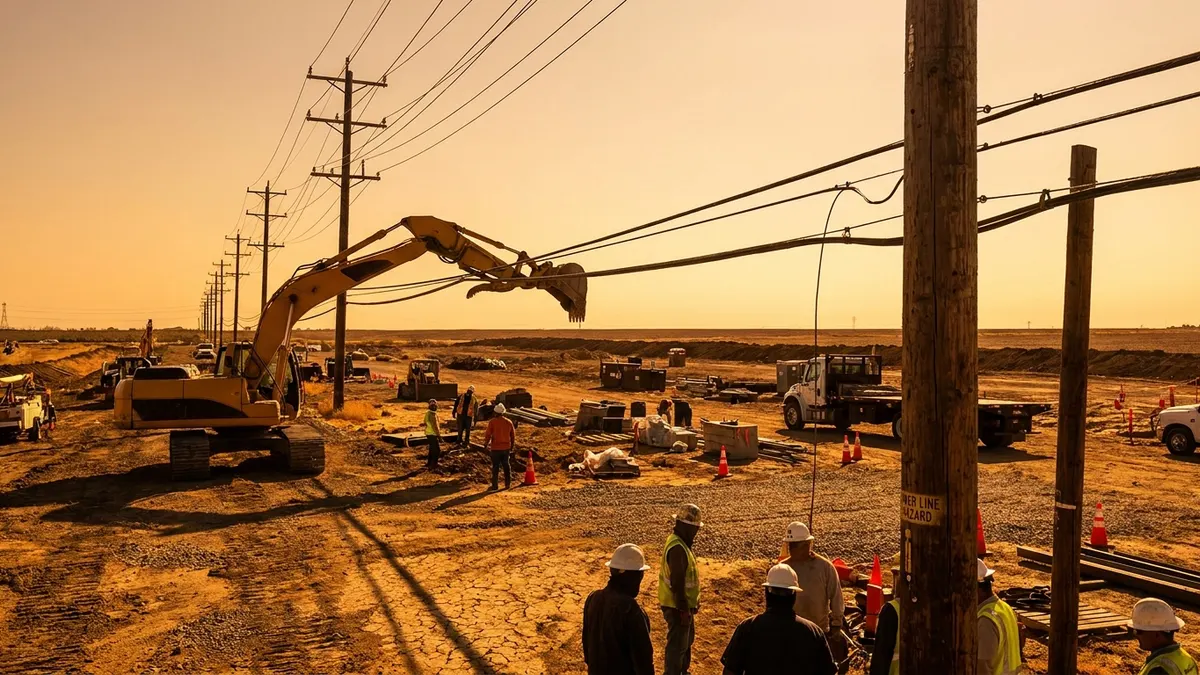
The WorkSafeBC findings reframe how the industry should think about electrical hazard training. For years, the assumption has been that electrical safety is the electrician’s problem. The data says otherwise. When three out of four injury claims involve carpenters, equipment operators, laborers, tree trimmers, and traffic control workers, the conclusion is straightforward: electrical hazard awareness is a general-trades safety issue, not a specialty-trades one.
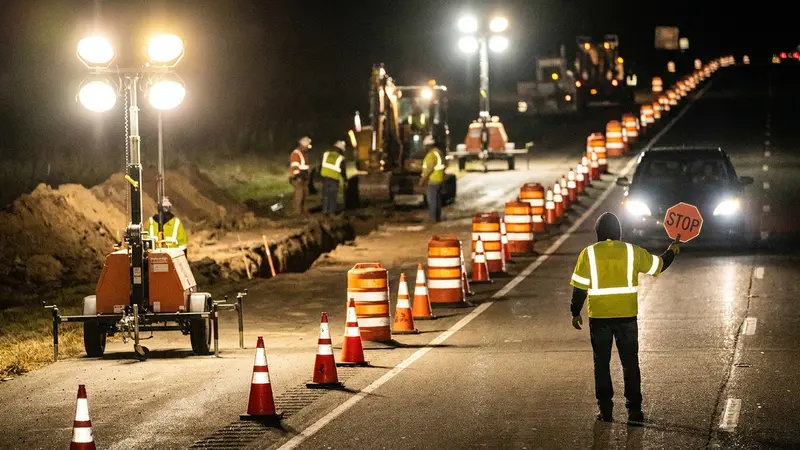
This matters especially for subcontractors who work on utility construction, transmission corridor maintenance, roadway projects, and any site where overhead or buried lines are present. These crews routinely include workers from multiple trades operating in close proximity to infrastructure they didn’t install and may not fully understand. An equipment operator running an excavator isn’t thinking about the distribution line above him. A traffic control worker standing near a utility pole isn’t calculating approach distances. That’s precisely when incidents happen.
The 531 construction-specific compliance orders issued by WorkSafeBC over a decade represent a significant liability exposure for employers. Compliance orders carry real consequences: fines, work stoppages, reputational damage, and in serious cases, criminal liability for supervisors and companies. The fact that the orders were concentrated in construction, rather than spread evenly across industries, reinforces that this is a problem rooted in how construction sites are managed and how hazard awareness is communicated to non-specialist workers.
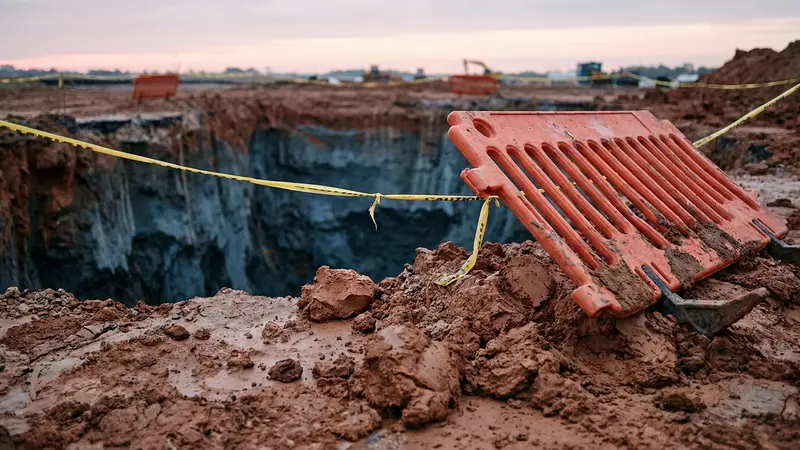
The survey data on underground hazards adds another dimension. Nearly half of the workers surveyed couldn’t identify a locate service they’re expected to use before breaking ground. This is the kind of knowledge gap that leads directly to cable strikes, which can be fatal and which carry serious regulatory consequences. In the US, OSHA’s General Industry and Construction standards both address utility line contact, and state-level 811 (Call Before You Dig) requirements carry their own enforcement teeth. While the WorkSafeBC data comes from British Columbia, the pattern it describes reflects conditions on jobsites across North America.
Summer is a high-exposure period. Wilson’s comment about increasing workloads through the warmer months is consistent with what field supervisors already know from experience. More crews, faster schedules, and more equipment operating on tight sites increases the chance that someone ends up inside a hazard zone they weren’t tracking.
What It Means for Subcontractors
- Electrical hazard training can’t be limited to your electricians. If your site has overhead or underground lines, every worker on that site needs baseline awareness training, regardless of their trade classification.
- Know the minimum approach distances and make sure your crews do too. Both OSHA and WorkSafeBC cite 10 feet as a minimum standoff from overhead lines for general work on lines up to 50kV. Verify what applies in your jurisdiction and make sure supervisors can actually recite it.
- Don’t use metal ladders, including aluminum, anywhere near energized lines. The guidance from WorkSafeBC is explicit: fiberglass reduces risk but doesn’t eliminate it and doesn’t permit work within minimum approach distances.
- Treat every downed or damaged line as live. If a line is down, damaged, or low-hanging, the recommended standoff distance cited in the source is at least 33 feet, and the first call is to 911, not the foreman.