Natural Gas Output Now Outpacing Oil Growth in the Permian Basin
Natural gas production is growing faster than oil production in the Permian Basin, according to a recent report from the U.S. Energy Information Administration cited by Oklahoma Energy Today. The EIA found marketed natural gas production in the Permian grew 60% from 2021 to 2025, climbing from 17.2 billion cubic feet a day to 27.6 bcf/d. Crude oil production over the same period grew 39%, from 4.7 million barrels per day to 6.6 million b/d. The mismatch has created a takeaway bottleneck that the EIA says solutions are “slow in coming.”
The agency attributes the gap to a rising gas-oil ratio (GOR) in the basin. “The higher growth in natural gas production is the result of increasing gas-oil ratio,” the EIA stated. “As the GOR rises, we estimate the production growth rate of natural gas will continue to exceed the growth rate of crude oil in the Permian region.” In 2025, the ratio averaged nearly 4,200 cubic feet of gas per barrel of oil, up 16% from 2021, and the EIA expects it to keep climbing as the basin matures. A related American Petroleum Institute report, cited via the Hobbs News-Sun, shows U.S. gas production up 27% since January 2019, with Texas, New Mexico, and West Virginia accounting for 94% of that growth. Texas leads on total volume while New Mexico has led on percentage growth, surging 168% since 2019; the three states now account for 47% of total U.S. natural gas production, up from 35% in early 2019.
What It Means for Subcontractors
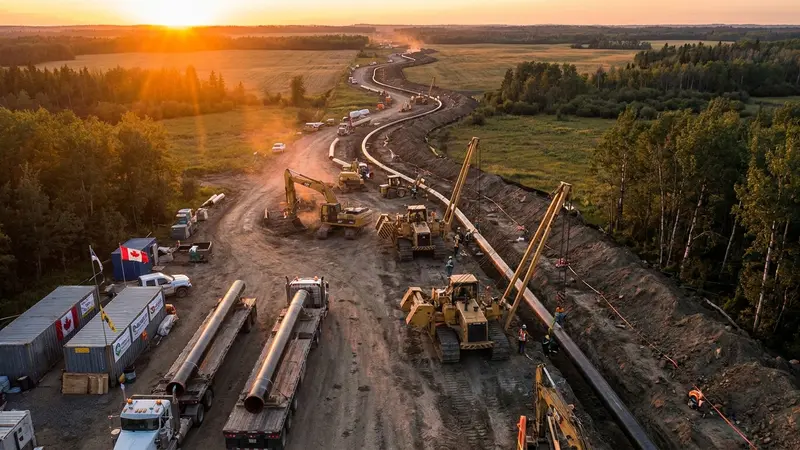
- The widening gas-oil gap points to sustained demand for gas gathering, compression, and processing infrastructure work in the Permian, even if oil-directed drilling activity plateaus.
- Midstream subcontractors should expect continued bottleneck-driven capital spending on takeaway capacity as operators work to move surging associated gas volumes to market.
- New Mexico’s 168% growth since 2019 signals an expanding market for gas-focused field service and construction crews on the state’s side of the basin, not just the traditional Texas core.