LNG Canada Phase 2 Could Get Green Light by Early October
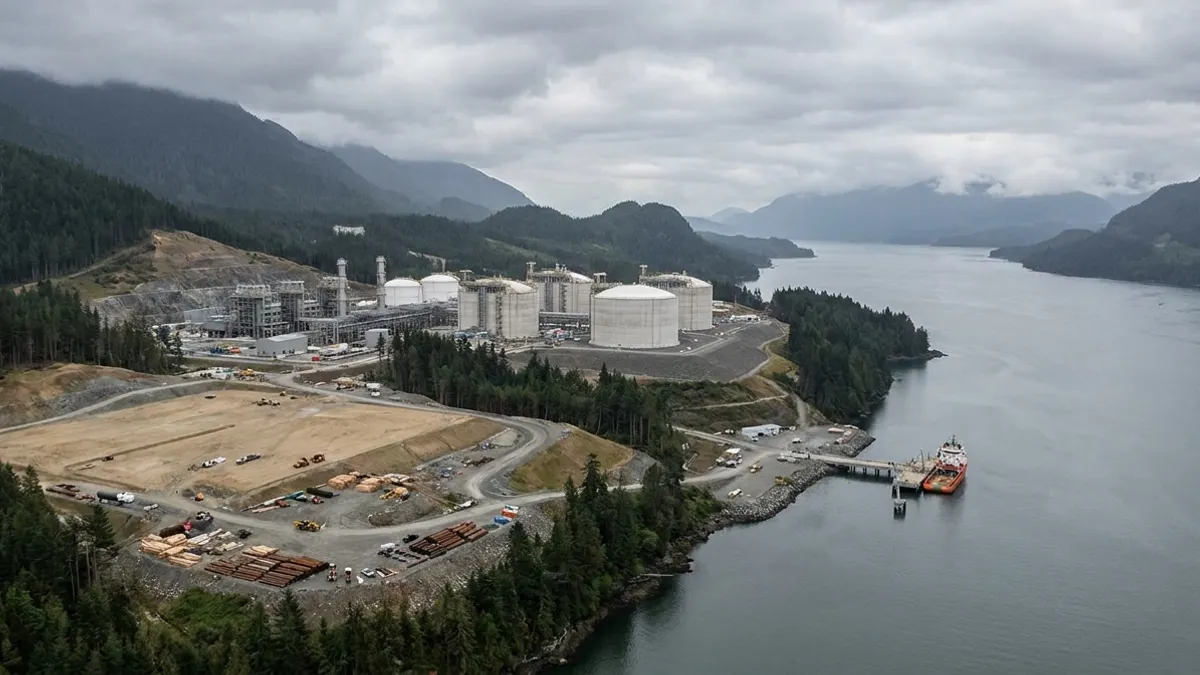
A Reuters report via BOE Report says partners in the Shell-led LNG Canada project could sign off on a final investment decision for the facility’s Phase 2 expansion as early as next month, citing three people familiar with the matter. If confirmed, the decision would double the Kitimat, British Columbia facility’s export capacity, adding 14 million metric tons per annum (mtpa) of liquefied natural gas capacity on top of the existing 14 mtpa first phase.
Background
LNG Canada is a joint venture led by Shell and backed by Petronas, PetroChina, Mitsubishi Corp and Korea Gas Corp. It is Canada’s first large-scale LNG export terminal and one of the largest private-sector investments in the country’s history, according to BOE Report. Phase 1 cost roughly C$40 billion, ran two processing trains, and shipped its first cargo earlier this year.
Shell told Reuters it “continues to work with the venture partners to explore pathways to a possible Phase 2 expansion,” noting that any decision will weigh competitiveness, affordability, government support and stakeholder needs. LNG Canada itself said in a statement that any final investment decision is still subject to joint venture participants independently satisfying their commercial, fiscal, regulatory and governance requirements, but added: “We hope to make an investment decision before the end of the year.”
The push comes as Asian LNG buyers place growing weight on supply security amid conflict in the Middle East, Red Sea shipping disruptions, and uncertainty over flows through the Strait of Hormuz, per the Reuters reporting. Tight global markets and outages among major producers are also fueling interest in diversified LNG supply. LNG Canada’s Pacific Coast location gives it shorter shipping routes to Asian buyers than Gulf Coast exporters that must transit the Panama Canal.
The report also notes that MNT Investments LP, representing a coalition of five neighboring First Nations, signed an agreement earlier this year giving the coalition an option to invest up to C$1 billion in Phase 2, described as one of the largest Indigenous investment opportunities in Canadian energy infrastructure.
Analysis
An early-October FID timeline, if it holds, would compress the usual gap between sanction and mobilization. Phase 1 took roughly five years from FID to first cargo and cost about C$40 billion for two trains. A Phase 2 sanction that mirrors that scope, again roughly 14 mtpa, points to a project of comparable capital intensity, though sourcing, labor markets and materials costs have all shifted since the original FID.
What makes this moment different from a typical greenfield LNG sanction is that the site, marine terminal, and much of the associated infrastructure already exist. That should shorten the early civil and site-prep phase relative to Phase 1, but it also means EPC contractors and their subcontractor networks already have established relationships and mobilization plans from the first build. Companies that worked Phase 1 packages, whether in pipeline tie-ins, marine works, or camp and civil support, have a structural advantage heading into requalification.
The Indigenous investment structure through MNT Investments is also worth watching closely. A C$1 billion equity option tied to five First Nations signals that community benefit agreements and local labor commitments will likely be baked into Phase 2 contracting requirements, similar to how Phase 1 procurement incorporated regional and Indigenous participation targets. Subcontractors bidding into Phase 2 packages should expect similar expectations around Indigenous business partnerships and local hire commitments.
The geopolitical framing in the Reuters reporting, tight global gas markets, Middle East conflict risk, and Red Sea disruptions, is driving buyer urgency for diversified supply. That urgency is likely part of why the venture partners are moving toward a decision now rather than waiting longer. For BC-based trades, that urgency could translate into compressed bid windows once FID is confirmed, since the partners will want to move quickly to lock in engineering and construction capacity before labor and equipment markets tighten further across Western Canada’s LNG and pipeline corridor.
What It Means for Subcontractors
- Pipeline, marine, and civil contractors that worked LNG Canada Phase 1 should pull and update their prequalification packages now, since an FID as early as October would put the project into rapid mobilization mode before year-end.
- Firms with Indigenous partnership agreements or joint-venture structures should position early, given that MNT Investments’ C$1 billion equity option signals Phase 2 procurement will likely carry local and Indigenous participation requirements similar to Phase 1.
- Marine construction and dredging subcontractors in the Kitimat area should confirm equipment and crew availability for a potential terminal expansion scope, since Phase 2 would double throughput capacity at the existing facility.
- Trades tied to pipeline tie-ins, E&I, and mechanical scope should monitor Shell’s and LNG Canada’s public statements closely between now and year-end, since both companies have said the decision still hinges on each joint venture partner independently clearing commercial, fiscal, regulatory and governance requirements.
- BC-based labor suppliers and camp service providers should start capacity planning conversations with EPC contractors now, given that a compressed FID-to-mobilization window could tighten regional labor and lodging markets quickly once sanction is confirmed.