Kentucky's Approval of TeraWulf's $4B AI Campus Signals a Brownfield Power Playbook
A former aluminum smelter’s dusty substation just became one of the fastest paths to power in the AI data center race. Engineering News-Record reports that Kentucky utility regulators on Aug. 21 approved a 482-MW electric-service agreement clearing the way for TeraWulf Inc.’s redevelopment of the shuttered Century Aluminum smelter in Hawesville into a data center campus now valued at more than $4 billion.
Background
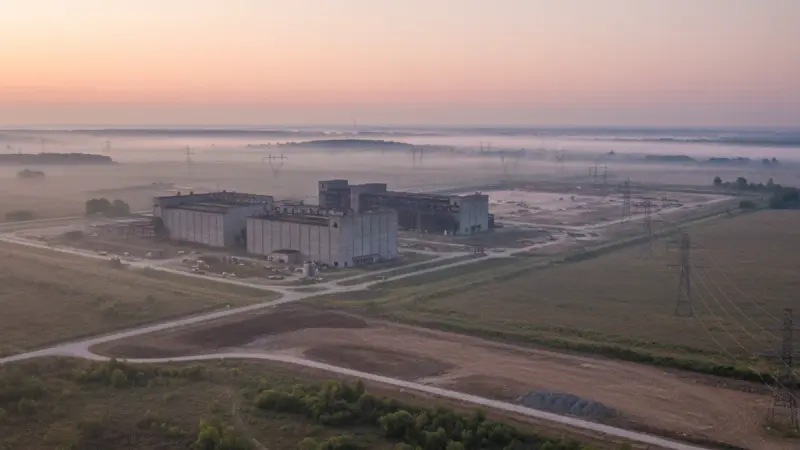
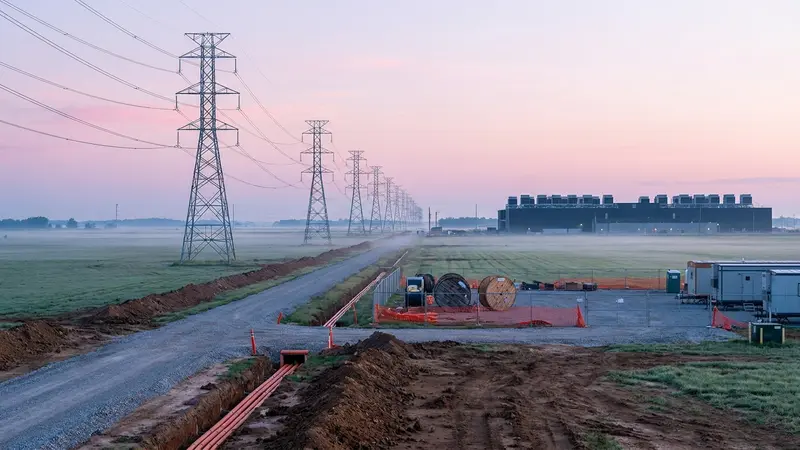
TeraWulf, based in Easton, Maryland, bought the 250-plus-acre Hawesville site for about $302 million in a deal that closed Feb. 2, according to ENR’s review of the company’s second-quarter SEC filing. The smelter ran from 1969 until 2022, and what it left behind is the real asset: an energized substation, multiple high-voltage transmission lines and a direct tie into the regional grid. Kentucky’s Public Service Commission found about 482 MW of transmission capability still available on-site, connected through five 161-kV Big Rivers circuits.
The 15-year electric-service agreement, served by cooperatives Big Rivers Electric Corp. and Kenergy Corp., puts market, transmission and customer-specific infrastructure costs on TeraWulf. Anthropic signed a 20-year lease July 6 for about 401 MW of critical IT capacity, up from the 370 MW TeraWulf had presented to regulators in June. TeraWulf now projects $4 billion to $4.5 billion for site development and initial data halls, not counting Anthropic’s own computing buildout, which the company’s Kentucky filing pegs at another $10 billion, pushing combined investment past $14 billion by TeraWulf’s estimate. Fluor moved from early engineering and preconstruction work into the general contractor role, per ENR, with a formal construction kickoff held March 10 and more than 20 local firms brought to a contractor outreach event two days later. Site work, including demolition, remediation and permitting, was already underway before the commission’s approval.
Analysis
The headline number here isn’t the $4 billion price tag, it’s the 482 MW that came pre-wired. Data center developers across the country are stuck waiting years for interconnection studies and new transmission builds. TeraWulf sidestepped a huge chunk of that timeline by buying a site that already had an energized substation and high-voltage lines rated for heavy industrial load. That’s the model worth watching: brownfield industrial sites, particularly old smelters, refineries and mills with legacy grid connections, are becoming shortcuts for hyperscale power demand.
But “build-ready” isn’t the same as “build-free.” TeraWulf still owes real money to unlock that capacity. The company disclosed a net $11.2 million obligation to reimburse Big Rivers for substation modifications, and it’s carrying about $16.5 million in asset-retirement obligations for asbestos remediation and spent pot liner removal tied to the smelter’s industrial past. And crucially, the commission’s approval doesn’t yet let the campus draw its full 482-MW contract demand. That still requires sign-off from grid operator Midcontinent Independent System Operator and additional transmission arrangements. So the interconnection queue isn’t eliminated here, it’s shortened and partially resequenced, with civil and remediation work running in parallel rather than waiting behind a multi-year grid study.
The timeline pressure is real on both ends. TeraWulf told regulators financing depended on a planned September 2027 power ramp, and delayed approval risked pushing back financial close. Anthropic’s lease has its own clock: capacity delivery starting late 2027, full 401 MW by early 2028. That compresses the construction and remediation schedule into a window where brownfield surprises (contamination, legacy equipment, permitting snags) carry outsized financial risk.
What It Means for Subcontractors
- Electrical subs and E&I firms should watch for repeat opportunities at other decommissioned smelters, aluminum plants and heavy-industrial sites with existing high-voltage substations. These are the sites where AI developers can skip years of interconnection queue time, and Hawesville shows the pattern: energized substation, multiple transmission lines, direct grid tie.
- Environmental remediation contractors have a defined scope at Hawesville: TeraWulf’s asset-retirement obligations for asbestos and spent pot liner removal total about $16.5 million as of June 30, work that’s running alongside site prep rather than ahead of it.
- Fluor, now general contractor after handling early engineering and preconstruction, held a contractor outreach event March 12 that drew more than 20 local firms, suggesting subcontract packages for civil, site prep and related trades were already being scoped as of that date.
- Firms with substation or transmission upgrade experience should note TeraWulf’s $11.2 million net reimbursement obligation to Big Rivers for substation modifications, a reminder that even “existing infrastructure” sites need real electrical construction work before full contract demand can be drawn.
- Anthropic’s lease timeline, capacity delivery starting late 2027 and full 401 MW by early 2028, sets a hard schedule pressure point. Subs bidding into this project or similar brownfield conversions should expect compressed construction windows once financing and MISO approvals clear, not the multi-year runway typical of greenfield data center builds.
- The commission’s approval still doesn’t authorize the full 482-MW draw. MISO approvals and additional transmission arrangements remain pending, so contractors should treat full-capacity buildout timing as unconfirmed until those approvals land.