IIJA Funding Cliff Looms Sept. 30, Straining Highway and Bridge Bid Pipelines
Construction Dive reports that the construction industry’s most reliable source of steady work, the $1.2 trillion Infrastructure Investment and Jobs Act, is set to expire Sept. 30, and contractor executives are already bracing for what comes next if Congress doesn’t act.
The federal transportation bill covers roughly 80% of funding for major transportation projects nationwide, according to Associated General Contractors of America CEO Jeffrey Shoaf, who spoke during a July 2 media briefing. Losing that funding stream, or even seeing it reduced, would force contractors to shelve work and put construction jobs at risk, said Lynn Hansen, CEO of Charlotte, North Carolina-based general contractor Crowder Constructors.
Background
Congress has until the end of September to pass a new transportation reauthorization bill known as Build America 250, replacing the current IIJA before its authorization period runs out. An AGC poll conducted July 2 in partnership with Morning Consult, surveying more than 10,000 voters, found 78% want Congress to pass the new bill.
The stakes go beyond politics. Construction Dive notes that infrastructure work has been one of the few dependable segments propping up the broader construction sector this year, outside of the data center boom. Associated Builders and Contractors Chief Economist Anirban Basu said during a July 8 economic update webinar that public infrastructure spending, much of it tied to the IIJA, is one of the only reliable demand drivers left for contractors. “There’s not much else that’s flying high right now,” Basu said, pointing to data centers and energy as the main private-sector bright spots.
Two major projects highlighted in the Construction Dive report, the Gateway Development Commission’s $16 billion Hudson Tunnel Project in New York and New Jersey and the Chicago Transit Authority’s $2.1 billion Red and Purple Line modernization, both recently won court rulings ordering the U.S. Department of Transportation to restore financing after the Trump administration withheld funds.
Analysis
The Sept. 30 deadline creates a strange kind of uncertainty. It’s not a hard funding cliff in the way a government shutdown might be. Basu told Construction Dive that even without a new bill, money already authorized under the IIJA will keep flowing, potentially lasting into the early 2030s. That’s a critical distinction for subcontractors trying to gauge risk: existing contracts and already-appropriated state DOT programs aren’t going dark overnight.
But “already authorized” is doing a lot of work in that sentence. New project authorizations, the next round of formula funding to state DOTs, and any inflation adjustments to keep pace with rising materials and labor costs all depend on Congress actually passing Build America 250. Hansen’s warning, that reduced or stagnant federal funding will postpone projects and put construction employment at risk, points to the real exposure: not projects already under contract, but the next wave of bid packages that state DOTs and transit agencies are still assembling.
The court fights over the Hudson Tunnel and Chicago’s Red and Purple Line show a second layer of risk that has nothing to do with the September deadline. Even fully authorized, appropriated funding can get held up by executive action, requiring litigation to unlock. For subs bidding into large multibillion-dollar programs, that means schedule risk isn’t just legislative anymore, it’s also administrative.
Shoaf’s comment that “Congress seems to always follow the path of least resistance” is a reasonable bet on eventual passage, but “eventual” is the operative word. A bill that slips into November or later could still get done, but it stretches out the window where state DOTs hesitate to release new solicitations, and where GCs sit on updated bid schedules until they know what federal match money looks like for the next several years.
What It Means for Subcontractors
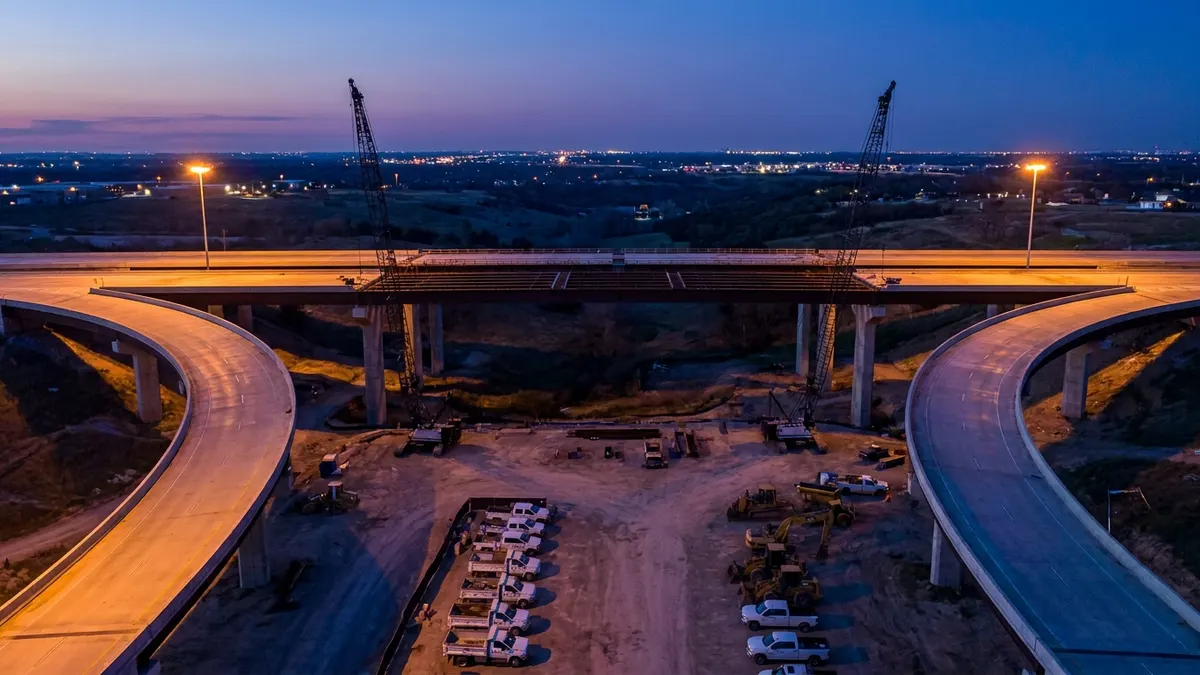
- Highway, bridge, and heavy civil subs working on projects already funded under current IIJA authorizations should see continued cash flow, per Basu’s estimate that existing money could last into the early 2030s, but new bid packages tied to a Build America 250 renewal are the ones at risk of delay past Sept. 30.
- Subs pursuing work tied to the Gateway Development Commission’s $16 billion Hudson Tunnel Project or the CTA’s $2.1 billion Red and Purple Line modernization should track whether court-ordered funding restoration actually translates into released subcontract packages, since both projects needed litigation to unstick DOT financing.
- Electrical, mechanical, and civil trades bidding into state DOT programs should ask project owners directly whether their specific contract is funded under existing IIJA authorization or depends on a future reauthorization, since Hansen’s warning about postponed projects applies specifically to funding that “fails to keep pace with growth and inflation.”
- With AGC’s Shoaf citing a narrow window before Sept. 30, subs should expect state DOTs to hold back on releasing new multiyear bid schedules until Congress acts, making Q4 2026 a likely bottleneck point for fresh solicitations rather than a hard stop for ongoing work.
- Firms diversified into data centers or energy work, the two segments Basu flagged as the only other reliable sources of private demand, may be better positioned to absorb a slowdown in new public infrastructure lettings if Build America 250 passage drags past the fall deadline.