Electric Power Construction Starts Surged 353% in March as Megaprojects Dominate
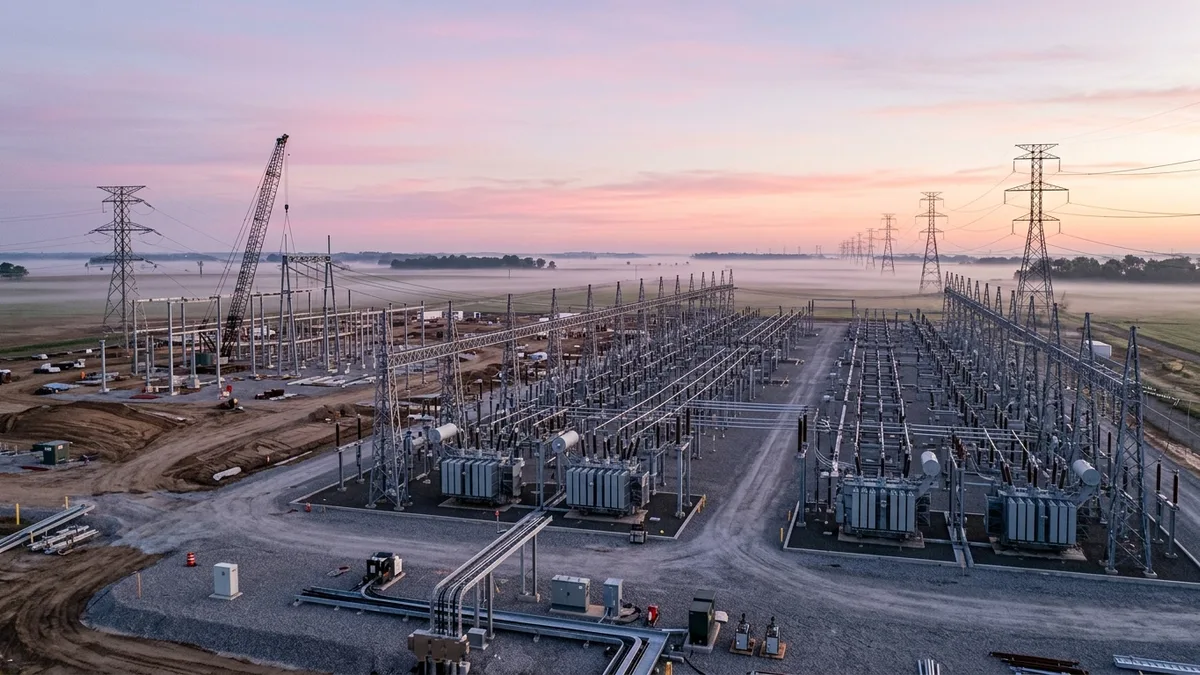
According to Construction Dive, total U.S. construction starts rebounded 12.8% month over month in March, reaching a seasonally adjusted annual rate of $1.22 trillion, with nearly all of that momentum coming from a massive surge in electric power and utility projects. The data, sourced from Dodge Construction Network, shows that electric power and utilities starts jumped 353.6% month over month, lifting overall nonbuilding construction starts 37.9% higher for the month.
For field service companies and subcontractors working in power, utilities, and infrastructure, the message is clear: the megaproject wave is real, it’s concentrated, and the window to position for it is now.
Background
The March rebound nearly erased February’s losses, which saw a 13.2% monthly drop in total starts. Dodge Construction Network chief economist Eric Gaus attributed the swing to a familiar pattern. “A few strong categories overcame slight weakness in all the others in March,” Gaus said, describing what Dodge called a “flip-flopping streak” in the data.
That flip-flopping is important context. The headline numbers look strong, but the underlying picture is uneven. Highway and bridge starts fell 13.6% month over month in March, and environmental public works dropped 4.1%, reversing February gains. On a 12-month basis through March 2026, highway and bridge groundbreakings were down 1% and environmental public works fell 6.4%. The strength is not broad-based across infrastructure, it’s concentrated in power and utilities.
The utility and gas segment tells a different story over the longer term. According to Dodge data reported by Construction Dive, utility and gas starts rose 52.3% year over year for the 12 months ending March 2026. That’s a sustained trend, not just a one-month spike driven by three large projects.
On the nonresidential side, manufacturing starts surged 251.9% month over month after a weak February, and hotels and stores also posted gains of 19.3% and 5.6% respectively. The commercial segment showed the most consistent strength, with Gaus noting “12-month growth for all sub-categories except warehousing.” Data centers, which surged 159.6% in February, pulled back sharply with office and data center starts falling 16% in March.
Residential starts grew 2.6% month over month, but the picture is mixed. Multifamily kickoffs expanded 15.3% while single-family starts dropped 5.3%. Over the trailing 12 months, total residential starts are down 5.3%, with single-family housing off 15.7%.
Analysis
The 353% spike in electric power and utility starts is striking, but the real story for the field services sector is what’s driving it and whether the pipeline holds.
Three megaprojects accounted for the bulk of March’s nonbuilding surge. That concentration matters. When a handful of massive projects move the national needle by that magnitude, it signals that project scale is increasing, not that work is spreading evenly across geographies or trade categories. For subcontractors, that means the opportunity is substantial but the competition to get on those project teams is intense. Primes and EPC firms on gigawatt-scale power projects are not running open procurement. Relationships, prequalification, and capacity are the gatekeepers.
The data center deceleration is worth watching but shouldn’t be overstated. A 16% month-over-month drop in office and data center starts follows a 159.6% surge the prior month. The 12-month commercial growth trend remains positive across nearly all subcategories. The data center sector is volatile on a monthly basis, and subcontractors who built capacity around hyperscale work in 2024 and 2025 should expect this kind of choppiness. The underlying demand case for power-intensive construction, whether data centers or AI infrastructure, is still directly tied to the utility and power buildout that’s now showing up in these numbers.
The weakness in highway and bridge starts is worth noting for subcontractors whose books are heavy in DOT work. A 13.6% monthly decline and a negative 12-month trend suggest that federal infrastructure funding, while still present, is not translating into consistent groundbreakings at the pace many expected. Environmental public works is in the same position. Subcontractors dependent on that segment should be watching award timelines closely and diversifying where they can.
Manufacturing’s 251.9% monthly rebound is another signal worth tracking. Industrial construction, including reshoring-driven manufacturing facilities, has been a growth area, and the 20.2% year-over-year gain in manufacturing starts confirms that trend has legs.
What It Means for Subcontractors
- The electric power and utility sector is where the volume is right now. If you have crews and equipment suited to transmission, substation, or utility-scale generation work, prioritize getting prequalified with the primes active in this space. The 52.3% year-over-year growth in utility and gas starts is not a blip.
- Megaproject concentration means fewer, larger contracts. Subcontractors who can demonstrate scale, bonding capacity, and safety track records will have an advantage over smaller competitors for these awards.
- Don’t read the data center pullback as a retreat. The monthly swing from plus 159.6% to minus 16% reflects project timing, not sector collapse. Power infrastructure demand tied to data center growth is showing up directly in the utility starts surge.
- Highway and bridge work is softening on both a monthly and 12-month basis. If your backlog is weighted toward DOT contracts, watch bid pipelines carefully and consider whether industrial or utility work is accessible with your current capabilities.
- Multifamily’s 15.3% monthly gain and 16.3% year-over-year growth offers a counterweight to single-family weakness. Subcontractors in concrete, framing, MEP, and finishes who can work at multifamily scale have a healthier near-term pipeline than those focused on single-family residential.
- The “flip-flopping streak” Dodge describes means monthly volatility is high. Base your capacity and hiring decisions on 12-month trends, not single-month spikes, or you risk staffing up for a surge that corrects the following month.