DOE Commits $17.5B in Loans to Build 10 Large Nuclear Reactors at Five Sites
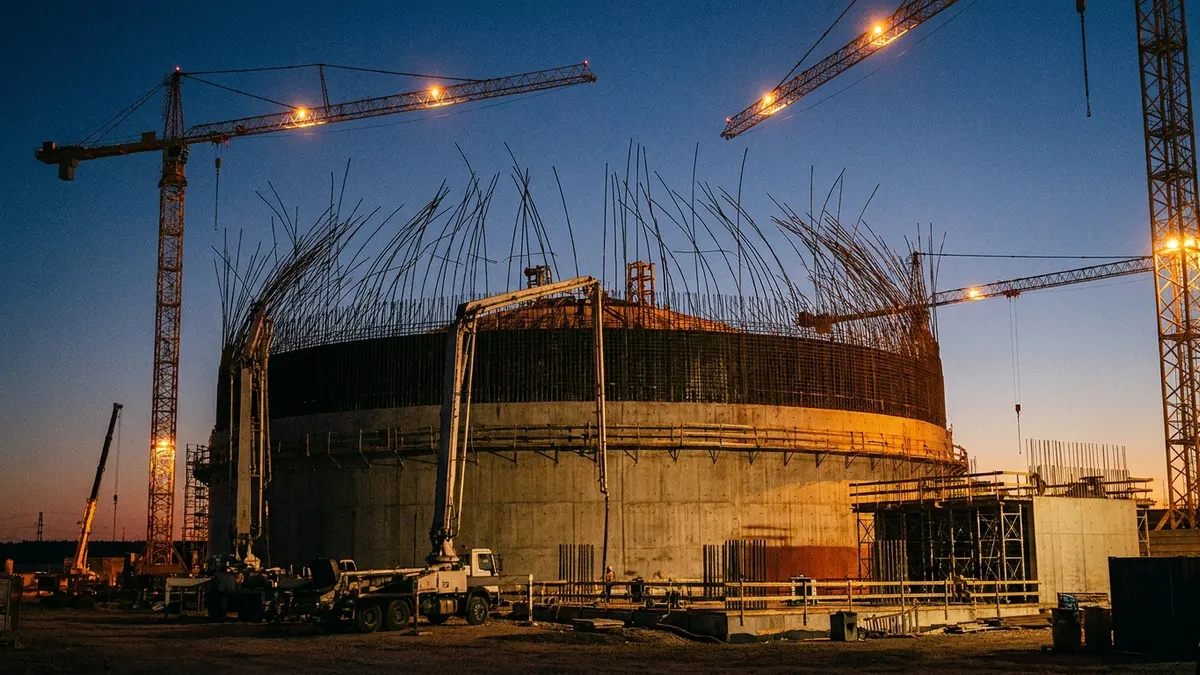
According to Construction Dive, the U.S. Department of Energy announced on June 23, 2026 that it will provide conditional loans totaling up to $17.5 billion to support the development of 10 large nuclear reactors at five sites across the country.
Market Impact
The loans, issued through DOE’s Office of Energy Dominance Financing, will be structured as up to five separate loans tied to projects using the Westinghouse AP1000 reactor design. Westinghouse will partner with up to five utilities or energy companies, jointly owning each project and requiring $1 billion in combined equity upfront before any federal loan funds are accessed.
Energy Secretary Chris Wright said the conditional loans “will play an important role in reviving the supply chain needed for America to once again build large-scale commercial reactors,” and noted the financing could accelerate project timelines by as much as three years. Westinghouse has already signed letters of intent with seven potential partners, each with identified project sites.
According to D.C.-based research firm Capstone, the regulated utilities best positioned to access the loans include Dominion Energy, DTE Energy, WEC Energy Group, Public Service Enterprise Group, and Entergy Corp. Capstone expects DOE to announce which utilities are receiving financing in the second half of 2026.
The announcement advances a Trump executive order calling for 300 GW of new nuclear capacity by 2050 and 10 large reactors under construction by 2030.
What It Means for Subcontractors
- Qualify now, not later. With DOE expecting to name finalists in late 2026, heavy civil and industrial subs that want to compete for site prep, concrete, piping, and mechanical work need to be building relationships with Westinghouse and the named utilities today.
- Supply chain revival is the stated goal. Wright’s statement explicitly frames these loans as a supply chain catalyst. That signals real procurement activity ahead for fabricators, specialty contractors, and equipment suppliers, not just design work.
- Equity requirements signal serious project commitments. The $1 billion per-project upfront equity requirement means these won’t be paper projects. Once a utility commits, construction timelines become real, and subcontractor mobilization windows will move fast.
- Watch the five utilities. Dominion Energy, DTE Energy, WEC Energy Group, Public Service Enterprise Group, and Entergy Corp. are the names to track. Subs already working in those utilities’ service territories have a natural path to the table.
- Three-year timeline compression is significant. If DOE’s financing genuinely accelerates schedules by three years as stated, project labor demands will be front-loaded and compressed, putting a premium on subs who can scale quickly.