Deep Fission's Underground Reactor Prototype Reaches Kansas Test Site
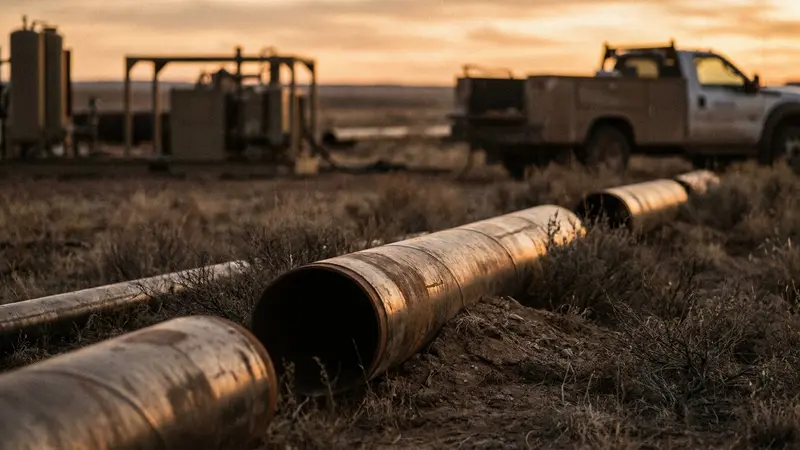
A prototype reactor canister has arrived at a Kansas test site for Deep Fission, a California-based startup developing a small modular reactor designed to operate a mile underground, OilPrice.com reports.
Market Impact
The company says the prototype has completed fabrication, hydrostatic testing, and delivery, clearing the way for non-nuclear testing ahead of large-diameter drilling at the site. Deep Fission’s “gravity reactor” concept relies on burying the reactor roughly a mile below ground, where a column of water naturally generates the 160 atmospheres of pressure needed for operation. That eliminates the need for the large, expensive surface pressure vessels used in conventional nuclear plants, and the company claims the design could cut operational costs by up to 80% compared to traditional fission reactors.
“The arrival of our prototype reactor canister at the Kansas site is a clear step forward in moving from design to deployed infrastructure,” Mark Pérès, Deep Fission’s Chief Nuclear Officer, told Interesting Engineering, as cited by OilPrice.com. The project is being advanced under Executive Order 14301, which taps the U.S. Department of Energy’s Reactor Pilot Program to speed testing and commercialization of advanced reactor designs. Critics cited in the report, including a Wall Street Journal op-ed, argue the administration’s focus on unproven next-gen technology like this could be diverting attention from the large-scale reactor investment needed to quadruple U.S. nuclear capacity by 2050.
What It Means for Subcontractors
- Large-diameter drilling is the next phase at the Kansas site. Drilling contractors and geotechnical firms with deep-bore experience should watch for procurement activity tied to this proof-of-concept phase as Deep Fission moves from non-nuclear testing toward site work.
- The underground design replaces conventional surface pressure vessels, meaning civil and structural subs on future projects may see reduced above-ground vessel construction scope but increased demand for below-grade excavation, casing, and wellbore-style installation work, similar to oil and gas well construction trades.
- This remains a single proof-of-concept installation, not a commercial buildout. Subcontractors should track DOE Reactor Pilot Program announcements and any follow-on site selections before assuming near-term bid packages will materialize.
- Because the project falls under a federal pilot program (Executive Order 14301), field service firms working federal energy contracts should monitor DOE announcements for additional pilot sites that could open similar early-stage drilling and site-prep work in other states.