Canada's $7.2B Clean Power Push Opens Multi-Year Work in Newfoundland and Labrador
Engineering News-Record reports that Canada’s federal government committed roughly $7.2 billion on Aug. 17 to expand clean electricity generation and transmission in Newfoundland and Labrador, part of a broader program Prime Minister Mark Carney calls the largest clean energy investment in North American history.
Market Impact
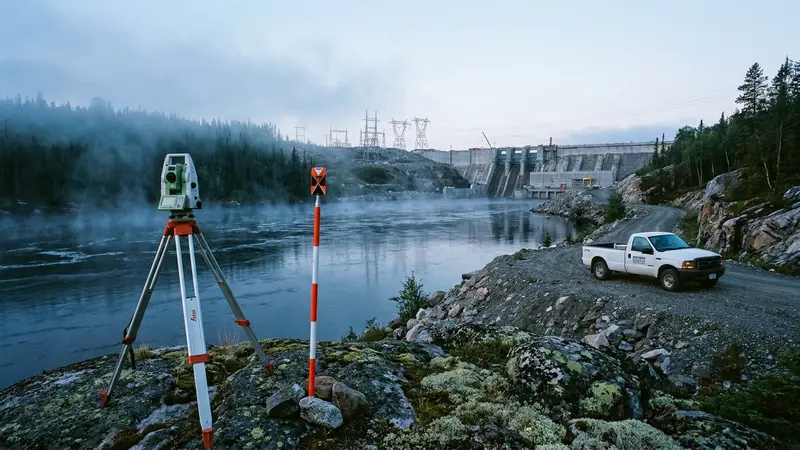
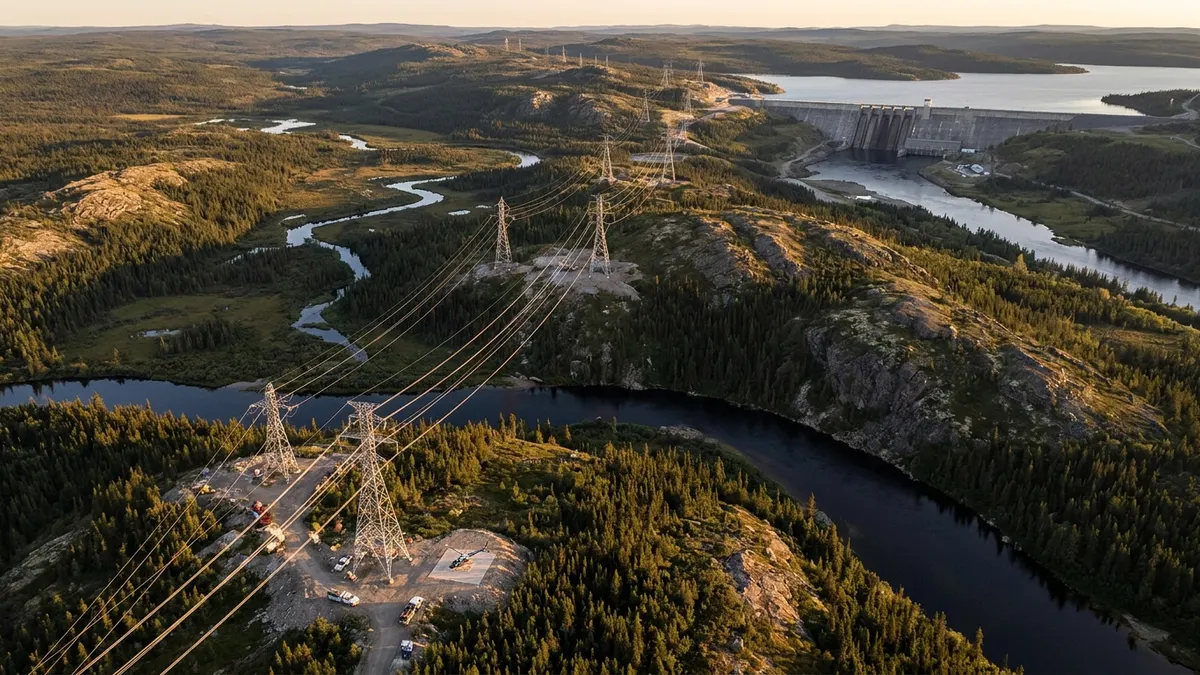
The nearly $50 billion program builds on a 2024 agreement between Newfoundland and Labrador Hydro and Hydro Québec to expand hydroelectric capacity in the region. Anchor projects include an upgrade to the 55-year-old Churchill Falls Generating Station, which currently produces more than 5.4 GW using 11 underground turbines fed by a reservoir system of 90 dikes. The plan calls for gradually installing more efficient units to add 2.5 GW of capacity. Work is also advancing on the long-planned 2.7-GW Gull Island hydroelectric facility on the Churchill River, about 225 km from Churchill Falls, targeted to come online in the mid-2030s.
Combined with roughly 660 km of new high-voltage transmission lines and 2 GW of onshore wind capacity in Labrador, the buildout could deliver 14 GW of renewable power to the region, according to a government statement cited by ENR. Some of that power could eventually flow to northeast US utilities over existing transmission lines, a notable detail given the US imported about 59 terawatt-hours of electricity annually from Canada between 2010 and 2024. Stantec and WSP Global have already handled geotechnical and environmental studies for the projects, though ENR notes the construction work will likely be carried out by the utilities’ internal units.
Carney tied the investment to a national strategy to double Canada’s power supply by 2050, framing it as a way to attract power-hungry sectors like data centers and critical minerals processing. “When we master energy, we master our destiny,” he said, according to ENR.
What It Means for Subcontractors
- Transmission and electrical crews should track the roughly 660-km high-voltage line buildout tied to the Labrador program, since utility-run construction typically still requires outside line, civil, and E&I subcontractors even when the prime scope sits with internal utility units.
- Firms with hydro or heavy civil experience should watch for subcontract packages tied to the Churchill Falls turbine upgrade (targeting 2.5 GW of added capacity) and the 2.7-GW Gull Island facility, which is not expected online until the mid-2030s, meaning a multi-year pipeline of site prep, powerhouse, and dam-related work.
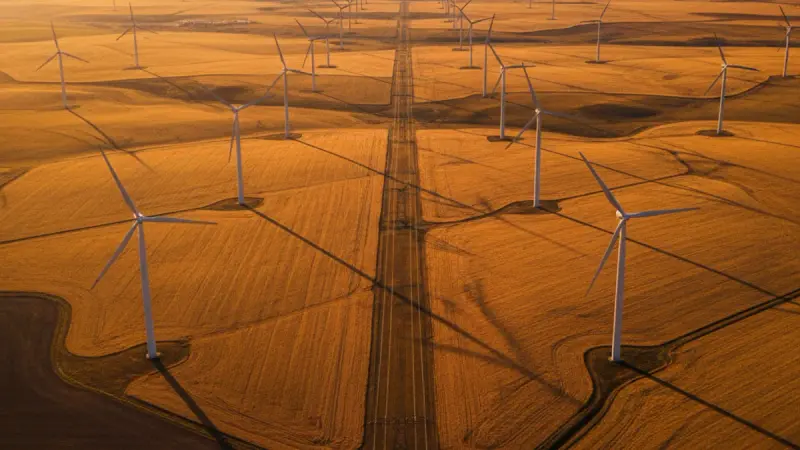
- Wind construction and foundation contractors in Labrador should note the 2-GW onshore wind component included in the regional plan, a separate procurement track from the hydro work.
- Environmental and geotechnical subcontractors should note that Stantec and WSP Global have already completed early-stage studies, a signal that the projects are moving from planning into execution phases where construction subcontracting decisions typically follow within the next year or two.
- Canadian subcontractors bidding into this pipeline should also monitor the ongoing US-Canada tariff dispute, since Canada’s 15% to 50% tariffs on about $20 billion in US imports (effective Sept. 8) and the Trump administration’s 50% tariffs on Canadian imports (imposed Aug. 22) could affect material costs and cross-border supply chains for equipment used on these builds.