Ottawa's $70B Labrador Energy Push Signals Years of Heavy-Civil Work
Canada’s next major heavy-civil buildout may be taking shape in Labrador, where a nearly $70 billion federal-backed clean-energy package is set to generate years of hydro, transmission, road and mining-infrastructure work, On-Site Magazine reports.
The package, announced August 17 by Prime Minister Mark Carney alongside officials from Newfoundland and Labrador and Quebec, includes up to $10 billion in direct federal financial support. It covers upgrades to the Churchill Falls generating station, development of the proposed Gull Island hydro project, major new transmission infrastructure and projects tied to critical-minerals development in the Labrador Trough.
Background
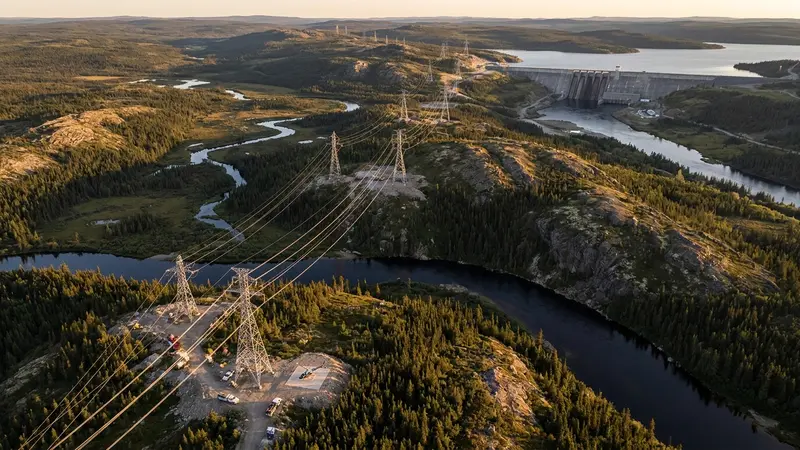
According to On-Site Magazine, the scope of planned work is substantial: a 2,700-MW Gull Island generating facility, up to 2,500 MW in added capacity at Churchill Falls, more than 660 kilometres of transmission lines serving the Churchill River projects, and a new 735-kV transmission line connecting Churchill Falls to Labrador City.
The federal government is also referring the Labrador Trough Clean Power, Critical Minerals and Infrastructure Corridor to its Major Projects Office for coordinated review. Nearly $20 million has been earmarked for feasibility and engineering work tied to mining-enabling infrastructure, including port expansion planning at Sept-Îles, transmission studies for Labrador West, an all-season access road and power connection for the Lac Knife graphite project, and infrastructure planning for the Kami iron-ore project. The Labrador West transmission study alone covers geotechnical investigations and front-end engineering to electrify existing mining operations, per On-Site Magazine.
Timelines stretch out for years. Gull Island isn’t expected online until 2036-37, and Churchill Falls upgrades are planned in stages, with one turbine coming online annually.
Analysis
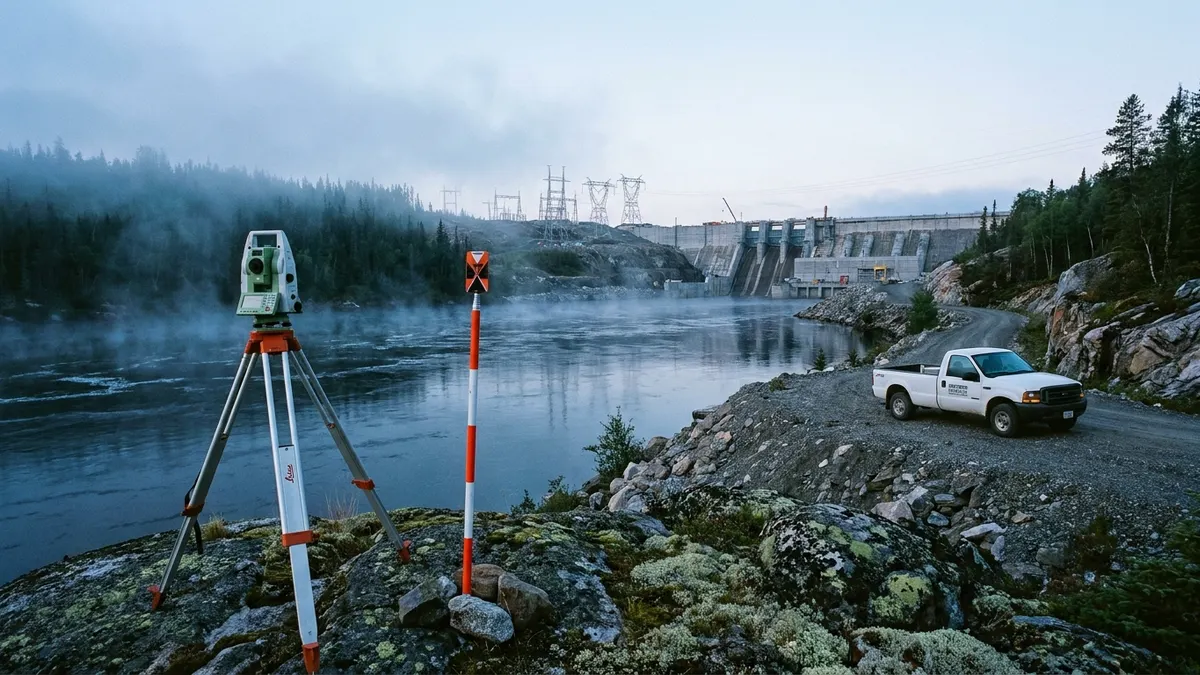
For subcontractors, the headline dollar figure matters less right now than the sequencing. On-Site Magazine notes that most of the immediate opportunity centers on engineering, feasibility, permitting and project development, not shovels in the ground. That’s typical for a project of this scale, but it means the companies positioned to win the earliest work will be geotechnical, survey, environmental and engineering firms, not necessarily heavy-civil crews.
That said, the sheer breadth of the package is what makes it notable. This isn’t a single dam or a single transmission line. It’s a bundled portfolio spanning hydro generation, 660-plus kilometres of new transmission, a 735-kV line, road access, port expansion and mining-site electrification, all in a region with limited existing construction capacity and a workforce that will need to scale up substantially.
That combination, long lead time plus wide scope, tends to reward contractors who get in early on the engineering and feasibility contracts, then use that relationship to move into the construction packages as they’re released. It also means camp infrastructure, logistics and workforce housing will become their own subcontracting category well before major civil work starts, given Labrador’s remoteness.
The staged nature of Churchill Falls, with turbines coming online one per year, suggests a rolling series of discrete construction packages rather than one massive mobilization. That’s a more manageable entry point for mid-sized contractors than a single monolithic tender, but it also means the work will stretch across many years, requiring companies to plan for a long-haul regional presence rather than a short-term project.
The mining-infrastructure component adds another layer. Projects like Lac Knife graphite and Kami iron-ore depend on the same power and transmission backbone being built for Churchill Falls and Gull Island, meaning delays in one segment could ripple into the others. Contractors bidding into this pipeline should track how the Major Projects Office coordinates these interdependent pieces.
What It Means for Subcontractors
- Geotechnical, survey and environmental firms should watch for near-term contracts tied to the Labrador West transmission study, which includes geotechnical investigations and front-end engineering work now underway.
- Transmission and E&I contractors should prepare for eventual bid packages on more than 660 kilometres of new transmission lines and the 735-kV Churchill Falls to Labrador City line, though these follow the current feasibility and engineering phase.
- Heavy-civil and hydro-construction contractors should track Churchill Falls’ staged turbine rollout, expected at roughly one unit per year, as a source of recurring, sequential construction packages rather than a single large tender.
- Road-building and site-access contractors should note the planned all-season access road and power connection for the Lac Knife graphite project as an early, discrete scope tied to the broader critical-minerals push.
- Camp, logistics and workforce-housing providers should position now given Labrador’s remoteness and the multi-year timeline, since support infrastructure will likely be procured ahead of major civil mobilization.
- Firms interested in the Gull Island project (2,700 MW, targeted for 2036-37) should treat the current phase as relationship-building through engineering and permitting work, with major construction packages years away.
- Companies should monitor the federal Major Projects Office, which is coordinating review of the Labrador Trough Clean Power, Critical Minerals and Infrastructure Corridor, for updates on how interdependent packages (power, transmission, mining infrastructure) are sequenced.