Canada Plans Up to 10 New Nuclear Reactors in $100 Billion-Plus Build Program
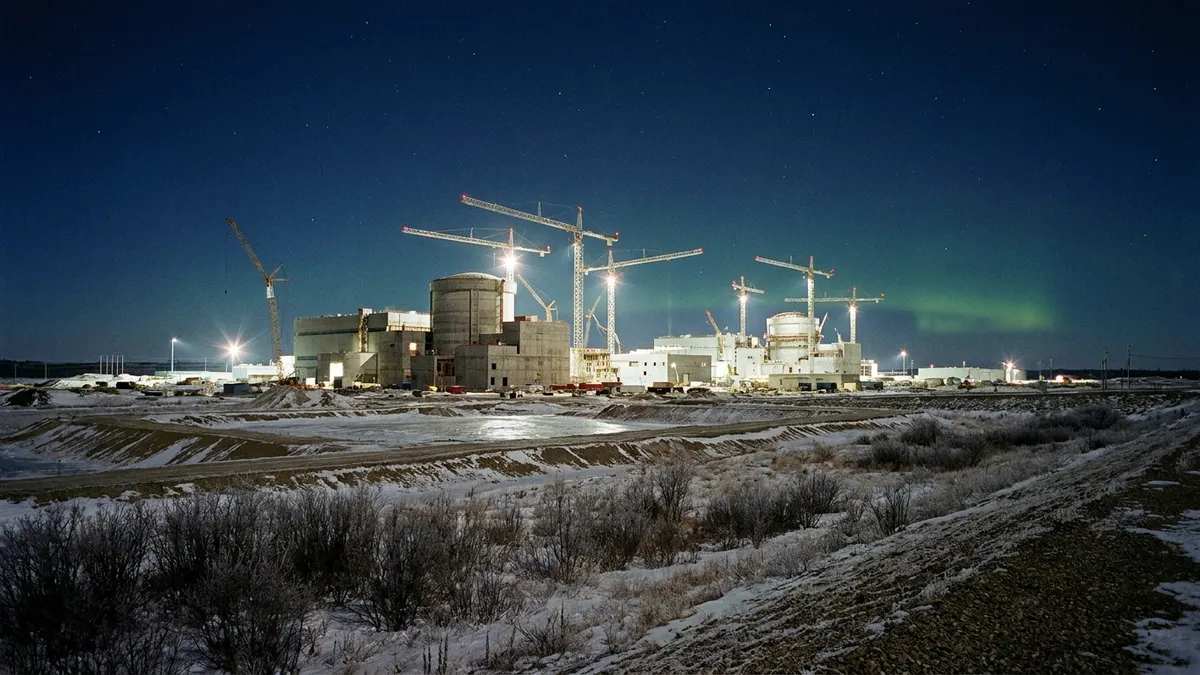
According to a Canadian Press report via Daily Commercial News, Canada’s Energy Minister Tim Hodgson released a national nuclear strategy Monday calling for up to 10 new reactors over the next 15 years, expanded Candu reactor exports, and a doubling of uranium exports, as the federal government targets doubling the country’s electrical grid capacity by 2050.
Market Impact
The strategy sets hard milestones: construction on two new large-scale reactors must begin by 2035, five more must be planned or under development by 2040, and at least one reactor outside Ontario must be under construction by 2035. A Canadian-made microreactor is to be finalized by 2035 and deployed to a remote community by the late 2030s.
A Natural Resources Canada official told media the reactor construction program could cost more than $100 billion, though the strategy does not specify a funding mechanism. The Canadian Infrastructure Bank and the Canada Growth Fund were pointed to as possible sources. Hodgson said the plan would double the existing 90,000 jobs in Canada’s nuclear sector “over the coming decades.” On the export side, Canada is targeting at least four new international markets for Candu reactors by 2040, with engagement across six to 10 new markets over the 15-year horizon. Thirty Candu reactors currently operate worldwide.
What It Means for Subcontractors
- Long-duration pipeline of work. Two large-scale reactors breaking ground by 2035 means heavy civil, mechanical, electrical, and specialty trades work is on the horizon, likely concentrated initially in Ontario with at least one project outside the province to follow.
- Remote and modular opportunities. The microreactor deployment to a remote community by the late 2030s opens a lane for contractors experienced in remote site logistics, camp services, and modular construction, areas where Western Canadian firms have a competitive edge.
- Workforce positioning. With sector employment targeted to double from 90,000, subcontractors should start tracking nuclear-specific certifications and labor pipeline requirements now. Qualified tradespeople will be in high demand well before shovels hit the ground.
- Watch the funding gap. The strategy acknowledges no clear payment structure for the $100 billion-plus program. Subcontractors should monitor how federal financing vehicles evolve before committing resources or pursuing prequalification on these projects.
- Export work is a secondary opportunity. The push into four or more new international Candu markets by 2040 could create overseas construction and service contracts for Canadian firms with nuclear project experience.