Arizona Locks In $11.3B Transportation Plan Ahead of Federal Highway Bill Uncertainty
According to Engineering News-Record, the Arizona State Transportation Board unanimously adopted an $11.3 billion five-year construction program on June 19, covering highway, bridge, and airport investments through fiscal year 2031.
Federal Uncertainty Shapes the Plan
The timing of the vote is notable. Current federal surface transportation authorities expire September 30, and Congress has yet to pass a successor bill. The House Transportation and Infrastructure Committee has approved the BUILD America 250 Act, a five-year reauthorization proposal valued at roughly $580 billion that emphasizes formula funding and long-term planning certainty. The Senate has not yet released its own version.
That gap shows up directly in Arizona’s numbers. ASTB Chairman Ted Maxwell pointed to a visible funding dip in 2029, telling the board before its vote: “everybody panics, but one of the things to remember is we don’t have any authorization for any federal funds in there. Those funds are not included in those out years. As we see what happens with that, those should come back to a more consistent” level.
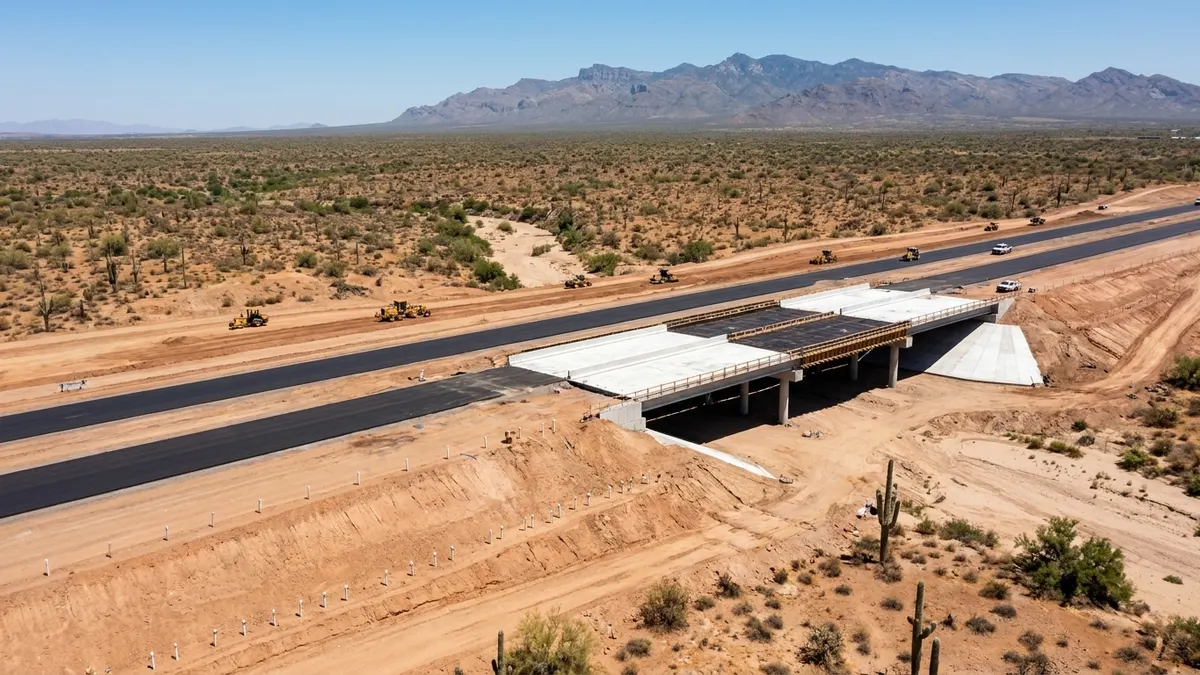
One example of a major capacity project in the plan is a wildlife crossing along the SR 260 Lion Springs widening east of Payson, according to the Arizona Department of Transportation.
What It Means for Subcontractors
- Pipeline is real, near-term. A five-year, $11.3 billion program provides a forward-looking bid schedule. Subcontractors in Arizona and the Mountain States should track ADOT procurement releases now, before competition heats up.
- Watch the 2029 dip. The funding gap tied to federal reauthorization uncertainty means project flow could slow in the out years. Backlog planning should account for this potential lull.
- Federal bill progress matters. The BUILD America 250 Act’s formula-funding emphasis would benefit state DOTs like Arizona. If the Senate moves a compatible bill, that 2029 dip could recover. Subcontractors should monitor congressional action through the September 30 deadline.
- Capacity and bridge work are focal points. Projects like the SR 260 corridor signal that roadway widening and infrastructure upgrades are priorities, pointing to demand for earthwork, civil, and specialty subcontractors across the state.