Alberta-Ottawa Carbon Deal Opens Door for West Coast Pipeline Construction by 2027
According to OilPrice.com, Canada has cleared a significant political hurdle toward building a West Coast oil pipeline, with a carbon pricing deal between Ottawa and Alberta potentially setting the stage for construction to begin as early as September 2027.
Background
The prospect of a West Coast oil pipeline has been a fixture of Canadian energy debate for years, repeatedly stalled by regulatory battles, environmental opposition, and federal-provincial friction. According to OilPrice.com, the governments of Canada and Alberta have now reached a carbon pricing arrangement that removes one of the key political obstacles blocking forward progress on the project. A reported target throughput of 1 million barrels per day has been associated with the pipeline concept. For Canadian oil producers, a tidal-water export route on the West Coast would represent a major shift, opening access to Asian markets and reducing dependence on US-bound pipelines.
Analysis
This development matters beyond Canada’s borders. The US remains the dominant buyer of Canadian crude, and any infrastructure that meaningfully diversifies Canada’s export options changes the pricing dynamic for Alberta barrels. A functioning West Coast export terminal would give Canadian producers leverage they currently lack, which could tighten Western Canadian Select differentials over time and affect how US refiners on the Gulf Coast and in the Midwest source and price heavy crude.
The September 2027 construction start, if it holds, is still years away, and Canadian pipeline projects have a well-documented history of slipping timelines. What’s different this time is that the federal-provincial political relationship appears to have shifted enough to produce a concrete agreement rather than continued standoff. Carbon pricing has been the fault line between Alberta’s oil-producing government and Ottawa for years, so a deal on that front is genuinely significant, not just procedural.
That said, a construction start date is not a completion date. Major pipeline builds in Canada have faced injunctions, indigenous rights consultations, and financing complications that stretched projects well past original schedules. Subcontractors and field service firms should treat 2027 as an entry point into a multi-year work cycle, not a single mobilization event.
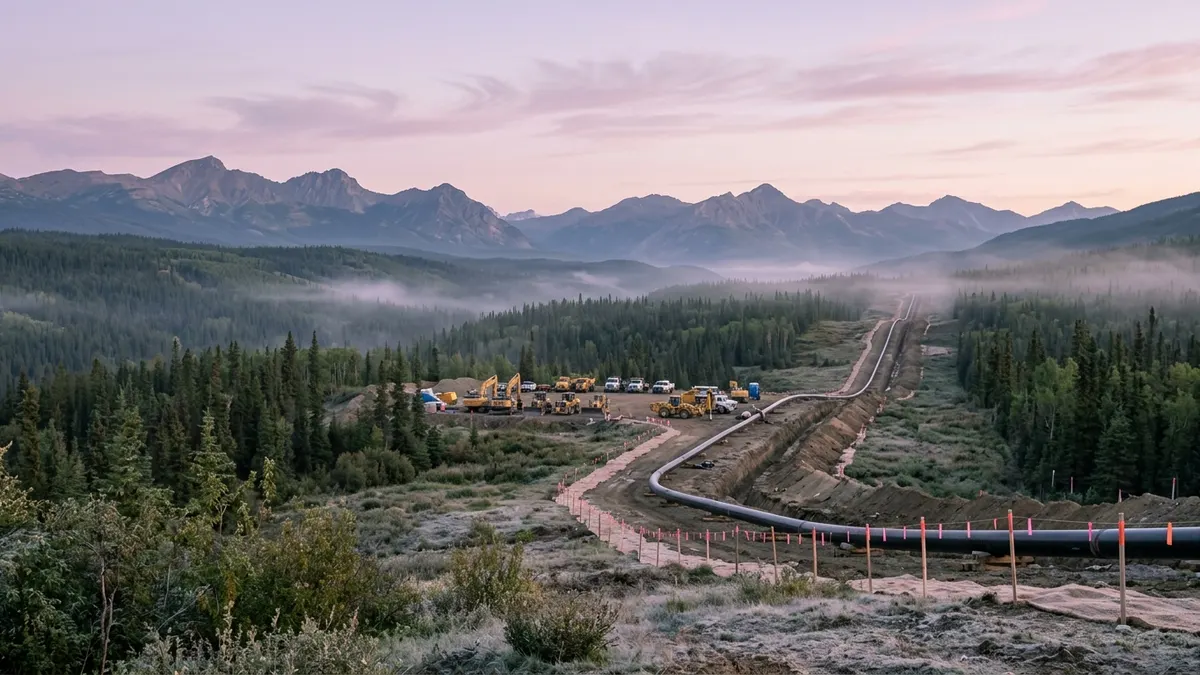
The scale implied by a 1 million bpd pipeline also signals the size of the contractor ecosystem that would be needed. Pipeline construction of that capacity requires sustained demand for welders, heavy equipment operators, hydrovac crews, integrity inspection services, environmental monitoring, civil construction, and camp accommodations across hundreds of kilometers of right-of-way. That work window, if the project advances, would be one of the larger Canadian field employment cycles in recent memory.
What It Means for Subcontractors
- A September 2027 construction start is a planning horizon, not a guarantee. Monitor regulatory and financing milestones closely before committing resources or personnel.
- Alberta-based pipeline contractors and field service firms should begin positioning now. Tier-1 EPC contracts will be awarded well ahead of ground-breaking, and subcontractor relationships are often locked in during that phase.
- Welding, coating, hydrovac, environmental inspection, and heavy civil crews will all be in demand. Firms with documented pipeline experience in Western Canada should be updating prequalification packages with major pipeline operators.
- Camp and logistics providers should watch this closely. A project of this scale in remote terrain will require significant accommodations, catering, and transportation infrastructure.
- US-based field service companies operating in Canada, particularly those with Alberta or BC presence, should treat this as a market expansion signal and evaluate whether to build or acquire Canadian capacity ahead of the work cycle.
- Indigenous consultation requirements will shape the project timeline and create opportunities for Indigenous-owned contracting firms and joint ventures aligned with affected communities.