Alberta GDP Forecast Upgraded to 2.7% as Oil Revenues Surge, But Capital Discipline Limits Field Work Opportunities
According to a CNW release of ATB Financial’s March 2026 Economic Outlook, Alberta’s economy is on track to outperform the rest of Canada this year, with real GDP growth revised upward to 2.7% for 2026, up from the 2.1% projection issued in December. The upgrade is driven by stronger-than-expected economic performance heading into the new year and a significant jump in oil prices tied to conflict in the Middle East. For field service companies working in Alberta, that headline number is both encouraging and misleading.
Background
ATB Financial, Alberta’s largest provincial financial institution, publishes regular economic outlooks that serve as a key benchmark for business planning across the province. The March 2026 edition arrives at a moment of genuine tension in global energy markets.
The conflict in the Middle East has rattled global supply chains and pushed West Texas Intermediate crude higher. ATB Financial revised its WTI forecast to an average of US$75 per barrel for 2026, a sharp increase from the US$61 per barrel projected in December. That price spike is expected to deliver a 6.0% increase in Alberta’s nominal GDP, generating substantial revenue gains for both provincial government coffers and corporate balance sheets.
Alberta oil production remains at an all-time high, and the Trans Mountain Expansion has opened new markets, with oil shipments to Asia exceeding $9 billion in 2025. Population growth is expected to slow to 1.1% as federal immigration policies reduce the number of non-permanent residents, but job creation remains solid at a projected 3.1% for 2026.
The Bank of Canada is expected to hold interest rates at 2.25% through 2026, and provincial inflation is projected to average 2.5%. On paper, this looks like favorable conditions for a busy field season.
Analysis
Here is where subcontractors need to read past the headline numbers. ATB Financial’s chief economist Mark Parsons was direct on this point: “While higher oil prices will drive a surge in revenues, we anticipate that producers will be cautious with their capital expenditures.” That one sentence carries more practical weight for field service companies than any GDP figure.
The reason for the caution is structural, not cyclical. Producers are sitting on strong cash flows from elevated oil prices, but they lack two things that historically unlock major capital programs: confirmed new pipeline capacity and confidence that the price spike will last. The war in the Middle East creates a so-called “Hormuz premium” on energy, but premiums tied to conflict are notoriously volatile. A ceasefire or diplomatic resolution could quickly erase the price gains that are currently driving Alberta’s upgraded forecast.
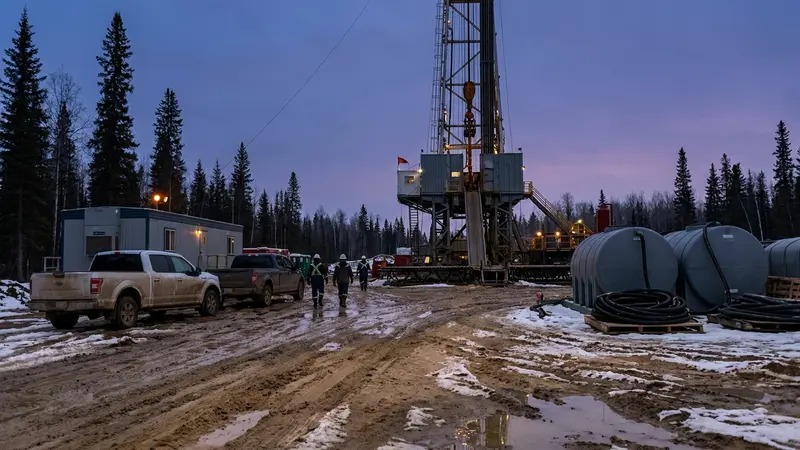
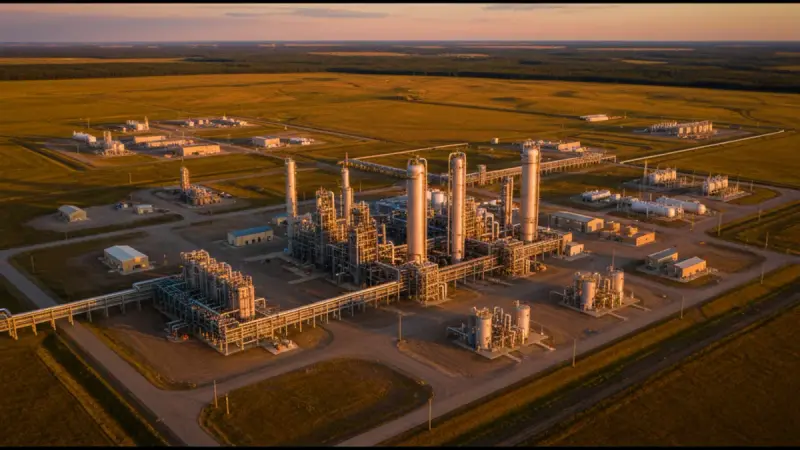
This dynamic produces an economy that looks strong from 30,000 feet but delivers uneven results on the ground. Revenue is flowing to producers and governments, but that money is not being recycled into new wells, new facilities, or expanded infrastructure at the rate a traditional energy boom would generate. For subcontractors, the difference matters enormously. Maintenance and sustaining capital work may hold steady, but the large-scale new project activity that drives peak revenue for service companies remains on hold.
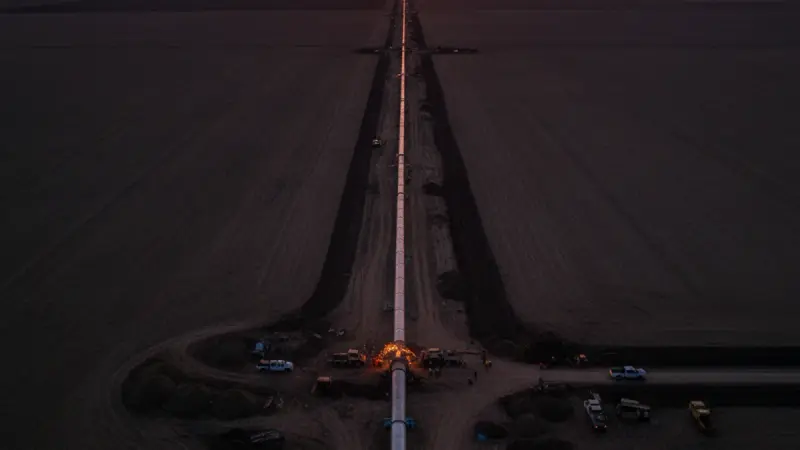
There is an important upside scenario, and Parsons flagged it. If new pipeline projects move forward and create a credible long-term runway for production growth, producers have both the cash and the incentive to accelerate capital spending. That would shift the equation significantly, generating real demand for drilling, facility construction, pipeline work, and the full range of field services that follow. Subcontractors operating in Alberta should track pipeline project announcements closely over the next 12 months, because that is the real trigger for a work surge.
The trade uncertainty piece adds another layer of complexity. U.S. tariff pressures, ongoing softwood lumber duties, and the upcoming CUSMA review are creating headwinds for Alberta’s manufacturing and export sectors. While oil and gas is not directly exposed to most of these pressures, the broader economic drag can slow infrastructure investment and reduce the appetite for large capital commitments.
Rising operating costs are also worth watching. The same global disruptions pushing oil prices higher are increasing costs for fertilizer and energy inputs across the agricultural sector, which has downstream effects on rural Alberta economies where many field service companies operate.
What It Means for Subcontractors
-
Don’t bank on a boom cycle yet. Higher oil prices are not translating into major new capital programs. Producers are holding the line on spending until pipeline capacity or price durability becomes clearer. Plan your 2026 workload around sustaining capital and maintenance, not greenfield growth.
-
Watch pipeline project news as your leading indicator. ATB Financial explicitly ties the upside forecast to new pipeline capacity. If a project gets a credible go-ahead, capital spending could accelerate quickly. Companies that are positioned and ready when that happens will capture the best contracts.
-
Price your bids with cost inflation in mind. Alberta inflation is running at a projected 2.5% for 2026, and global supply disruptions are pushing up input costs across energy, materials, and fertilizer sectors. Make sure your contract pricing reflects current and near-term cost realities, not 2024 numbers.
-
Strong hiring conditions work in your favor. Job creation at 3.1% and a declining unemployment rate signal a competitive labor market. If you need to grow your crew for anticipated work, start recruiting now before the labor pool tightens further.
-
US-focused subcontractors should track this market. For American field service companies considering Alberta expansion, the current environment offers reasonable near-term volume without the boom-bust volatility risk of a full cycle surge. The Trans Mountain Expansion has also diversified Alberta’s customer base beyond US refineries, which adds a degree of insulation from bilateral trade friction.