AI's Power Hunger Is Creating a Construction Boom Subcontractors Can't Afford to Miss
According to OilPrice.com, the power demands of artificial intelligence are outpacing the ability of the US grid to respond, and even the most prominent voices in the tech industry don’t have a clear solution. The piece frames the shortage as a structural problem, not a temporary supply hiccup, with the White House placing the infrastructure investment gap at $1.4 trillion.
Background
The core tension, according to OilPrice.com, is straightforward: AI data centers require enormous and continuous amounts of electricity, and the existing grid was not built to handle that load. The White House’s $1.4 trillion figure represents the scale of power infrastructure investment the country needs to meet projected AI-driven demand. That number puts the challenge in a different category than previous grid modernization conversations.
The article notes that even high-profile figures in the technology sector, including Elon Musk, have not offered a workable answer to closing that gap. That detail matters less as a headline and more as a signal: the power shortage problem is real enough that it’s drawing attention at the highest levels of both government and industry, yet no one has a quick fix.
For context, AI data centers consume power at a scale that bears little resemblance to traditional commercial or industrial loads. A single large data center can draw hundreds of megawatts continuously. When you multiply that across dozens of new facilities being planned or built across Texas, the Mountain West, and the Southeast, the cumulative pressure on transmission and generation infrastructure becomes severe.
Analysis
The $1.4 trillion figure from the White House is the most important number in this story, and it deserves to be treated as a demand signal rather than a policy talking point.
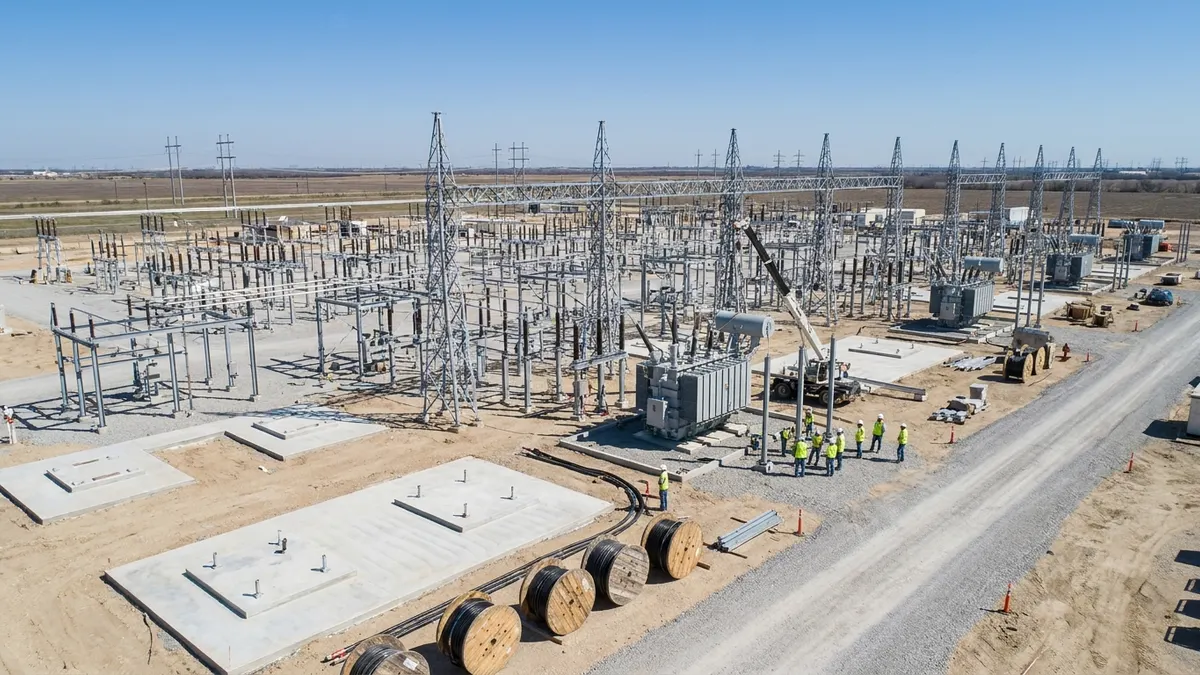
Infrastructure investment at that scale doesn’t happen through a single federal program. It happens through thousands of individual projects: new transmission lines, substation upgrades, natural gas peaker plant construction, grid interconnection work, and the civil and electrical contracting that ties all of it together. The organizations that actually build this infrastructure are utilities, independent power producers, and the subcontractors those companies hire.
That’s the part of the story that rarely gets told in coverage aimed at the finance or tech audience.
The AI power demand wave is arriving on top of an already stressed grid. Utilities across the US have been managing aging infrastructure while simultaneously trying to integrate renewable generation, which is often located far from load centers. The addition of massive, concentrated, around-the-clock data center loads in specific regions is accelerating the timeline on upgrades that were already overdue.
Texas is a useful case study. The ERCOT grid has faced well-documented capacity concerns, and the state is simultaneously one of the top targets for new data center investment, driven by land costs, tax incentives, and available power corridor access. That combination creates a concentrated demand for transmission buildout, substation construction, and generation-side work across a geography where a large share of the field services industry already operates.
The same dynamic is playing out in the Rockies corridor, the Southeast, and, to a growing degree, in the Canadian provinces of Alberta and British Columbia, where power infrastructure investment is accelerating alongside both AI and LNG-driven industrial load growth.
The article’s point about the absence of easy answers is, in some ways, the most telling part. When a problem is recognized at the White House level but lacks a defined solution, it typically means the buildout will be messier, faster, and more expensive than a planned rollout. For subcontractors, messy and fast usually means premium rates for crews who are ready to move.
What It Means for Subcontractors
-
Electrical and utility subcontractors are the direct beneficiaries. Transmission line construction, substation installation, and grid interconnection work are skilled trades businesses. If $1.4 trillion in infrastructure investment materializes over the next decade, a significant share of that spend flows through subcontract labor.
-
Position now, not after the RFPs hit. Utility primes and EPCs are already building their approved vendor lists for data center power corridor projects. Subcontractors who aren’t on those lists before the work begins will struggle to get a foot in the door once demand peaks.
-
Texas and the Mountain West are the near-term hot spots. If your crews are operating in ERCOT territory or the broader Southwest power corridor, the pipeline of grid upgrade work is already building. Watch for transmission and substation project announcements from major utilities in those regions.
-
The lack of a clear solution creates urgency, not delay. When the power gap is this large and this visible, utilities face regulatory and political pressure to move fast. That compresses planning timelines and increases the likelihood of premium contract terms for contractors who can mobilize quickly.
-
Natural gas generation construction is part of this story. AI data centers need firm, dispatchable power. That means gas peaker and combined-cycle projects are getting a second look across multiple markets. Civil and mechanical subcontractors with power generation experience should be watching that pipeline closely.
-
Workforce capacity is the constraint. The shortage isn’t just in power generation, it’s in the trained crews to build the infrastructure. Subcontractors who invest in electrical apprenticeship pipelines and journeyman retention now will be in a stronger negotiating position when the work ramps up.