5,700-Ft HDPE Pullback Under James River Resets Long-Bore Benchmark
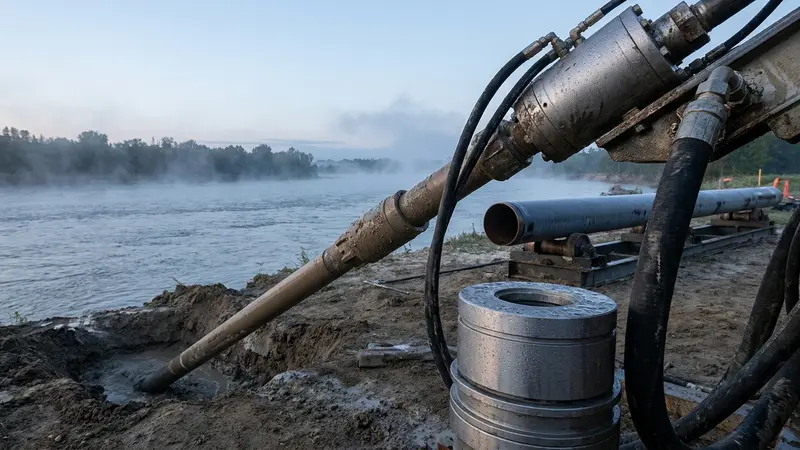
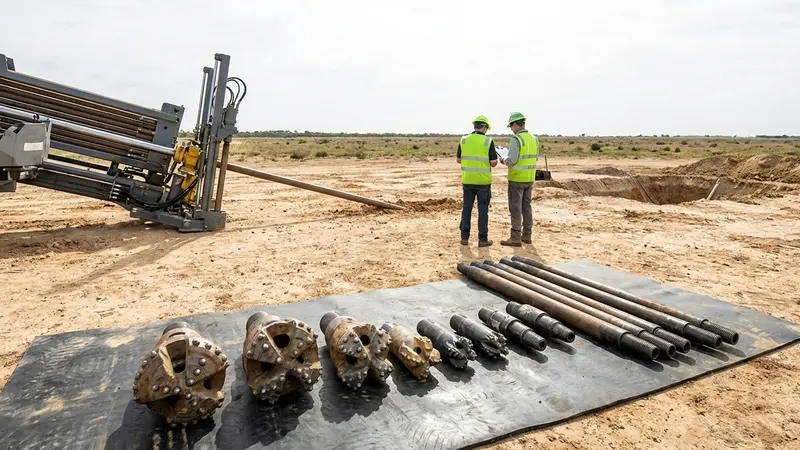
A 5,700-ft pullback of 42-in HDPE beneath the Newport News Shipping Channel, a team-claimed record for that pipe size, earned the James River Crossing ENR’s MidAtlantic Project of the Year.
Project Details
The owner, Hampton Roads Sanitation District, awarded the design-build contract to Garney and Dewberry in April 2022. The job includes more than 4.5 miles of HDPE force main beneath the James River. HRSD required HDPE for a 75-year service life in brackish water. Dewberry’s Paul Longo said coated steel was dropped because coating failure risk was too high.
The district’s original concept was a 3,200-linear-ft crossing with two marine platforms. Garney’s Jeff Seal said one platform would have congested an area near a fuel oil depot and two docked Navy vessels. Extending the bore to eliminate that platform cut in-water risk and saved more than $10 million. It also raised installation risk. Per ENR, the longest known HDD of 42-in HDPE at this wall thickness had been roughly 4,000 ft.
The team’s fixes were mostly mechanical. A custom German-engineered pipe pusher on the marine platform added up to 750,000 lb of force to supplement the drill’s pull. The team also worked with the manufacturer to tighten ovality tolerance from the standard 5% to 3%. Supplemental geotechnical borings and a full pilot drill came before the final alignment was set. The pullback was a single-shot operation with no margin for a restart. ENR reports the pullback ran roughly 22 to 24 hours, with its summary and body text giving slightly different figures.
The project finished in January 2026 at $139 million, $14 million under the original proposal price. Realigning around leased oyster beds saved about $2 million. Thicker-walled pipe in shallow water eliminated articulated concrete block mats and saved $1.8 million.
What It Means for Subcontractors
- HDD contractors: Pipe pushers have now been used successfully on a 5,700-ft HDPE pull. If you bid long, large-diameter HDPE crossings, price a supplemental pusher (this one was rated to 750,000 lb) and the platform it needs.
- Pipe specs: Expect pressure to negotiate tighter ovality, 3% versus the standard 5%, on long pulls. Ask suppliers early whether they can hold it and what it costs.
- Geotechnical and pilot-hole scope: Supplemental borings plus a full pilot drill were completed before committing to the alignment. Build both into schedules and pricing for crossings approaching this length.
- Marine contractors: Savings came from eliminating a platform, rerouting around oyster beds and dropping mattress placement. Offering design-stage alternatives that cut in-water work can win design-build packages.
- Early teaming: Garney and Dewberry brought trenchless, marine and geotechnical expertise together before the RFP was issued. Trenchless and marine subs can pitch themselves to design-build teams at that stage, not after award.
- Prequalification (our inference, not stated by ENR): Owners may start asking for proof of comparable-length HDPE pulls, and for single-shot contingency plans, on long crossings. Keep case-study data on pull lengths, loads and crew coordination ready.
ENR does not say what rig, drilling fluid program or mud-management approach was used, so those details are not covered here. The project is complete, so no subcontract packages remain open.