Fourth Trench Collapse in Two Months Hits Southeast Michigan, Worker Rescued
According to Equipment World, a 50-year-old worker was rescued September 2 after a trench collapsed at a residential sewer extension project in Oxford Township, Michigan, marking the fourth trench-collapse emergency in southeast Michigan since June 30.
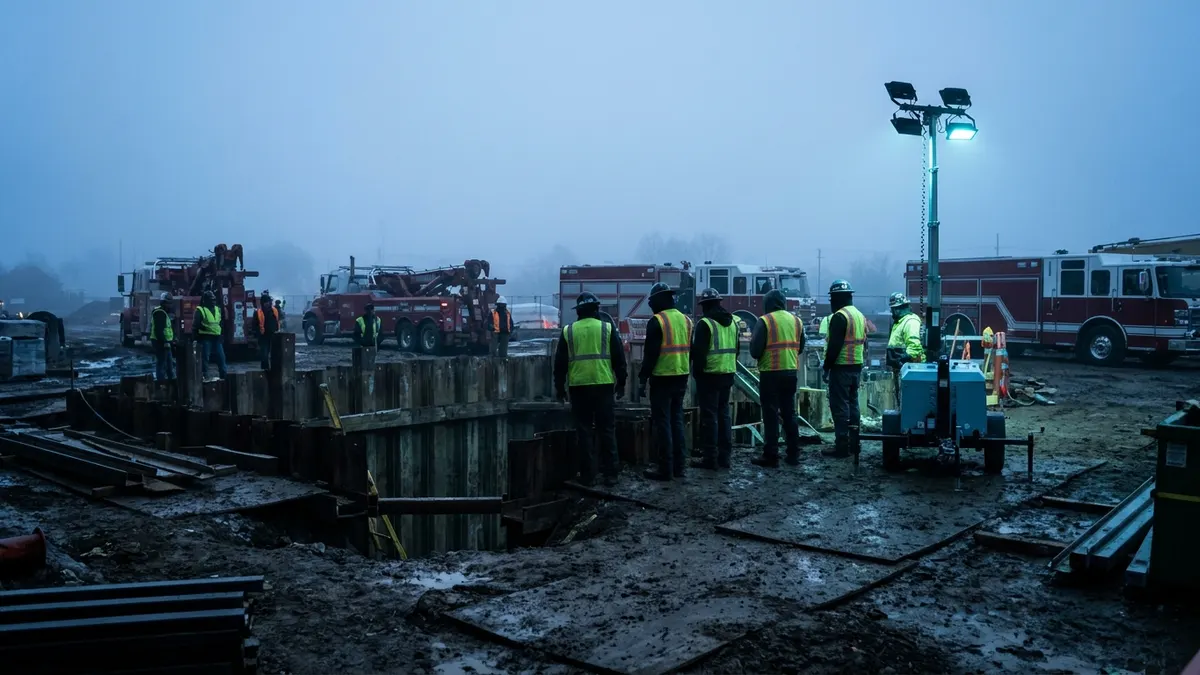
The worker was buried from the waist down when the trench gave way at about 3:45 p.m. It took a team of roughly 100 first responders more than four hours to extricate him and airlift him to a trauma center, according to the Oakland County Sheriff’s Office. He remained alert throughout the rescue and insisted on climbing out of the trench under his own power once freed. He was later released from the hospital after a precautionary evaluation.
Oxford Fire Chief Matthew Majestic, who spoke with the worker throughout the operation, described the man’s composure: “He was in pretty good spirits, all things considered.” A Southfield Fire Department crew that assisted in the rescue called it one of the more difficult trench operations they’d responded to, citing the trench’s depth and the machinery staged around it.
This is the second trench collapse in Oakland County alone. A 35-year-old man was rescued June 30 in Oxford Township while gluing pipe together for a septic system when a trench wall gave way. A 25-year-old man was rescued July 1 in a separate collapse in Orion Township, and a 30-year-old man was killed in a fatal trench collapse in Handy Township during that same period. The Michigan Occupational Safety and Health Administration (MIOSHA) is investigating all four incidents, and all cases remain open and active.
Bill Shuster, a professor of civil and environmental engineering at Wayne State University, told reporters that dry soil conditions, consistent monitoring, keeping barrier tape farther back from trench edges, and regulated ingress and egress can all help prevent further collapses.
What It Means for Subcontractors
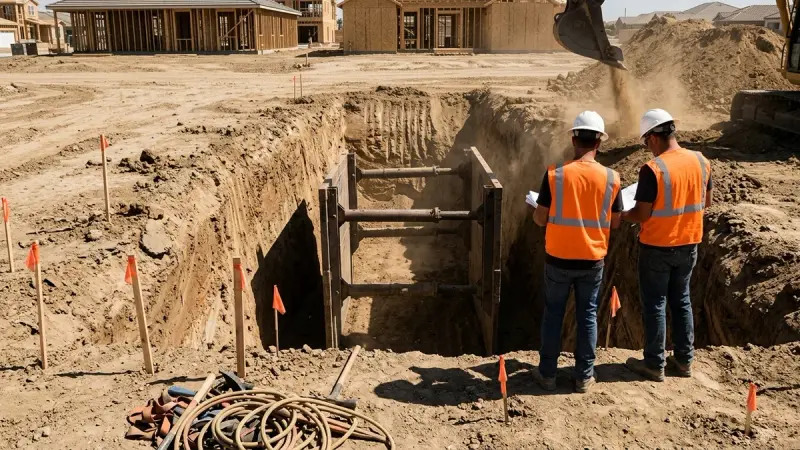
Four trench collapses in one region within about ten weeks, one of them fatal, is a pattern, not a run of bad luck. Underground and utility subcontractors working in southeast Michigan, and anywhere with similar soil conditions, should treat this as a prompt to audit shoring and trench box compliance now rather than wait for a MIOSHA inspector to do it. OSHA’s excavation standard (29 CFR 1926.652) requires protective systems for trenches five feet deep or greater, and crews should confirm trench boxes are rated for actual soil conditions and depth, not just the job spec sheet. With four open MIOSHA investigations tied to the same region, expect heightened enforcement attention and possible citations to ripple through nearby jobsites in the coming months.