Washington Eyes New Certification Rules for Forklifts Lifting Suspended Loads
Washington’s Department of Labor & Industries is drafting rule changes to clarify certification and qualification requirements for forklift operators lifting suspended loads on construction sites, Safety+Health Magazine reports.
Market Impact
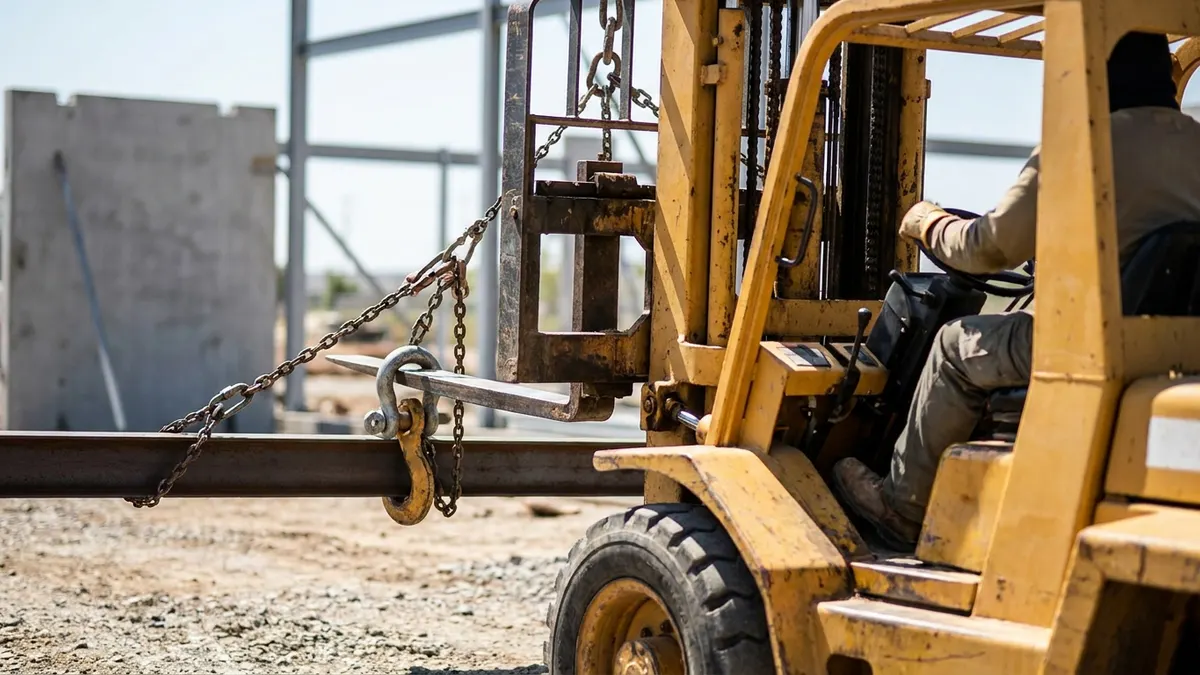
The rulemaking follows a petition L&I received in December, after the agency finalized an update to its cranes, rigging and personal lifting rule in August 2025 to keep pace with federal OSHA standards. According to the Associated General Contractors of Washington, the sticking point in that update is language that can be read to classify a forklift as a crane whenever it raises, lowers, or horizontally moves a load using a hook or shackle, a distinction that carries very different certification burdens for operators.
L&I says the new rulemaking will address definitions in Chapter 296-155 WAC, Part L, and make what it calls “housekeeping changes.” Potential updates on the table include spelled-out responsibilities for lift director and rigger qualifications, revised inspection and documentation requirements for consistency, clearer proof load testing and certification standards, and defined requirements for critical lift plans and operational aids.
What It Means for Subcontractors
- Crane and forklift subcontractors working construction sites in Washington should review current lift director and rigger qualification practices now, since the rulemaking may formalize documentation standards that go beyond what’s currently required.
- Firms using forklifts for suspended-load work, common in steel erection, precast, and mechanical trades, should confirm with L&I or AGC of Washington whether their current operator certifications would satisfy a crane-level standard if the “forklift as crane” interpretation is written into final rule.
- Subs should audit inspection and proof load testing paperwork now. If the rulemaking tightens documentation and certification consistency requirements, contractors with outdated inspection logs could face compliance gaps once the rule is finalized.
- Companies with critical lift plans on file should review them against the proposed clarity requirements for operational aids, since vague or informal lift plans may not meet a more defined standard once adopted.
- Track the rulemaking docket through L&I directly rather than waiting for a final rule notice. Getting comments in during the public process is the best chance to shape how “forklift versus crane” gets defined before it becomes binding.