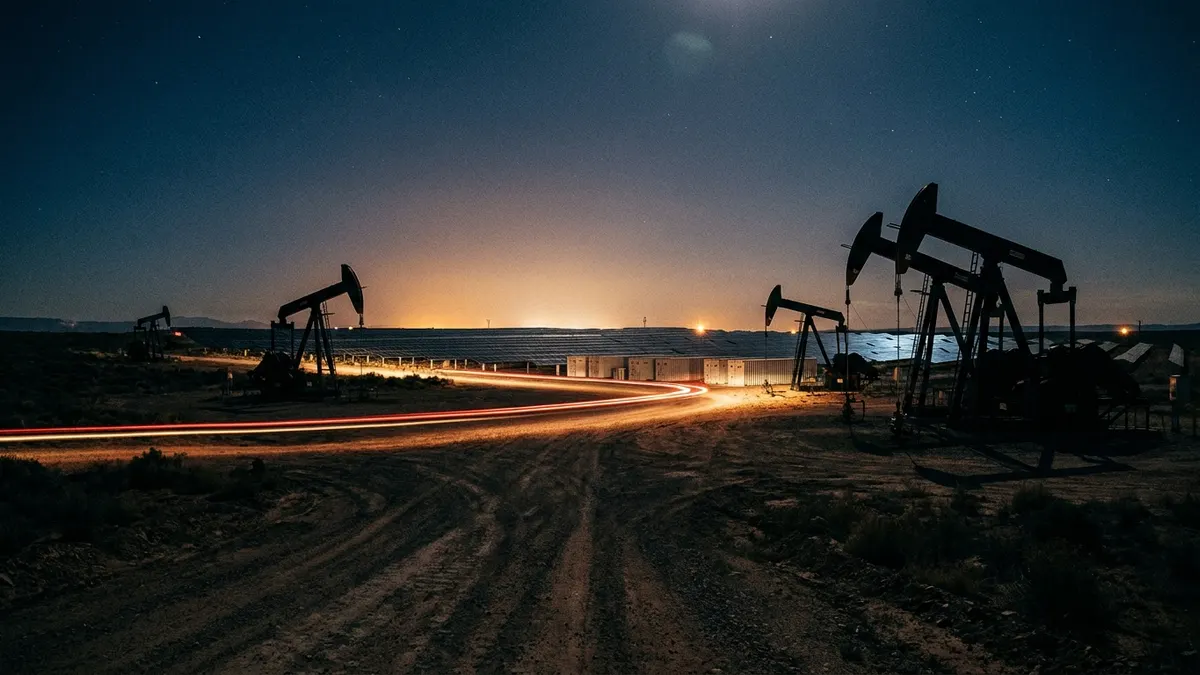
Utah's Largest Solar-Plus-Storage Project Goes Online in Emery County
According to Power Engineering, rPlus Energies has started commercial operations at Green River Energy Center, a 400 MW solar and 400 MW/1,600 MWh battery storage project in Emery County, Utah.
Market Impact
The facility is now the largest solar-plus-storage project within PacifiCorp’s six-state service territory and represents more than $1 billion in capital investment. rPlus Energies expanded the project’s original design, quadrupling battery storage capacity from 400 MWh to 1,600 MWh after amending its power purchase agreement with PacifiCorp in 2024.
Financing included a tax equity commitment exceeding $500 million from RBC Community Investments, along with more than $1 billion in construction debt financing. The project ties into Utah Governor Spencer Cox’s Operation Gigawatt initiative, which aims to double the state’s energy production over the next decade. “Green River Energy Center represents the kind of large-scale energy investment we need to deliver reliable energy, support rural Utah, and help power the next generation of prosperity across our state,” Cox said. The project is expected to generate more than $55 million in property taxes for local schools and public services, and project partners committed $375,000 in scholarships for local students pursuing careers in the region.
What It Means for Subcontractors
- Large-scale solar and storage builds of this size require significant local labor. During construction, the project employed hundreds of workers, including several local contractors for key components like Megapack delivery and installation.
- O&M contracts for battery storage systems and solar arrays of this scale represent long-term recurring work opportunities, not just one-time construction jobs.
- Electrical, civil, and heavy equipment subcontractors in rural Utah and the broader PacifiCorp territory (spanning six states) should watch for similar project announcements tied to Operation Gigawatt, since the state is targeting continued large-scale energy build-out over the next 10 years.
- Workforce development tie-ins, like the $375,000 in local scholarships, signal a push to build regional labor pipelines. Subcontractors that invest in training local crews may have an edge on future bids in the region.
- Financing structures involving tax equity and construction debt at this scale suggest more utility-scale renewable projects are bankable in the Mountain West, a signal for subcontractors to build relationships with developers like rPlus Energies ahead of future project cycles.