Two Traffic Plans, One Work Zone: Closing the Safety Gap Subcontractors Miss
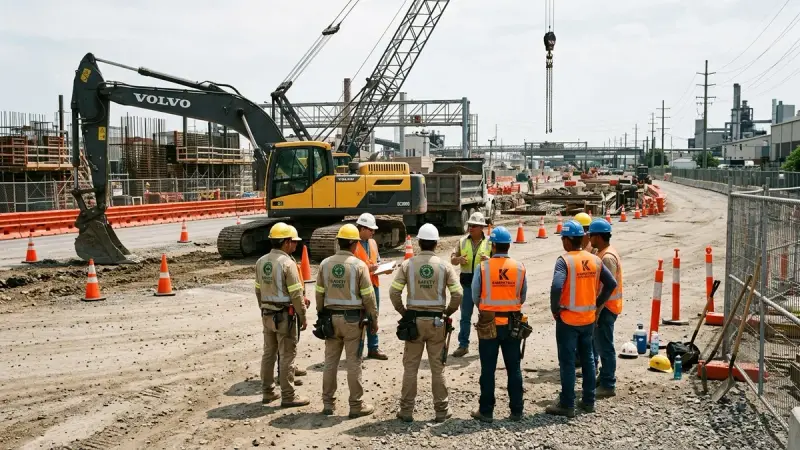
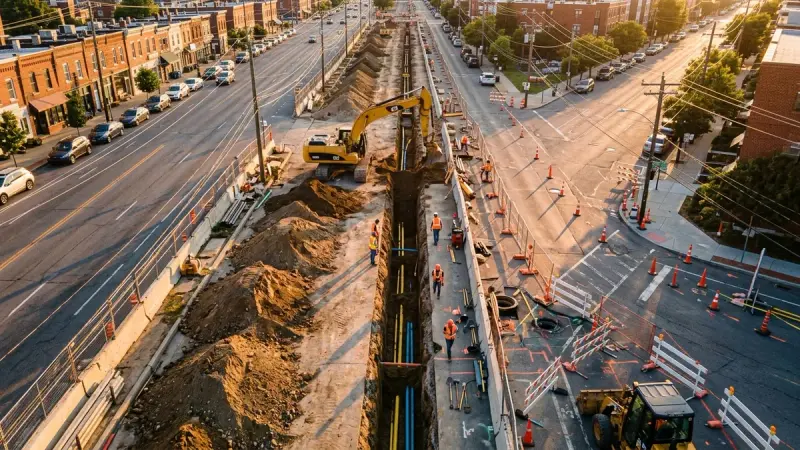
Work zone crashes keep killing people even on projects where the signs, tapers and channelizing devices are technically correct, and Construction Executive’s new analysis pinpoints why: most safety programs are built around one plan when they need two. A temporary traffic control (TTC) plan manages the public, drivers, pedestrians, cyclists. A separate internal traffic control plan (ITCP) is supposed to manage equipment, delivery trucks and crews working inside the barrier. When those two plans aren’t designed together, and the connection points between them aren’t explicitly controlled, predictable gaps open up, and workers pay for it.
Background
According to Construction Executive, the data confirms this is a two-sided problem, not one. In 2024, 850 people were killed in work zones nationally, including 673 drivers and passengers and 169 pedestrians and pedalcyclists. Speeding was a factor in 34% of fatal work zone crashes, rear-end collisions accounted for 22%, and large trucks or buses were involved in 31%. More than half of fatal work zone crashes happened at night.
That’s the public-facing side. The internal side tells a different story. From 2011 through 2022, 1,462 fatal occupational injuries occurred at road construction sites, and 44% involved a worker struck by a vehicle inside the work zone. In a review of 75 fatality investigations covering 78 deaths, 55% of the incidents traced directly back to construction vehicles or equipment operating inside the work zone, not the traveling public.
Construction Executive also flags a compliance deadline: updated federal rules require agencies to implement compliant positive-protection policies by December 31, 2026, which will push new bid documents to specify protection requirements more explicitly than in the past.
Analysis
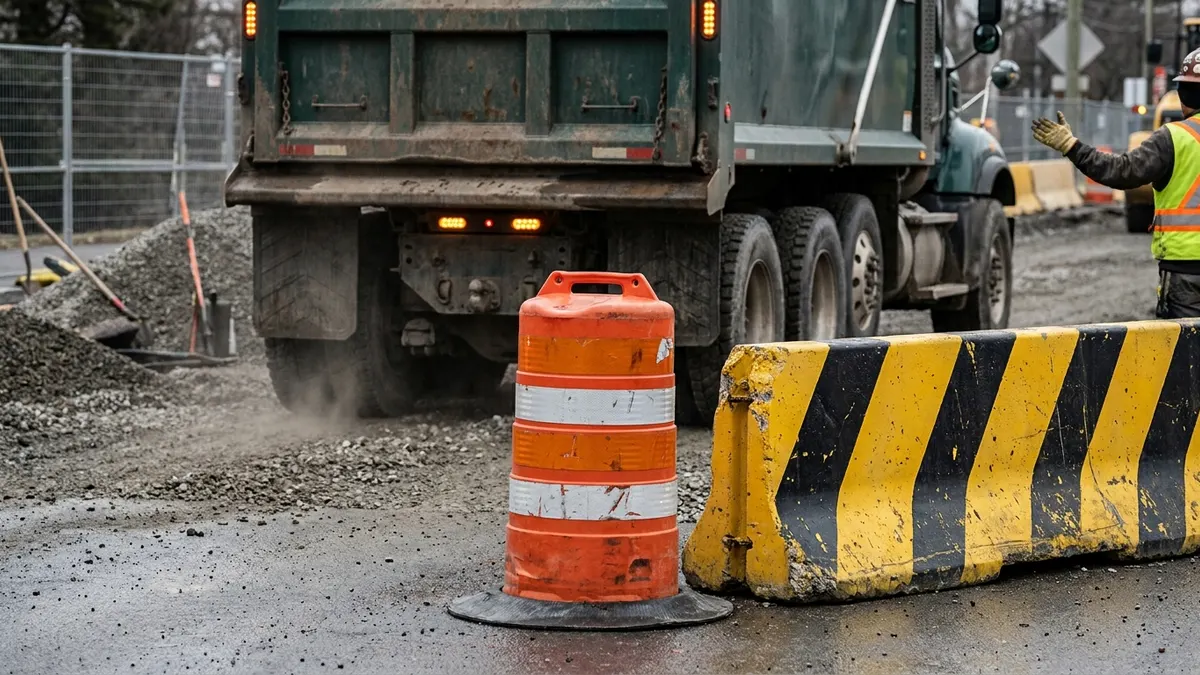
The uncomfortable finding here is that a work zone can be fully compliant on paper, correct signage, properly placed tapers, all the required channelizing devices, and still fail, because compliance addresses the TTC side of the barrier and says almost nothing about what’s happening inside it. A dump truck backing through a paving crew, or a growing traffic queue nobody’s tracking beyond the advance warning area, isn’t a TTC failure. It’s an ITCP failure, and ITCP failures are the ones killing workers at a higher rate than motorist intrusions do.
Construction Executive’s framing around a hierarchy of controls matters for how subs should think about spend. The instinct on a tight bid is to add more devices, more cones, more warning signs, because it’s cheap and visible. But the analysis makes clear that counting devices tells you nothing about whether the highest-energy hazards are actually controlled. Eliminating exposure (full closures, detours, off-peak scheduling) and separating people from moving vehicles (positive protection, buffer space, shadow vehicles) do more to reduce risk than adding another layer of detection and warning technology on top of a poorly staged site. Technology like queue detection systems and intrusion alarms only shortens reaction time to a hazard that already exists; it doesn’t remove the hazard. An intrusion alarm, notably, only warns a worker after a boundary has already been crossed. It doesn’t contain or reduce the exposure that led to the crossing.
For subcontractors bidding public infrastructure work, the 2026 positive-protection deadline is a signal to read upcoming bid documents carefully. Agencies rewriting their own policies will likely push protection requirements, and the associated costs, onto contract language that didn’t exist in prior lettings. Subs who assume “the DOT handles TTC, we handle the work” are the ones most exposed when an ITCP gap causes an incident, because ownership of ITCP design, access-point control and field verification is often not clearly assigned in the contract at all.
What It Means for Subcontractors
- Before mobilizing, confirm in writing who owns TTC design, ITCP development and field verification, whether that’s the GC, the DOT, or your own crew. Don’t assume the traffic control subcontractor’s scope covers internal equipment routing.
- Map access and egress points between the public roadway and the internal workspace as a distinct task. This is where dump trucks, deliveries and paving crews collide, and where the source’s data shows the highest share of worker fatalities originates.
- If your scope includes night work, budget for the added exposure. Construction Executive’s data shows more than half of fatal work zone crashes occur at night, which should factor into shift planning and lighting/positive-protection costs on any nighttime paving, striping or utility packages.
- Review upcoming DOT bid packages for positive-protection requirements ahead of the December 31, 2026 compliance deadline. Pricing and equipment lead times (barrier systems, shadow vehicles) should be locked in before that date, not after.
- Push back on safety metrics that only count devices installed. Ask project owners or GCs whether exposure hours, queue-threshold exceedances and unresolved ITCP deficiencies are being tracked, since these leading indicators catch problems device counts miss.
- For crews working adjacent to live traffic without a physical barrier, confirm queue detection or warning technology is scoped in the contract, and treat it as a supplement to separation controls, not a substitute for them.