Texas RRC Hits Oil and Gas Operators With $1.1 Million in Enforcement Penalties
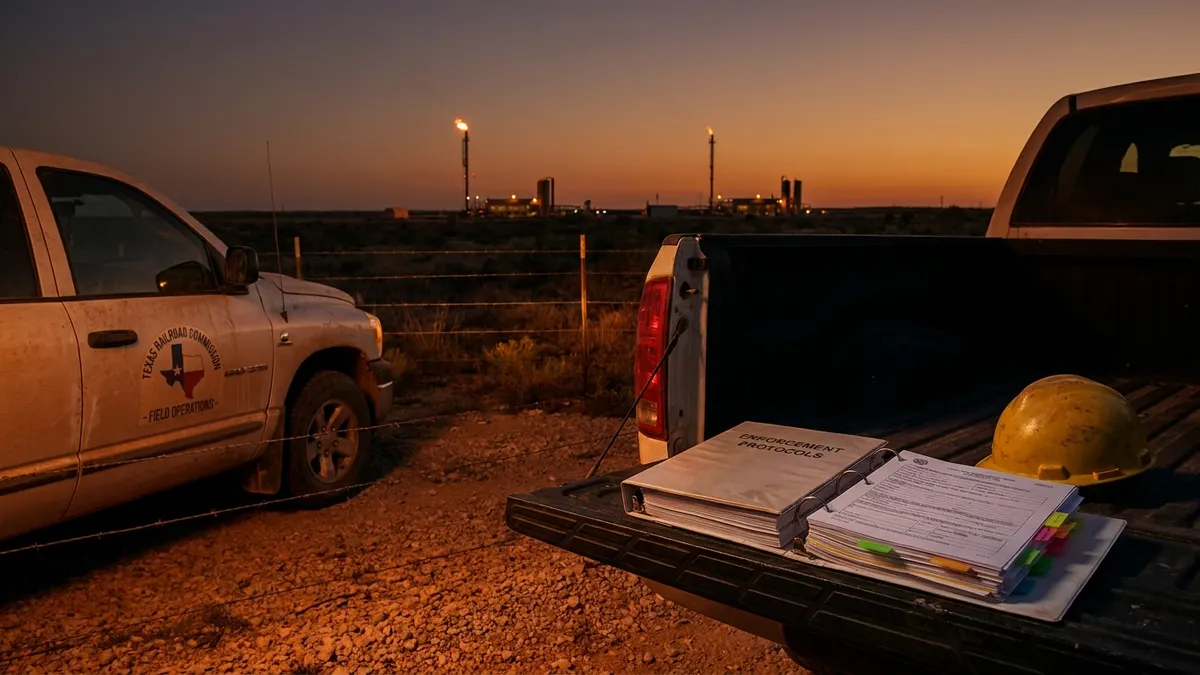
According to World Oil, the Railroad Commission of Texas (RRC) assessed more than $1.1 million in enforcement penalties against oil and gas operators and businesses during its most recent open meeting, covering drilling, production, and intrastate pipeline operations statewide.
Enforcement Breakdown
Commissioners approved a combined $1,111,897 in fines through two penalty tracks. Default orders, issued against operators who failed to appear at enforcement proceedings, accounted for $509,905 in penalties. Agreed orders, which require operators to actively address compliance issues as part of resolving enforcement actions, made up the remaining $601,992.
The RRC is the primary regulatory authority for Texas oil and gas operations, including drilling, production, and intrastate pipeline safety. These actions were approved as part of the agency’s regular compliance cycle. Per Commission procedures, the decisions become final unless a timely motion for rehearing is filed.
The split between default and agreed orders is worth noting. Default penalties tend to be larger and more damaging, since they reflect operators who did not engage with the process at all. Agreed orders, while still costly, suggest at least some level of operator cooperation and corrective action.
What It Means for Subcontractors
- Show up. Default orders made up nearly half the total penalty dollars assessed. Ignoring RRC enforcement proceedings doesn’t make the problem go away, it makes it more expensive.
- Know your compliance exposure. Subcontractors operating in Texas should understand which RRC rules apply to their scope of work, whether that’s drilling, completions, production equipment, or pipeline work.
- Document corrective actions. Agreed orders require operators to address violations. If your work is tied to an operator’s compliance plan, delays or incomplete work on your end can complicate their ability to resolve enforcement actions.
- Enforcement is routine, not rare. The RRC conducts these penalty reviews on a regular meeting schedule. This isn’t a crackdown, it’s standard operations, which means the risk of fines is a constant feature of working in Texas oil and gas.