SOLV Energy Acquires Substation Contractor RWE, Signaling Bigger Push Into Grid Infrastructure
According to Solar Power World, SOLV Energy has entered into an agreement to acquire Roberson Waite Electric (RWE), a California-based substation construction, testing, and commissioning company founded in 1975. The deal is expected to close by the third quarter of 2026, and RWE will continue operating under its own name with its existing leadership and customer relationships intact.
For field service companies working in solar, storage, or high-voltage infrastructure, this acquisition is worth watching. It reflects a broader shift in how major energy EPCs are positioning themselves, and that shift has real consequences for the subcontractors who fill in the gaps around them.
Background
RWE is a multi-generation family business headquartered in Anaheim, California, with decades of work supporting major electric utilities in Southern California. According to Solar Power World, the company is recognized specifically for its execution at brownfield sites and in dense urban environments, and for maintaining consistent, repeat relationships with regulated utility customers.
SOLV Energy, for its part, is already a significant player in large-scale solar generation, energy storage, and high-voltage infrastructure. CEO George Hershman described the acquisition as advancing SOLV’s strategy to “build a diversified, scalable energy and infrastructure services platform aligned with utility investment.” James Waite, RWE’s CEO, pointed to expanding customer service capacity as grid infrastructure investment continues to grow.
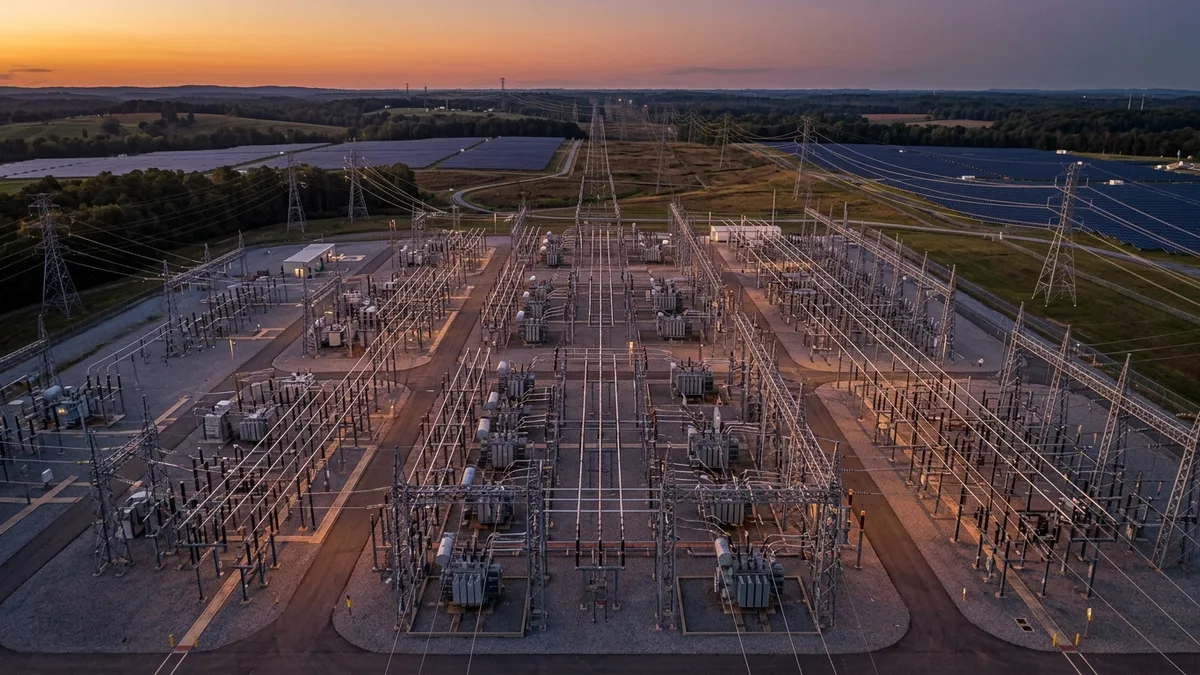
The transaction adds substation construction and commissioning to SOLV’s existing capabilities, giving the company a more complete lifecycle offering from solar generation through grid interconnection and long-term operation.
Analysis
This deal is one of the cleaner illustrations yet of where large solar EPCs are headed. For years, major contractors in the solar space operated primarily as generation-side builders, constructing panels and inverter infrastructure while leaning on separate utility contractors for substation and interconnection work. SOLV is now collapsing that boundary by bringing substation expertise in-house.
The strategic logic is straightforward. Grid interconnection has become one of the most stubborn bottlenecks in the US energy build-out. Queues are long, timelines are unpredictable, and projects that can’t demonstrate clear interconnection pathways struggle to move forward. An EPC that controls both the generation build and the substation work has a meaningful advantage in managing those timelines and in presenting utilities with a single accountable partner.
The regulated utility market is also a deliberate target here. Solar Power World notes that the acquisition “supports SOLV’s expansion into the regulated utility market,” which is a different business than merchant or contracted solar development. Regulated utilities operate on longer planning horizons, prioritize trusted contractor relationships, and tend to award repeat work to proven vendors. RWE’s existing foothold with Southern California utilities is not just a list of past projects; it’s an established position in a procurement relationship that is genuinely difficult to break into as an outsider.
The retention of RWE’s leadership team and operating model is also notable. Acquisitions in the field services space frequently falter when the acquiring company imposes its own systems and culture on a business that runs on craft knowledge, local relationships, and operational consistency. Keeping the RWE team intact suggests SOLV understands that the value here is as much in the people and relationships as in the equipment and capabilities.
Looking at the broader market, this acquisition fits a pattern visible across energy infrastructure right now. EPCs and large service companies are moving to capture more of the project value chain, particularly in areas tied to grid modernization. Substations, transmission interconnects, and high-voltage switching infrastructure are all seeing increased investment driven by renewable integration, data center load growth, and utility resilience mandates. Companies that can deliver across that full scope are increasingly preferred by utilities looking to reduce vendor complexity.
What It Means for Subcontractors
-
Scope compression is real. When a major EPC acquires a specialized subcontractor, some of the work that previously flowed to independent firms gets absorbed in-house. Subcontractors who have been relying on SOLV or similar EPCs for substation-adjacent work should assess how exposed they are to that kind of consolidation.
-
Utility relationships are a defensible asset. RWE’s value in this deal comes significantly from its long-standing, repeat relationships with regulated utilities. Independent subcontractors with similar direct utility relationships are harder to displace than those who work exclusively through EPCs.
-
Brownfield and urban site experience commands a premium. Solar Power World specifically highlighted RWE’s reputation for brownfield and dense urban execution. Subcontractors who can credibly claim that same capability are positioned for a different class of project than greenfield-only operators.
-
The grid infrastructure opportunity is real, but the window to establish position is narrowing. As large EPCs move to capture substation and interconnection work, independent field service companies that want a seat at the table should be building utility relationships and relevant technical credentials now, not after the consolidation wave has passed.
-
Watch the close date. The deal is expected to close by Q3 2026. Any subcontractors currently working with RWE or bidding on projects where RWE is involved should clarify how contractual relationships will be handled post-acquisition.