Sentinel Midstream Breaks Ground on $2.1B Texas GulfLink Offshore Terminal
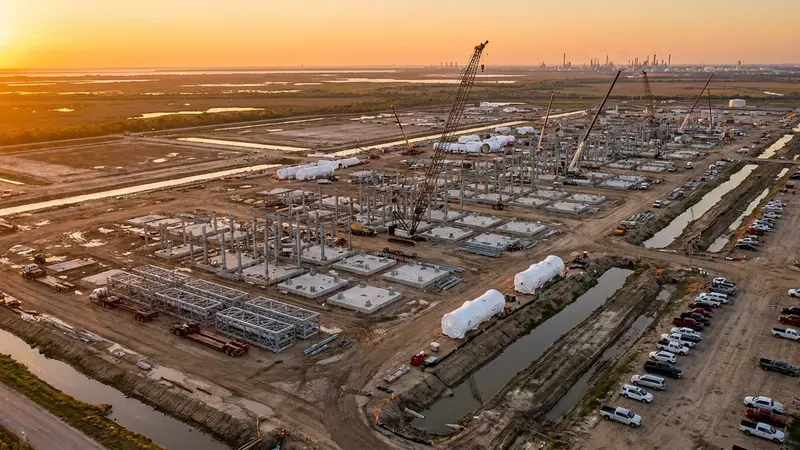
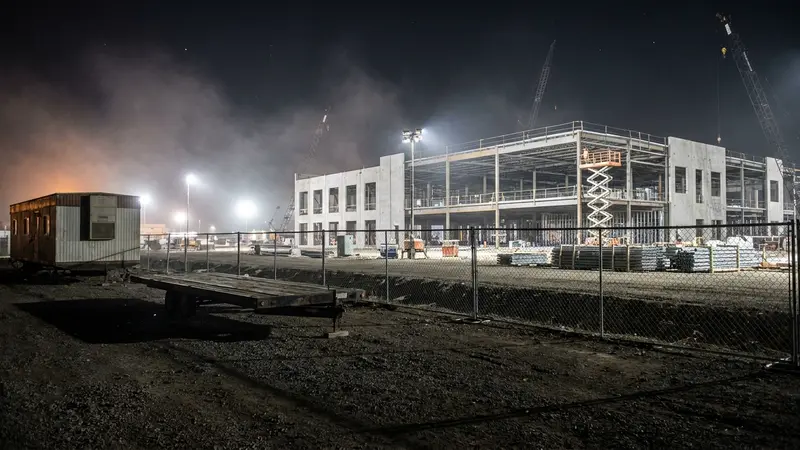
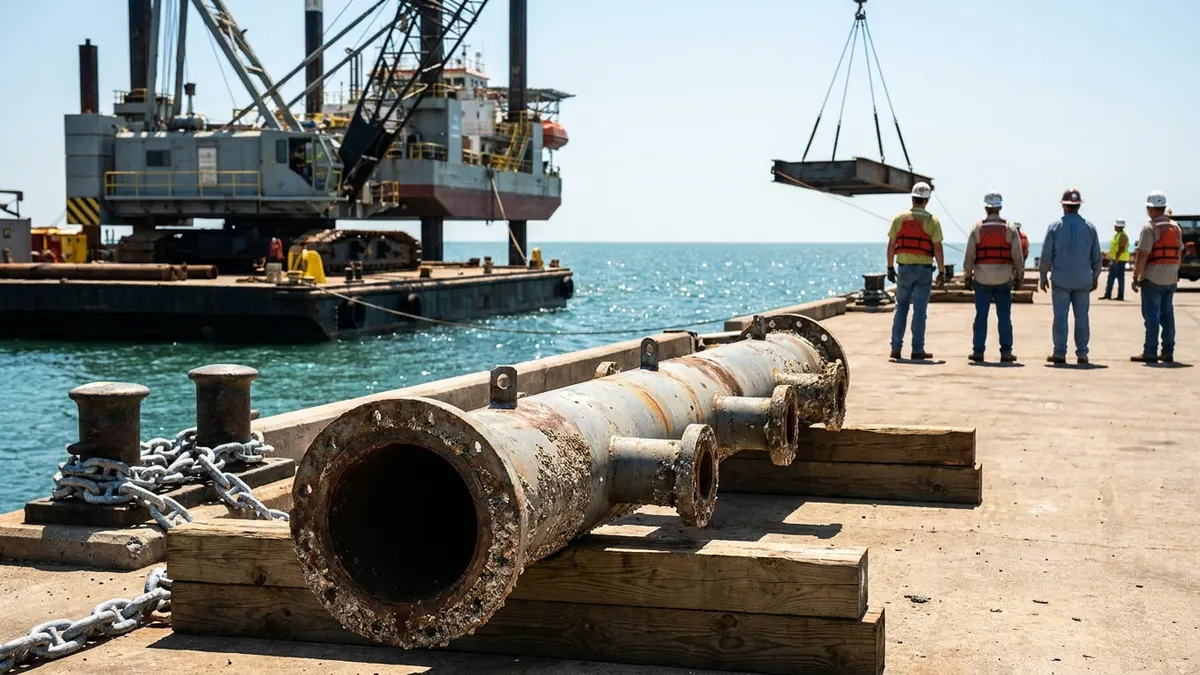
Construction has officially started on Texas GulfLink, a multibillion-dollar deep-water crude export terminal off the Texas Gulf Coast, Daily Commercial News reports. The project, backed by $2.1 billion in financing tied to the U.S.-Japan Trade Agreement, opens a new lane of heavy civil, marine, and offshore mechanical work for contractors positioned along the Gulf Coast corridor.
Background
Sentinel Midstream, a Dallas-based energy infrastructure developer, is building the offshore terminal roughly 30 miles off the coast of Brazoria County, just west of Freeport, according to Daily Commercial News. The U.S. Maritime Administration granted the project its deep-water port license in January 2026, and Sentinel announced the U.S.-Japan funding package on May 4. Construction began immediately after that announcement.
The terminal will let Very Large Crude Carriers (VLCCs) load directly offshore instead of relying on “reverse lightering,” the current method where smaller tankers shuttle crude out to VLCCs anchored in deeper water. Sentinel says direct loading will cut emissions by roughly 86% compared to that process. The facility will also use what the company describes as the first vessel-based vapor recovery system of its kind in the U.S., a dynamic-positioned support vessel designed to capture volatile organic compounds during loading and prevent up to 19,000 tons of VOC emissions annually.
Commerce Secretary Howard Lutnick said the project will “reinforce America’s position as the world’s leading energy supplier,” per Daily Commercial News. U.S. Transportation Secretary Sean Duffy added that the terminal puts American producers “in the driver’s seat” on global energy supply. The U.S. Transportation Department projects the project will support up to 720 construction and operations jobs, with the terminal expected to begin operations in 2028 and handle up to two million barrels of crude daily.
Notably, a project-tracking database cited in the report lists Texas GulfLink at a conceptual value of $75 million as of July 27, 2026, a figure that likely reflects only a portion of the overall scope currently entered into public bid-tracking systems rather than the full $2.1 billion project cost.
Analysis
The gap between the $2.1 billion headline financing figure and the $75 million conceptual value currently showing in project databases is worth watching closely. It suggests that subcontract packages, particularly for the offshore and marine components, may not yet be fully scoped or released to the bid market. For subcontractors, that’s a signal to get ahead of the curve rather than wait for a fully formed RFP to show up in normal channels.
This project also reflects a broader financing pattern that field service companies should recognize: private developers are increasingly unwilling to carry full project risk without long-term contracts locked in, so government-backed financing, in this case a U.S.-Japan trade agreement, is stepping in to bridge that gap. That means more offshore energy infrastructure projects of this scale could follow a similar model, particularly as crude exports climb. Contractors who build relationships with EPC firms handling this kind of government-backed midstream work now may be better positioned for the next one.
The offshore vapor recovery system and direct-loading design also point to more specialized subcontract scope than a typical onshore terminal buildout. Marine construction crews, dynamic-positioning vessel operators, and mechanical contractors with VOC recovery and vapor-handling experience will likely see demand that a standard onshore civil crew can’t fill. That narrows the competitive field but raises the value of specialized offshore experience.
What It Means for Subcontractors
- Marine construction, HDD, and offshore mechanical contractors should track Sentinel Midstream’s subcontract release schedule now, since construction started immediately after the May 4 funding announcement and the project database still shows only $75 million in scoped value as of July 27, 2026, well below the $2.1 billion total financing figure.
- Firms with vapor recovery, VOC control, or marine vessel-based mechanical systems experience should position for the terminal’s dynamic-positioned support vessel scope, described as the first system of its kind in the U.S. and central to the project’s 19,000-ton annual VOC reduction target.
- Brazoria County and Freeport-area labor should prepare for near-term hiring tied to the U.S. Transportation Department’s projection of up to 720 construction and operations jobs, with a 2028 operational target giving a roughly 18-month window for peak civil and marine mobilization.
- Companies with prior experience on government-financed energy infrastructure, particularly projects tied to trade agreements rather than pure private capital, should study Sentinel’s structure as a model that may repeat on future Gulf Coast export terminal announcements.
- Contractors serving the Houston Ship Channel and Port Houston corridor should monitor whether Texas GulfLink’s offshore model draws additional export capacity investment to nearby onshore storage and pipeline tie-in projects, which would open separate bid packages beyond the offshore terminal itself.