The Same Permit Bottleneck Stopping Pipelines Will Also Stop the Grid Buildout
According to Oklahoma Energy Today, Oklahoma U.S. Senator Alan Armstrong is warning that the same permitting bottleneck that blocked pipeline construction for over a decade is now positioned to strangle the electric grid expansion that AI data centres, manufacturing reshoring, and energy demand growth require.
Armstrong, a former CEO of Williams Companies who now serves in the U.S. Senate, made the case in an opinion piece for the Washington Reporter after appearing on a national podcast to criticize Section 401 of the Clean Water Act. His argument: the political dynamics and legal tools used to obstruct pipelines apply equally to transmission lines, and advocates for grid buildout are underestimating the threat.
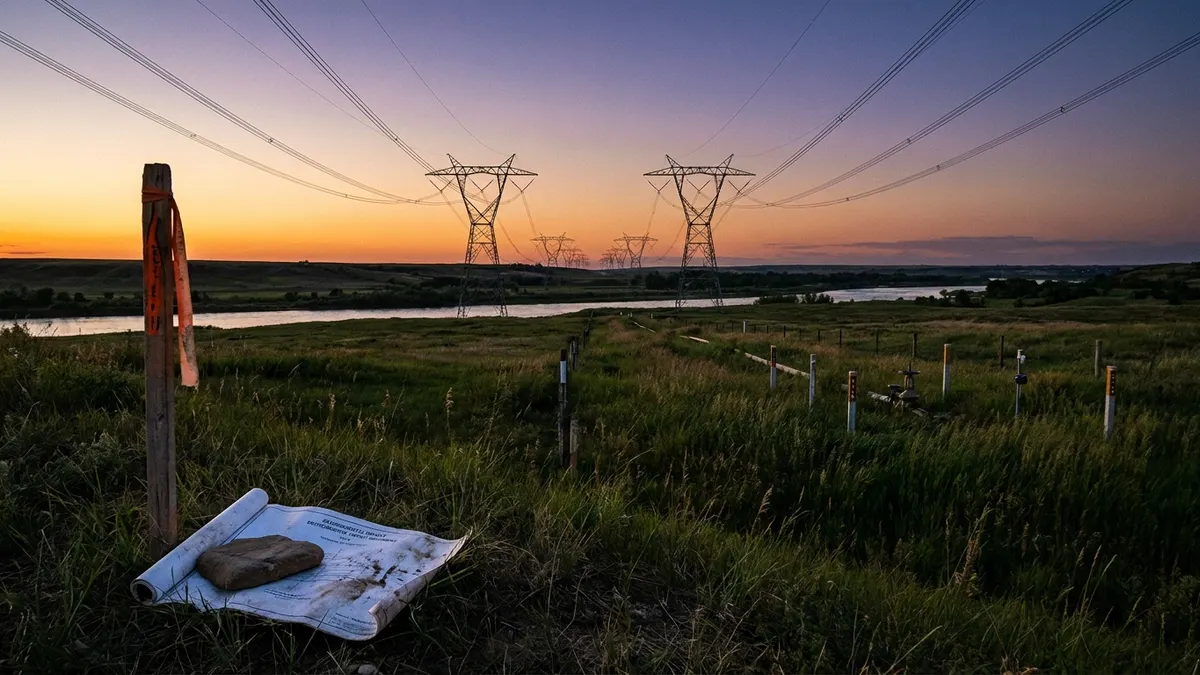
“Large-scale transmission projects face many of the same physical and regulatory realities as pipelines,” Armstrong wrote. “They must cross state lines, waterways, wetlands, forests, private property, and environmentally sensitive areas.”
He pointed to active examples already unfolding. The Cardinal-Hickory Creek line in the Midwest, the New England Clean Energy Connect in Maine, and the SunZia project in the Southwest have all encountered extended litigation, permitting disputes, and political opposition of the same type that killed projects like the Constitution Pipeline.
Armstrong highlighted Section 401’s vulnerability to political manipulation. Congress designed it to ensure water quality compliance, but states have expanded its use to evaluate projects on broader political grounds, effectively turning it into a veto mechanism. FERC Chairman Laura Swett described the authority as a “double-edged sword,” noting: “if you’re trying to build an interstate high-voltage transmission line, a red state can shut that project down, even if every other state around it is blue and wants it.”
His proposed fix is technology-neutral permitting reform that integrates Section 401 reviews into the broader Environmental Impact Statement process, eliminates redundant agency reviews, and establishes time-bounded dispute resolution. Without it, he argues the U.S. enters a future where all linear infrastructure is trapped in litigation regardless of energy source.
What It Means for Subcontractors
- Pipeline and transmission contractors operate in the same permitting environment. Armstrong’s analysis is directly relevant to subs tracking work across both sectors: permit uncertainty affects bid timelines, mobilization windows, and long-term workforce planning.
- The Section 401 issue is not hypothetical. SunZia, Cardinal-Hickory Creek, and New England Clean Energy Connect are active project pipelines where schedule slippage has already flowed through to subcontractor timelines. Companies with crews earmarked for these corridors face carrying costs when administrative hearings extend unexpectedly.
- If Congress acts on permitting reform in this session, it would meaningfully accelerate the project-release pace across both gas transmission and grid infrastructure. That is the upside scenario for subs competing on linear infrastructure work.
- Armstrong’s former role at Williams adds credibility to his read of how permitting dysfunction compounds project cost. His argument that “this uncertainty drives up the cost of capital” translates directly into the financing delays that push NTP dates to the right.