Sagamore Bridge Test Shafts Reach 165 Ft as $2.5B Bid Nears
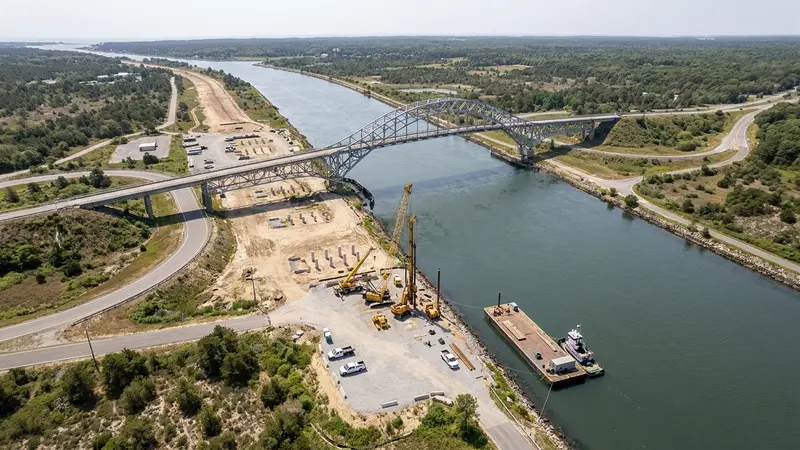
The Massachusetts Department of Transportation’s $2.5 billion Sagamore Bridge design-build replacement is in procurement, and a drilled shaft test program is already running on both sides of the Cape Cod Canal. ENR reports that the work will inform final design of the new bridge’s foundations. For drilled shaft, geotechnical, marine and heavy-civil subcontractors, the window to line up with a design-build team is open now, before foundation packages are priced and awarded.
Background
MassDOT is the owner, and the delivery method is design-build. The source describes procurement as underway but does not name the shortlisted teams, the bid due date or the award schedule. Our inference: those details will determine when subcontractor teaming decisions get locked in, and subs should confirm them directly with MassDOT.
The test program is being run by East Coast Slurry Co., a Stoughton, Mass., subsidiary of AA Will Corp. The source does not say who hired the firm or whether bidding teams will see the results. East Coast Slurry started in May on the canal’s mainland side, drilling separate 5-ft and 8-ft diameter shafts about 165 ft to bedrock.
A third test pile, 5 ft in diameter, is planned for the Cape side and will be installed with a vibratory hammer. Project manager Angelo Colasante told ENR he hopes to start that work soon and finish the whole program by the end of the year.
The mechanics matter for pricing:
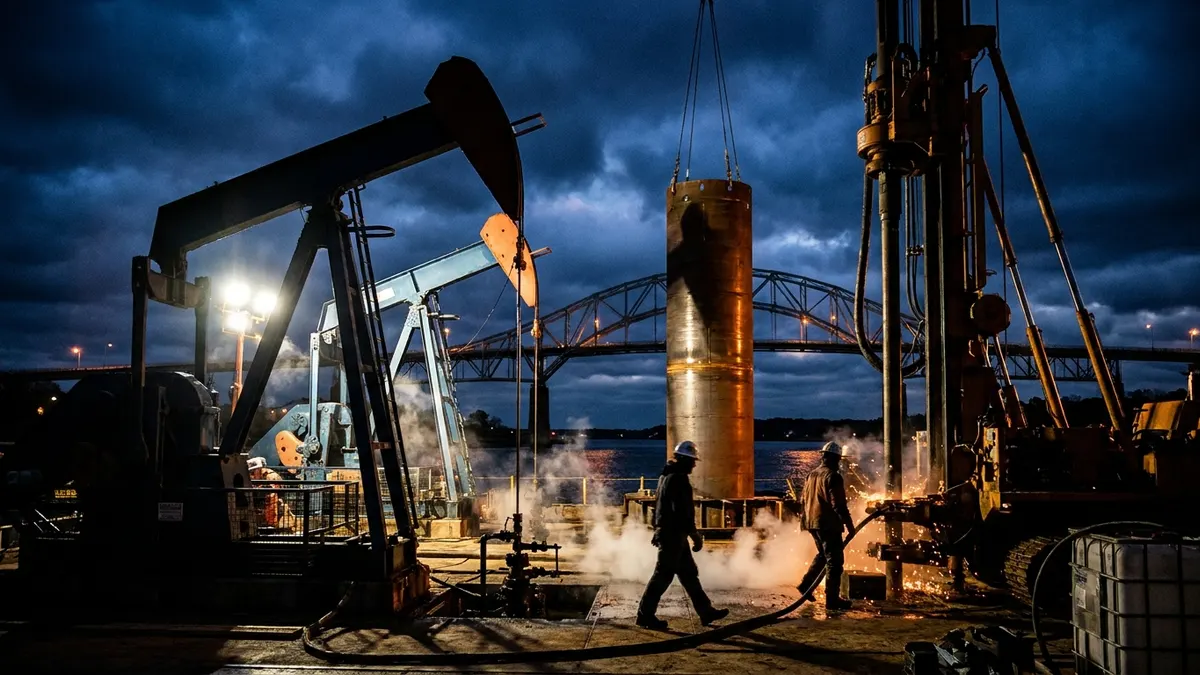
- Casings went in as 40-ft sections joined with full-penetration welds, set with a Nippon Sharyo casing rotator.
- Crews excavated with a mechanical grab on a lattice boom crane. Colasante called it conventional clamshell excavation to top of rock, with each casing taking about a month.
- Each shaft has an 11-ft rock socket, drilled with a Liebherr LB36 hydraulic rig. Colasante said the rock exceeds 30,000 psi, and each socket takes about three weeks.
- The ground is mostly fine sand, with boulders just above bedrock. Holding verticality over such long casing runs is the main challenge.
- The shafts were installed to 1% plumbness against a specified 2% maximum. Colasante called that “a pretty good result” at that depth.
- The team has found no unforeseen issues, though depth and soil conditions have made progress slow.
Analysis
The useful signal here is that the owner and the design team are spending real money to de-risk the foundations before the design is final. Shafts this deep, in hard rock, with a sand profile that fights verticality, are the kind of work where schedule and cost overruns tend to start. A test program that confirms the method works, and that the 2% plumbness tolerance is achievable, narrows the risk bidders have to carry. That should make foundation pricing more concrete.
The cycle times are also instructive. A month per casing and three weeks per rock socket are production figures for a single shaft. Our inference: if the final foundation scheme calls for many shafts of this size, the schedule will depend on how many rigs and crews a team can run at once. The source does not give a production shaft count, so we cannot say how many. But the numbers show that rig availability, casing handling capacity and qualified welders could be bottlenecks. A bidder short on any of those will look for subs who have them.
The two shaft sizes, 5 ft and 8 ft, suggest the design is still weighing options for foundation loads. That is a reading of the test program, not something the source states. Either way, bidders are likely to want subs who can show experience at both diameters and at this depth.
A caution on timing. This is a multi-year job. Procurement is still in progress, the test program runs through the end of 2026, and the source gives no construction schedule. Most subcontract money will not move until a design-build team is selected. But teaming agreements, pre-qualification packages and key-personnel commitments are usually settled earlier. Subs that wait for an award announcement may find the foundation scope already spoken for.
Marine and canal-adjacent work is a related question. The bridge crosses the Cape Cod Canal, and the test shafts sit on both banks. The source does not detail marine access, barge work or in-water scopes, so any marine sub should treat that as an open question to raise with teams, not a confirmed package.
What It Means for Subcontractors
- Drilled shaft contractors: The test program’s data, 165 ft to rock, 11-ft sockets, rock above 30,000 psi, gives you a benchmark to price against. Before the end of Q1 2027, build a one-page capability sheet showing your rig capacity for rock sockets of this size and your record on plumbness. Send it to the design-build teams bidding the $2.5 billion contract.
- Casing and welding trades: Casings were set in 40-ft sections with full-penetration welds. If you carry certified welders and casing-handling equipment, update your certifications and crew availability now. This is a teaming credential, since the source shows the casing step takes about a month per shaft.
- Geotechnical and testing firms: The program shows the foundation design is still being refined. Our inference: bidders will want firms that can handle shaft integrity testing and verticality verification. The source does not name those scopes, so ask teams directly which ones they plan to self-perform and which they will sub.
- Heavy-civil and crane subs: The excavation used a lattice boom crane with a mechanical grab. Subs with crawler cranes and clamshell crews can position themselves for the same type of work. Ask bidders about site access and laydown on both canal banks.
- Marine subs: The source does not describe any in-water scope. Contact teams by Q1 2027 to ask whether barge-based drilling, cofferdams or marine access are in their approach, and do not assume a package exists until they say so.
- Everyone: Contact MassDOT to confirm which teams are shortlisted and when proposals are due, since the source gives neither. Then pre-qualify with each team and request a teaming conversation. Complete pre-qualification paperwork by the end of March 2027, so you are in the file before any award.