Portland Sewer Rehab Project Highlights Demand for Specialized Tunneling Subs
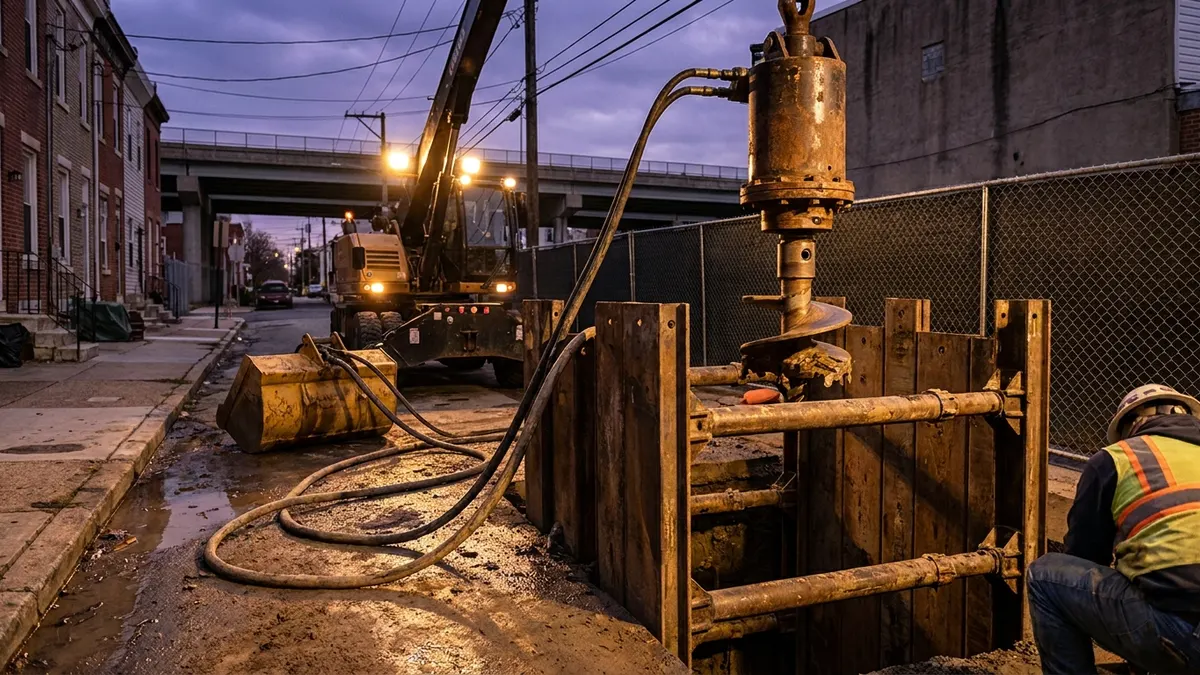
According to Engineering News-Record (ENR), a construction manager-general contractor working on Portland, Oregon’s Carolina Trunk Rehabilitation project switched from microtunneling to auger bore shafts after encountering unexpected underground conditions.
Market Impact
The $79.3 million project, led by James W. Fowler Co. under the direction of the City of Portland Bureau of Environmental Services (BES) and advisor Kennedy Jenks, involves replacing a sewer main built nearly 90 years ago. Chris Bottoms, division manager with James W. Fowler Co., called it “one of the most complex ‘small’ projects that I’ve been on,” citing steep slopes, narrow streets, proximity to Interstate 5, and two abandoned trestles.
Ryan Carney, engineering supervisor and owner’s representative with BES, said the confined work sites and close interface with the public have made the project difficult to design and stage. The new alignment spans just a quarter mile but includes a 107-foot elevation change. It will reroute the trunk line under existing right of way and permanent easements, both to avoid disturbing private property and to make future maintenance easier. Officials noted that failure of the aging line could affect Interstate 5 and would otherwise require displacing residents living above the current alignment.
What It Means for Subcontractors
- Specialty tunneling and shaft contractors should watch for similar pivots on legacy infrastructure jobs. The switch from microtunneling to auger bore shafts shows owners and CM-GCs need flexible subs who can mobilize alternate methods quickly when conditions change.
- Traffic control and public safety subs have opportunity here. Work sites bordering Interstate 5 and residential streets demand close coordination with the public, meaning traffic management, signage, and safety monitoring services are likely in steady demand throughout construction.
- Utility locating and geotechnical subs are critical on projects like this. Tight, hard-to-access sites with unexpected subsurface conditions put a premium on accurate subsurface investigation before and during construction.
- Site access and shoring specialists should note the confined working areas cited by BES. Contractors skilled in urban excavation support, shoring, and small-footprint logistics are well positioned for similar municipal sewer rehab work.
- Subcontractors targeting Pacific Northwest municipal infrastructure work should track BES and similar Portland-area agencies, as aging sewer and water infrastructure built decades ago is likely to generate more replacement contracts requiring the same specialized skill sets.