One in Three Highway Contractors Reported Five or More Work Zone Crashes in the Past Year
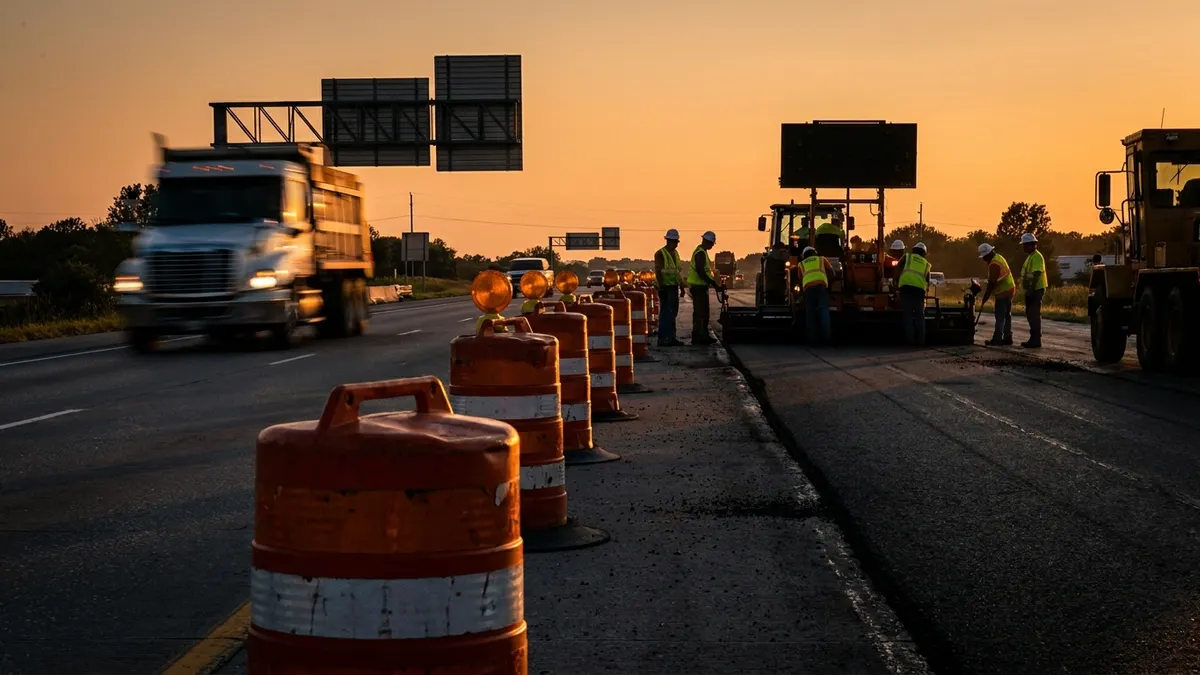
According to Construction Dive, a joint survey from the Associated General Contractors of America and software provider Heavy Construction Systems Specialists found that 60% of highway contractors experienced at least one crash involving a moving vehicle in a work zone during the past year, and roughly one-third reported five or more such crashes. The findings land as the summer construction season gets underway, putting the industry’s most persistent safety problem back in the spotlight.
Background
The annual AGC and HCSS survey paints a sobering picture of conditions on highway job sites. More than half of contractors said work zone crashes are a greater risk today than they were a year ago. Over 90% identified distracted driving as a major cause, with speeding, cellphone use, and impaired driving also ranking as top contributors.
The human toll is significant. Among contractors who experienced crashes, 27% reported worker injuries and 59% reported injuries to drivers or passengers. Seven percent of respondents said construction workers were killed in one or more work zone crashes during the past year, while 22% reported deaths involving drivers or passengers.
AGC Vice President Brian Turmail summed it up plainly during a webinar detailing the results: “Every day, thousands of construction workers across the country work just feet away from speeding traffic. These workers are relying on motorists to slow down, stay alert and pay attention in highway work zones.”
Macrina Wilkins, director of market insights for AGC, noted a tension in the data. Fewer contractors reported fatalities this year than in prior years, but she cautioned against reading that as progress. “Fatalities aren’t the only issue. There are also injuries, there are delays, there are other things,” she said.
On enforcement, the frustration is clear. Only 29% of contractors believe current enforcement efforts are helping deter unsafe driving. Thirty-seven percent said penalties for moving violations in work zones should be more severe, and 39% said existing penalties simply aren’t being enforced enough.
Analysis
The survey reflects a problem that highway subcontractors have lived with for years, but the scale here is striking. When one in three contractors is reporting five or more crashes in a single year, this isn’t a fringe issue or a run of bad luck at a handful of sites. It’s a systemic condition.
What makes this data particularly relevant right now is the combination of factors converging on highway work zones. Infrastructure spending has put more crews in the field, on more active corridors, often in tight urban and suburban environments where traffic volumes are high. At the same time, distracted driving enforcement has lagged behind the proliferation of in-vehicle screens and smartphone use. The result is more workers in harm’s way, facing drivers who are demonstrably less attentive than they were a decade ago.
The enforcement gap is worth focusing on. Contractors aren’t just asking for sympathy here. They’re asking for concrete policy action: increased police presence, stricter distracted driving laws, and automated speed enforcement in work zones. The fact that only 29% believe current enforcement is working should concern project owners and state DOTs as much as it does contractors. Delays caused by crashes don’t just affect safety, they affect project schedules, contract performance, and cost overruns that ultimately flow back through the project delivery chain.
The slight improvement in fatality numbers that Wilkins flagged is not a reason to ease up. It may simply reflect better emergency response or protective equipment, not safer conditions. Injury rates and crash frequency tell a different story.
What It Means for Subcontractors
- Document every incident. With 60% of highway contractors reporting at least one crash, work zone incidents are a near-certain reality over a multi-year contract horizon. Thorough incident documentation protects you in disputes over delays and cost impacts.
- Push for enforcement provisions in contracts. If your project owner or prime contractor has influence over law enforcement coordination or traffic control plans, advocate for active speed enforcement as a project requirement, not an afterthought.
- Use the survey data in safety meetings. The AGC and HCSS findings give field supervisors hard numbers to put in front of crews. The fact that 7% of contractors reported worker fatalities and 27% reported worker injuries makes the stakes concrete.
- Review your traffic control plans before summer peak. The survey was released heading into the busiest season for highway work. If your traffic control plans haven’t been reviewed recently, now is the time.
- Track near-misses, not just crashes. If over half of contractors say risk is getting worse, the leading indicators matter. Near-miss tracking can give your safety program early warning before a recordable event occurs.