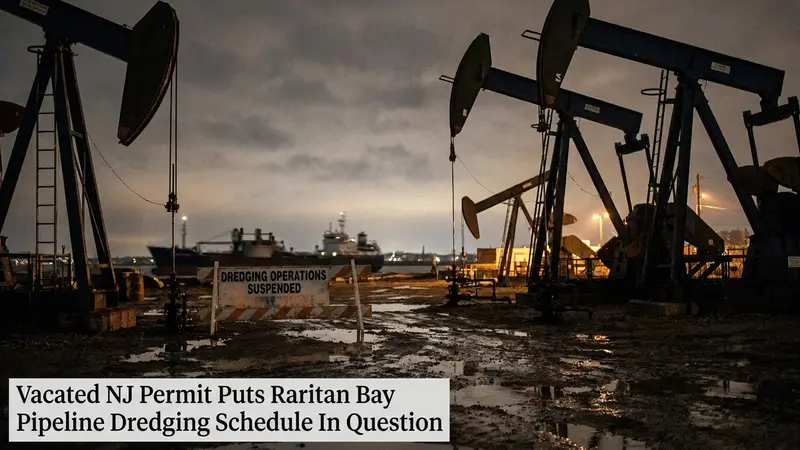
NJ Permit Ruling Puts Transco Compressor Station on the Clock
A 13-month compressor station build in Somerset County, N.J., now sits on the critical path for Williams’ Nov. 1, 2027 in-service date, and the permit that let it start has been vacated. The Third Circuit Court of Appeals on Oct. 22 denied rehearing of its Sept. 8 decision, ENR reports, so the New Jersey water-quality certification for the more-than-$1-billion Northeast Supply Enhancement (NESE) pipeline stays vacated.
Background
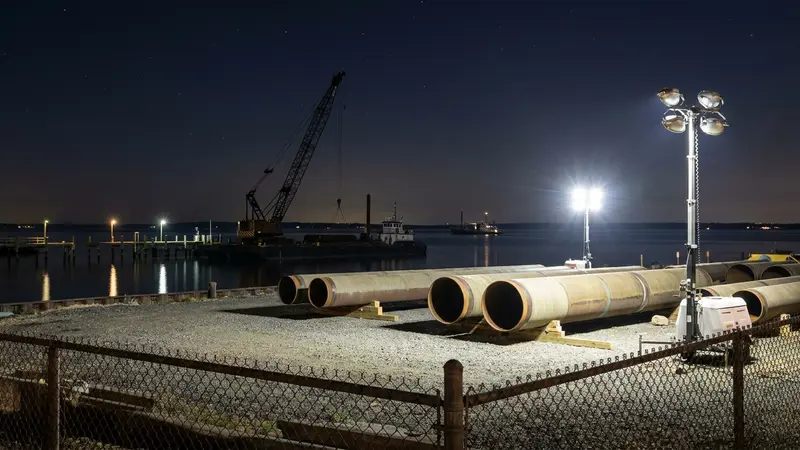
NESE would add roughly 37 miles of pipeline and related facilities to the Transcontinental Gas Pipe Line (Transco) system, adding 400,000 dekatherms per day of capacity for National Grid customers in New York City and Long Island. The New Jersey scope includes a compressor station in Somerset County (Station 206), the 3.4-mile Madison Loop in Middlesex County and about six miles of offshore pipeline in Raritan Bay.
The court found that the New Jersey Department of Environmental Protection (NJDEP) left material water-quality monitoring and adaptive-management provisions unresolved without requiring its approval before dredging. It also found the agency did not adequately explain how Raritan Bay dredging would meet state water-quality standards. Transco did not challenge those findings. Its rehearing petition argued only about remedy, saying NJDEP could fix the problems while the certification stayed in effect.
The ruling sends the certification back to NJDEP. The agency may supplement its explanation, require more analyses, issue a new or revised certification, or reach a different result. Transco told the court that New Jersey construction had been set to begin Oct. 1 and that vacatur “will delay construction.” It also said the Federal Energy Regulatory Commission cannot issue a notice to proceed for New Jersey components without a valid state certification. Transco asked the court to require NJDEP action in time for work to start by Oct. 30. The court did not grant that.
Absent further court action, the mandate is expected to issue Oct. 29. As of Oct. 26, no request to stay it appeared on the docket. Williams did not respond to ENR’s questions about the schedule or a possible Supreme Court petition.
Analysis
The most useful number in the story is the 13 months. Transco says Station 206 needs about 13 months to build. Counting back from Nov. 1, 2027 gives a start of Oct. 1, 2026, which matches the original New Jersey start date. That is our arithmetic, not a figure from the filing. As of Oct. 26, that start date has already passed, and the earliest date Transco asked the court to enable was Oct. 30. Even under that best case, the build window is about 12 months. Every month NJDEP takes to reissue the certification comes straight out of the station’s duration, or out of the in-service date.
There is an irony in the court’s findings. The deficiencies involve Raritan Bay dredging, and Transco said bay construction was not set to start until March or April 2027. But the vacated certification also covers Station 206 and the Madison Loop, whose environmental impacts were not challenged in the appeal. The onshore work with the tightest schedule is therefore held up by a defect in the work that starts last. NJDEP could reissue the certification with a fuller explanation, supplement its record, or reach a different result. How fast any of that happens is the open question, and the source does not say.
Williams’ tone has also shifted. After the Sept. 8 ruling, a spokesperson said the company did not expect an adverse effect on construction or the in-service timeline. Two weeks later, Transco’s own court filing said delay could jeopardize the Nov. 1, 2027 date and deliveries to National Grid for the 2027-28 winter heating season. The filing is the more binding statement. Owners usually have two levers when a critical-path item slips: compress the work or move the date. Compressing a 13-month compressor station build means more crews, longer shifts or parallel sequencing, and all of that lands on subcontractors. A date move pushes work into 2028 instead.
New York’s certification remains intact and Pennsylvania approved its permits earlier. Williams held an April 14 groundbreaking in Brooklyn. The source does not say how much work has happened or what can continue outside New Jersey while the permit is resolved. It also does not name a general contractor or say which Station 206 packages are awarded.
What It Means for Subcontractors
Project stage: The source does not say whether Station 206, Madison Loop or Raritan Bay packages are awarded. Treat this as an in-construction project with New Jersey scopes on hold, and with open work possible if packages are not yet let.
- Mechanical, electrical, civil and pipefitting/welding firms: Call Transco’s supply-chain contacts before Dec. 31 and ask which Station 206 packages (site civil, foundations, piping, electrical and controls) are awarded and which are still out for bid. A 13-month build that now has to start late is the kind of job where owners may seek added capacity.
- Firms already holding New Jersey awards: Ask your contracting party in writing, before the Oct. 29 mandate date, how a delayed notice to proceed affects mobilization, standby and pricing. Be cautious about crew and equipment commitments tied to Oct. 30, the start date Transco sought in court.
- Pipeline crews eyeing the 3.4-mile Madison Loop: The loop is in the same vacated certification as the compressor station. Don’t count on a 2026 start until the certification is resolved. Check with the Madison Loop prime or Transco on where the work falls in the new sequence.
- Marine and dredging contractors: Raritan Bay work was not set to begin until March or April 2027, and the court’s dredging-related findings go to NJDEP’s monitoring and adaptive-management terms. Those terms could be tightened in any reissued certification, so build contingency into pricing if you bid the roughly six miles of offshore pipeline.
- All trades: Check the Third Circuit docket on Oct. 29 and Oct. 30 for a motion to stay the mandate. If Transco files one, New Jersey remains stalled until it is resolved. Then watch NJDEP for a reissued certification, because FERC cannot issue a notice to proceed without one.
- Crews outside New Jersey: Ask Transco whether New York and Pennsylvania scopes are proceeding on their original schedules. Those certifications are intact, and that work could be your fill-in if New Jersey slips.