Montana Contractor Suspends HDD Locator 60 Feet Above the Yellowstone River to Complete Fiber Crossing
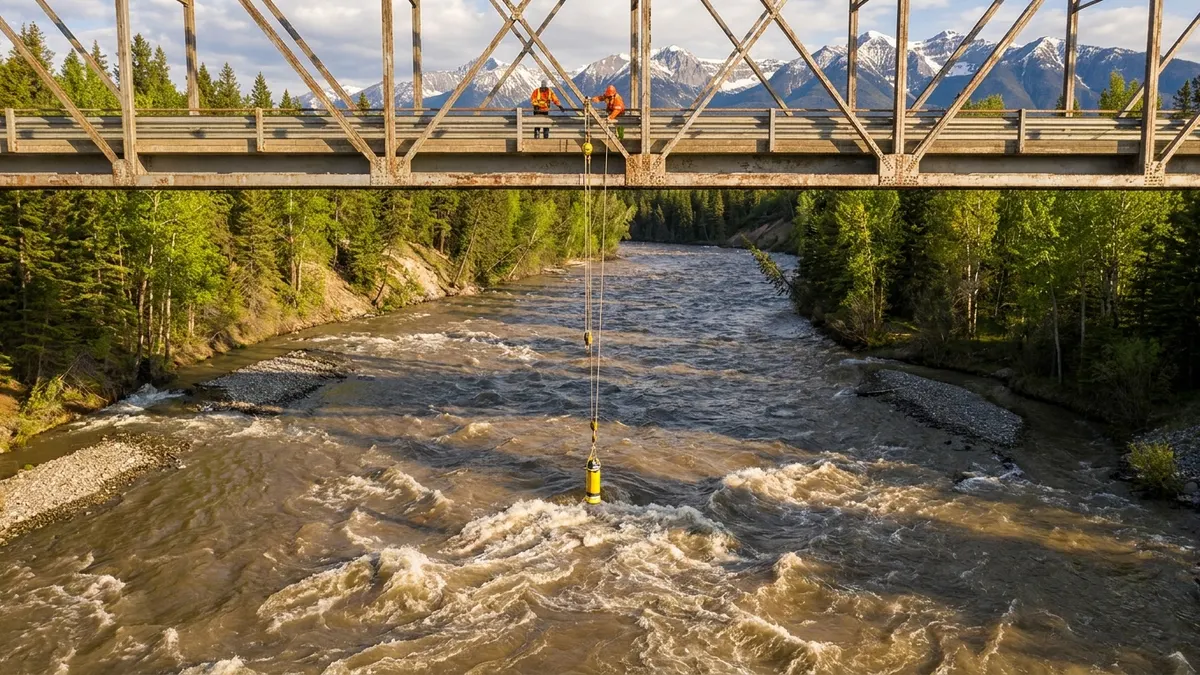
According to Trenchless Technology, Montana-based contractor Tru Directional Drilling completed a fiber installation crossing beneath the Yellowstone River by suspending an HDD locator nearly 60 feet above the rushing rapids using a pulley system anchored to a bridge structure.
A Creative Solution to a Locating Problem
The crossing, completed for Triangle Communications, a broadband provider serving central and eastern Montana, involved a bore path stretching more than 500 ft beneath the river. The job was executed during peak spring runoff, when turbulent rapids limited riverbank access and made standard walkover locating impossible.
“Spring runoff was the biggest challenge,” said Tru Directional Drilling president Trevor Herman. “The river was roaring and locating across it was tough.”
To track the drill head, the five-person crew devised a pulley system tied off to a bridge, hoisting a Subsite Marksman+ HDD locator roughly 60 ft in the air above the rapids to maintain line of sight to the beacon signal below. The project relied on Ditch Witch drilling equipment, dealer support, and Subsite’s locating technology. Tru Directional has built its reputation on demanding HDD work across the Rocky Mountain region.
What It Means for Subcontractors
- River crossings during high-water seasons introduce locating challenges that standard walkover crews aren’t equipped for. Identifying those constraints during project planning, not on the bore day, is critical.
- Small crews can execute complex crossings, but only when equipment selection, dealer support, and contingency planning are locked in well ahead of mobilization.
- When conventional locating methods are off the table, line-of-sight approaches using elevated or suspended equipment may be the only viable option. Crews should be familiar with the capabilities and limitations of their locating systems before taking on water crossings.
- Fiber and broadband infrastructure buildouts in rural western markets are generating HDD work in technically difficult terrain. Subcontractors with remote crossing experience are well-positioned to compete for those jobs.