Mammoet and Ledcor Complete Major Headframe Installation at BHP's Jansen Potash Mine
According to Equipment Journal, heavy lift specialist Mammoet has completed the installation of a major new headframe at BHP’s Jansen potash mine in Saskatchewan, working alongside Ledcor on what is expected to become one of the largest potash mines in the world.
A Major Milestone for Canada’s Largest Potash Project
The Jansen mine sits roughly 140 km east of Saskatoon and is targeting production start in mid-2027. Once fully ramped up, the operation is projected to produce about 8.5 million tonnes of potash per year, according to Equipment Journal.
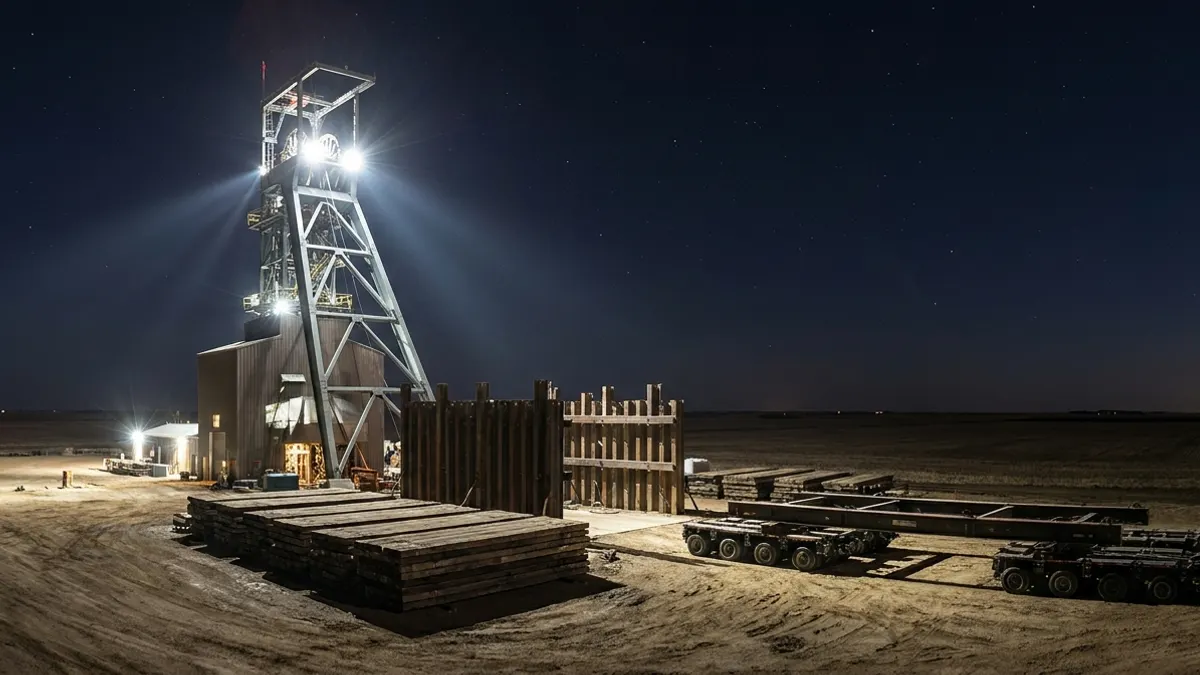
Mammoet’s scope involved removing the lower section of an existing headframe and replacing it with a larger unit to increase mining capacity. The team also handled the complex lift of a staircase tower module inside the building where it was to be installed. Modules were prefabricated at facilities in Edmonton and other Alberta locations, then transported to site on platform trailers fitted with transport beams.
The project required careful logistics management from the start. Project Manager Mike de Wilde noted that moving oversized modules through largely agricultural roads created real staging challenges overnight. Ground conditions added further complexity: more than 400 crane mats were mobilized after spring thaw softened the soil, and a shoring system built from 21-metre towers was required near the shaft opening to support the headframe’s weight. Mammoet even sourced additional steel supports from its yards in Dubai and the United Kingdom to manage risk.
The company has a long history at the site, having first worked at Jansen in 2013 during the original headframe construction.
What It Means for Subcontractors
- Saskatchewan’s heavy industrial pipeline is real and active. With Jansen targeting first production in mid-2027, civil, rigging, and transport subcontractors should be positioning for late-stage construction and commissioning work now.
- Modular construction techniques drove this project’s efficiency. Subs with prefabrication capabilities or experience handling oversized module transport have a clear edge on projects in remote or access-constrained locations.
- Ground conditions in the Prairies are a critical planning factor. The need for 400-plus crane mats and a custom shoring system shows that subcontractors must build geotechnical assessment and seasonal ground prep into bids and schedules, especially for spring mobilizations.
- Alberta fabrication yards fed this Saskatchewan project. Specialty fabricators and heavy transport companies operating out of Edmonton and surrounding areas are well positioned to capture future Jansen-related scope as ramp-up continues.