Maine's Data Center Moratorium Veto Signals Regulatory Risk for Electrical and Civil Subcontractors Nationwide
According to Construction Dive, an effort to impose the first state-level moratorium on data center construction in the United States stalled in Maine last week when Gov. Janet Mills vetoed a bill on April 24 that would have banned data centers larger than 20 megawatts for more than a year. The state legislature failed to gather enough votes to override the veto. The episode may be over in Maine, but the regulatory blueprint it created is already being studied in other states, and subcontractors working in electrical, civil, and infrastructure trades should pay attention.
Background
The vetoed bill would have applied to data centers exceeding 20 megawatts, a threshold that captures most hyperscale and large commercial facilities. Mills acknowledged in her veto statement that “a moratorium is appropriate given the impacts of massive data centers in other states on the environment and on electricity rates,” but said the final version of the bill failed to carve out a specific, locally supported project in the Town of Jay.
That project, a $550 million data center redevelopment on a former mill site, has strong backing from the surrounding community. State officials estimate it will generate more than 800 construction jobs and provide a boost to local property tax revenue. Mills cited those factors as the reason the bill, as written, could not stand.
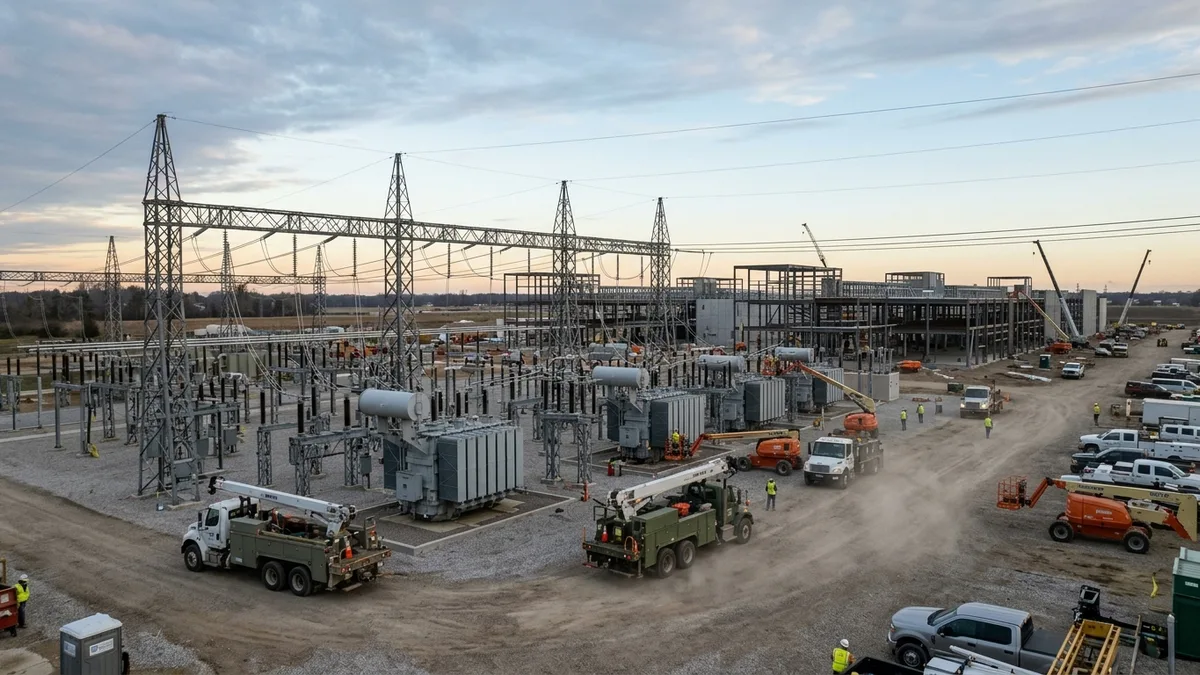
Construction Dive spoke with attorneys John Crossley and Kaitlyn DeYoung, partners at K&L Gates, a Pittsburgh-based law firm, for their assessment of what a moratorium like this would mean for construction activity. According to DeYoung, large data centers “aren’t quick builds,” describing them as “multi-year projects with heavy site work, substations, utility extensions and long-lead electrical procurement.” A statewide pause, she said, “would have interrupted an entire construction pipeline.”
DeYoung also noted that a statewide moratorium removes the local negotiation process that typically shapes project conditions, including traffic routing, noise limits, backup generation, water use, and responsibility for grid upgrades. “That local bargaining path goes away under a statewide moratorium, even for projects that could meet local expectations with the right conditions,” she told Construction Dive.
Analysis
Maine’s veto does not close the book on this issue. According to Construction Dive, other states have proposed similar limits on data center construction, though none of those bills have yet reached a governor’s desk. Maine was the furthest along, and its defeat in the legislature does not mean the underlying pressure has disappeared. Concerns about grid stability, electricity rate impacts, and environmental footprint are real and politically durable. Expect this conversation to resurface in legislative sessions across the country.
What makes this debate particularly important for field operations is the mechanism of disruption. It isn’t just about a single state or a single project type. It’s about the conditions under which capital commits to large construction programs. DeYoung was direct on this point: when developers cannot see a clear regulatory path, they redeploy capital. And when capital moves, the work moves with it. “If nearby states offer clearer rules and shorter timelines, capital and contractors are going to follow,” she said.
This is not a hypothetical for subcontractors. The data center construction pipeline is one of the most active categories in commercial construction right now, driven by demand for AI infrastructure, cloud capacity, and colocation facilities. Electrical subcontractors in particular are positioned to benefit from this cycle, given the scale of power infrastructure involved. But that pipeline is contingent on regulatory predictability. A moratorium, even a temporary one, can collapse a project queue that took years to develop.
The 20-megawatt threshold in the Maine bill is also worth understanding. At that level, the restriction targets facilities that require significant substation work and utility coordination, exactly the kind of projects that generate large, multi-year subcontracts for electrical, civil, and mechanical trades. A moratorium aimed at that tier of project is not catching small edge cases. It is aimed at the core of the data center construction market.
There is also a geographic arbitrage effect to consider. If one state imposes restrictions while neighboring states do not, developers will move projects across the border. That shifts subcontract opportunities without eliminating them, but it means field service companies tied to a single state market could see work evaporate faster than they expect.
What It Means for Subcontractors
- Watch for similar moratorium proposals in your operating states. According to Construction Dive, multiple states have introduced comparable legislation, and the Maine debate has given those efforts a more detailed template to work from.
- Data center projects over 20 megawatts are the primary target of these proposals. If your pipeline includes substation work, utility extensions, or large electrical scopes tied to data centers, regulatory delays in that tier are a direct business risk.
- Capital moves when regulatory clarity disappears. According to K&L Gates attorneys interviewed by Construction Dive, developers will redeploy to states with shorter timelines and clearer rules. Subcontractors with multi-state licensing and bonding capacity are better positioned to follow that work.
- Do not assume a veto ends the issue. The underlying concerns about grid load and electricity rates that drove the Maine bill have not been resolved. A stronger or narrower version of the same legislation could return in the next session.
- The local approval process that moratoriums eliminate is the same process where subcontractors often build relationships with developers and municipalities. Support local negotiating frameworks as a practical alternative to statewide bans, and engage with project stakeholders early to demonstrate community benefit.