Hormuz Reopens, But Insurance Gaps and Ceasefire Uncertainty Signal Continued Oil Market Volatility
According to World Oil, reporting from Bloomberg, oil and LNG shipments have resumed through the Strait of Hormuz following an interim agreement between the U.S. and Iran, easing the most severe energy supply disruption in modern history. But industry officials and market participants are cautioning that significant hurdles remain before shipping traffic and export volumes return to pre-conflict levels, and the mood among shipowners and insurers remains one of cautious hesitation rather than full recovery.
Background
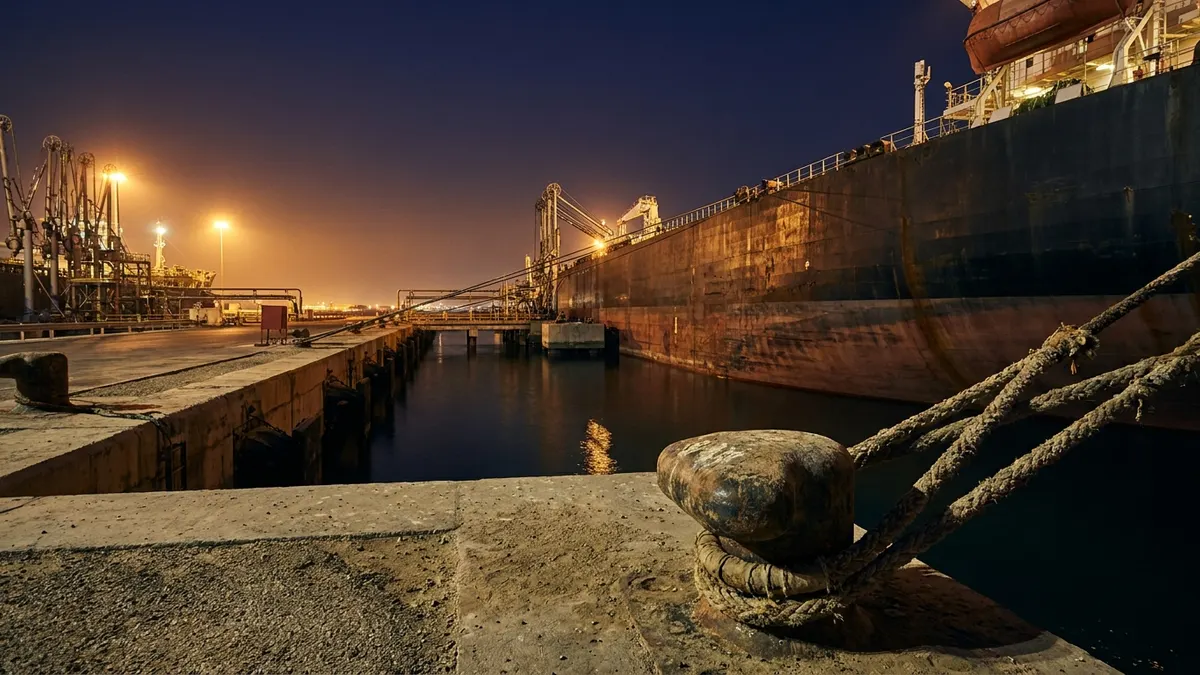
The Strait of Hormuz had been largely closed since conflict began in late February 2026. The waterway handles roughly one-fifth of the world’s oil trade, making its disruption an immediate shock to global energy markets. This week’s interim agreement triggered a resumption of tanker movements, with several crude oil and LNG vessels successfully transiting the strait.
Gulf producers moved quickly to signal a return to operations. Kuwait announced it is increasing production and expects output to exceed 2 million barrels per day within days. ADNOC has reportedly instructed customers to resume loadings from Persian Gulf terminals. Iran has also begun exporting crude that had been stranded during the conflict, with vessel-tracking data showing millions of barrels of Iranian oil departing from storage and export facilities outside the Gulf as restrictions ease.
Brent crude traded near $80 per barrel Friday after falling nearly 8% for the week, as traders responded to the reopening and expectations of gradual supply recovery.
Despite that initial burst of activity, shipping traffic appeared to slow by Friday. Planned negotiations between Washington and Tehran on a permanent agreement were postponed, underscoring how fragile the current ceasefire actually is. Jan Rindbo, chief executive officer of shipping company D/S Norden, put it plainly in comments to Bloomberg: “Everyone would like to get the ships out, but the mood is that you don’t necessarily need to be the first. With traffic resuming that will build confidence. But it’s still fragile.”
Iran also signaled this week that vessels transiting Hormuz may eventually be required to carry mandatory insurance policies administered through a new regulatory framework, raising questions about potential fees and transit requirements. U.S. officials have maintained that international waterways should remain free of tolls, setting the stage for further disputes over how traffic will be managed in the months ahead.
Analysis
The reopening of Hormuz is real, but the market’s reaction tells a more nuanced story. An 8% weekly price drop followed by a Friday slowdown in tanker movements is not a sign of a market that has found its footing. It is a market that is managing two contradictory signals at once: relief that the worst-case scenario has been avoided, and genuine uncertainty about what comes next.
The insurance question may be the most consequential near-term variable. If Iran follows through on a mandatory insurance framework for Hormuz transits, every cargo moving through the strait could face new cost layers that didn’t exist before February. That translates directly into elevated freight rates and, by extension, higher delivered costs for crude and LNG into U.S. and global markets. Shipowners are already behaving with caution, and that caution will not evaporate until the legal and financial liability picture for transiting vessels is clear.
The postponement of formal U.S.-Iran negotiations is another critical data point. A ceasefire with no durable framework behind it is a temporary condition, not a resolution. Energy markets have now had months of experience pricing in Hormuz risk, and that risk premium is unlikely to fully unwind until a permanent agreement takes shape. For anyone planning capital projects or locking in commodity-linked contracts through the back half of 2026, that uncertainty is a real scheduling and budgeting variable.
LNG routing adds another layer of complexity. Cargoes that were rerouted during the closure will not immediately snap back to their original paths. Shipping logistics, contract adjustments, and port scheduling take time to normalize, meaning the physical market for LNG may remain tighter than headline price movements suggest.
What It Means for Subcontractors
- Fuel cost volatility is not over. Brent near $80 per barrel reflects a partial relief rally, not a stable baseline. Field operators with diesel-heavy equipment fleets and fuel-escalation clauses in their contracts should continue to monitor weekly price movements closely through Q3.
- LNG and pipeline project schedules remain at risk. If Hormuz traffic normalizes slowly and LNG routing uncertainty persists, upstream investment decisions and project release timelines in the Gulf Coast and export-linked infrastructure sectors could continue to slip.
- Material procurement windows matter now. Steel, specialty pipe, and other energy infrastructure materials tied to global commodity prices may see continued price swings. Locking in pricing on upcoming bids rather than leaving costs open-ended is the lower-risk approach in this environment.
- Watch the insurance framework closely. If new mandatory transit insurance requirements become a permanent feature of Hormuz passage, the delivered cost of Middle East crude into U.S. refineries rises, with downstream effects on refined product prices that affect every subcontractor running a fleet or powering field equipment.
- Don’t treat the ceasefire as a resolution. The postponement of formal negotiations means the current arrangement is provisional. Companies building Q3 and Q4 project budgets should build in commodity and freight cost contingencies rather than assuming a return to pre-February 2026 baselines.