Google Signs 50 MW Superhot Geothermal Deal in Central Oregon
Google signed a 50 MW power purchase agreement with Quaise Energy for superhot geothermal power from Project Obsidian in Central Oregon, with deliveries targeted as soon as 2030, OilPrice.com reports.
Market Impact
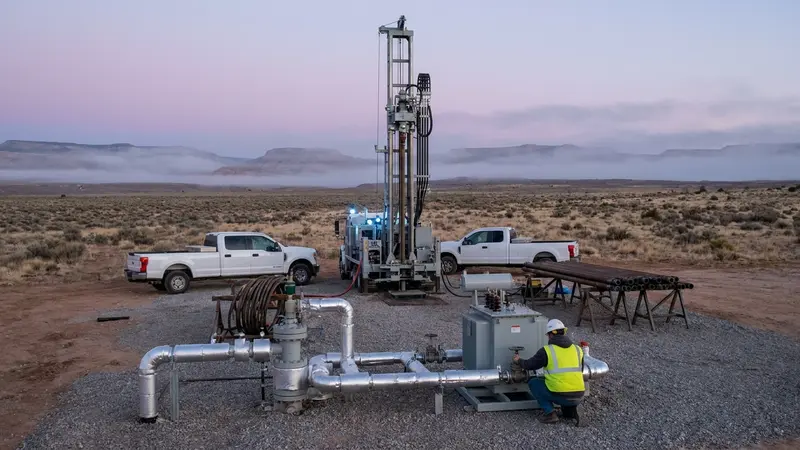
The deal is a major vote of confidence for a technology that has not yet been proven commercially. Quaise plans to drill ultra-deep wells with a vacuum-tube gyrotron, technology originally developed at MIT. The gyrotron sends high-frequency electromagnetic waves down a borehole to vaporize rock, while a jet of gas clears away the ash. Quaise CEO Carlos Araque said the agreement builds “the commercial foundation for superhot geothermal.”
OilPrice.com notes the method has yet to be proven at commercial scale. The enhanced geothermal sector still faces high up-front and operational costs because it lacks scale. Geothermal supplies about 0.4% of the US energy mix, even though the US leads the world with roughly 3.7 gigawatts of installed capacity. A Rhodium Group estimate cited in the report says geothermal could meet up to 64% of data center energy demand growth by the early 2030s.
The report does not name the utility, the interconnection arrangement, an EPC contractor, a construction start date or a contract value.
What It Means for Subcontractors
This quarter
- Confirm who is buying scopes. The source names Quaise as the developer but no EPC, drilling contractor or procurement contact. Ask Quaise directly whether it runs a vendor registration process for Project Obsidian. Lead with your trade (drilling support, pipe, civil, electrical) and your Oregon or Western US track record.
- Do not budget for this work yet. The 2030 delivery target is a goal, not a construction schedule, and the technology is unproven at commercial scale. Our read, not the source’s: treat Obsidian as a position-for-later item unless a start date is announced.
Position for later (2028-2030 window)
- Drilling support and service companies: Quaise’s gyrotron approach differs from conventional rotary drilling, so scope may differ from a standard geothermal well. Our read: expect the first work to be site-specific, such as pad prep and gas, water and materials handling, and expect less of the conventional rig-support work you may be used to.
- Civil and pipe contractors: Any commercial plant would need well-pad work and power-generation facilities. The source gives no sizing or location detail beyond Central Oregon. Document your high-temperature piping and heavy civil experience now so you are ready when packages appear.
- Electrical and E&I contractors: A 50 MW delivery commitment implies grid interconnection work. The source does not name the Oregon utility. Once it is identified, check that utility’s interconnection queue for Obsidian-related filings, which would show the project’s timing and electrical scope.
Why it matters beyond Oregon
- The Rhodium Group’s 64% figure and the broad bipartisan support OilPrice.com cites suggest more deep-drilling geothermal demand tied to data centers. Subs with oil and gas drilling or well-pad experience may find a second market. Whether it scales depends on whether Quaise’s method works commercially.