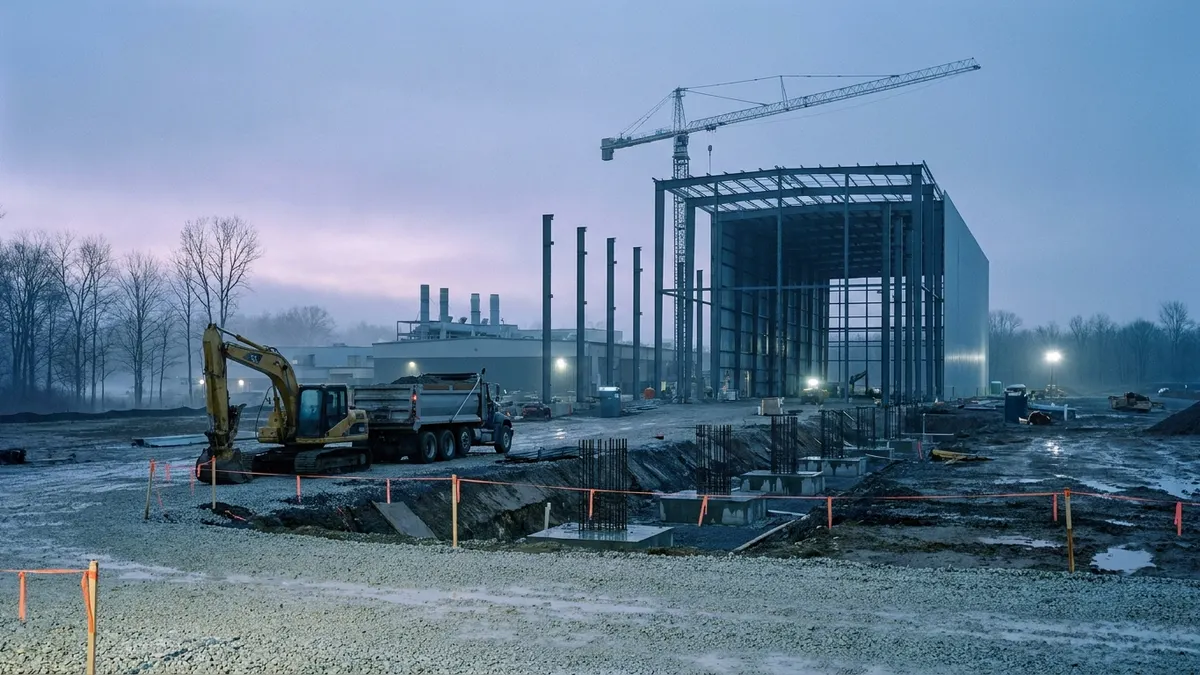
GlobalFoundries Malta Fab Starts With $10B, Could Hit $21B
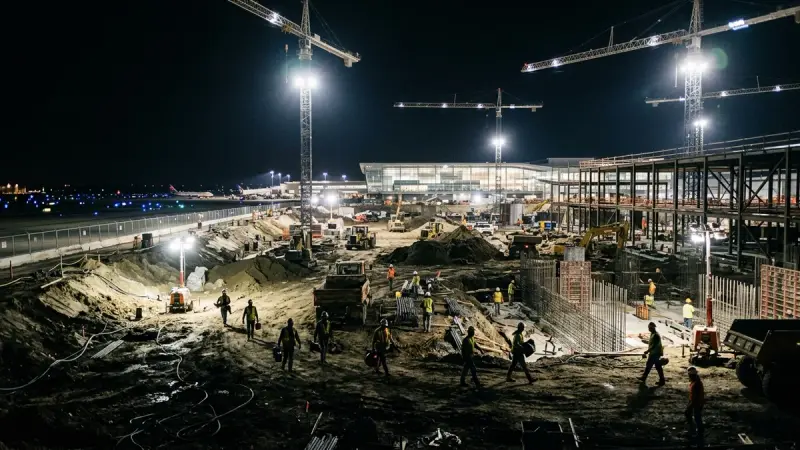
GlobalFoundries has finished permitting and started early site work on a $10 billion first phase at its Malta, N.Y., campus, part of a U.S.-Japan program that could reach $21 billion if a second fab goes ahead. ENR reports that the company announced the financing Oct. 14 and expects to break ground before year-end. The source does not name a general contractor for the new phase.
Background
The first phase is a 300-mm fab next to the existing Fab 8. ENR reports that Japanese investment of about $10 billion will fund it, and a second investment of roughly the same size could fund another fab, bringing the total to as much as $21 billion. ENR notes these are total investment figures, not disclosed construction contract values.
The ownership structure is unusual. A special-purpose vehicle owned by the U.S. and Japanese governments will fund and own the fab infrastructure and manufacturing equipment, while GlobalFoundries manages construction and operates the facilities. CFO Sam Franklin said the vehicle’s obligations cover “the entirety of the funding requirements, project development, construction, ramp operations, technology, and management fees.”
On schedule, GlobalFoundries expects the first fab to be ready for equipment in 2028 and to produce its first wafers in 2029, eventually adding about 900,000 wafers of annual capacity. CEO Tim Breen said on the investor call that key suppliers are lined up and early enablement work is already underway. The company says permitting and environmental approvals are complete and core infrastructure is in place. ENR reports that stakeholders must make a go/no-go decision on the second phase before the end of 2028.
Other funding pieces are also in play. The U.S. Commerce Department agreed to redirect up to $955 million from GlobalFoundries’ existing CHIPS award toward research and capital investments at Malta and Burlington, Vt., without raising the total federal award. New York has committed $575 million in performance-based Green CHIPS tax credits and $30 million for infrastructure. The company estimates the two-phase program would support about 27,000 construction and related ecosystem jobs and more than 1,000 manufacturing jobs.
On the contractor question, ENR reported in 2024 that records showed JE Dunn Construction had been hired for the earlier-planned expansion. GlobalFoundries did not say whether the newly financed phase relates to that project or whether JE Dunn remains on the team, and JE Dunn referred questions to the company.
Analysis
Permitting risk is largely cleared, and that changes the bid picture. Many large industrial projects stall on approvals. Here, approvals are done and the site already has core infrastructure, so the schedule now turns on procurement and sequencing. A groundbreaking before year-end and equipment-ready status in 2028 leave a compressed window for the building shell and cleanroom systems. That makes early package decisions the main thing to understand.
The likely package sequence (our inference). The source does not lay out a work breakdown, so this is our read of how a fab of this type typically proceeds, not something GlobalFoundries or ENR stated:
- Earthwork and site preparation first, which may overlap with the “early enablement” work Breen described.
- Site utilities and any remaining infrastructure tie-ins next.
- Structural work after that. ENR’s archive on the original Fab 8 complex describes steel and precast concrete erection as a major milestone, though that is a 2010 reference and not a statement about this project’s design.
- Cleanroom and process MEP last, ahead of tool hookup, to hit the 2028 equipment-ready target.
If that sequence holds, the earliest scopes may already be placed or close to it, since Breen said key suppliers are lined up. Later packages are where open competition is more likely. That is also our inference.
The GC question is open. The source does not name a GC for the new phase. The JE Dunn record dates to the earlier plan, and neither company confirmed its role going forward. Subcontractors should not assume JE Dunn holds the work, and should not assume it doesn’t.
Owner structure matters for payment and compliance. The government-owned SPV will own the assets and fund construction, while GlobalFoundries manages the build. The source does not say how contracts will be held or what flow-down terms apply. Subcontractors should expect that question to be answered in the contract documents, not in press releases.
The second phase is a real option, not a commitment. Per ENR, stakeholders must decide go/no-go on it before the end of 2028. A sub that staffs and equips for $21 billion of work is taking a risk the owners have not yet taken themselves.
What It Means for Subcontractors
- Earthwork and site civil: Early enablement is already underway and groundbreaking is expected before year-end. Any open site-prep or grading scope is the nearest-term opportunity, and it may already be committed.
- Utilities and underground: Core infrastructure is reportedly in place, so remaining work is likely tie-ins and extensions for the new fab. Our inference is that these follow site prep, with scopes sized to the first phase only.
- Structural steel and precast: The first fab must be equipment-ready in 2028. Steel and concrete trades should expect a short procurement runway after groundbreaking, so fabrication capacity commitments will likely be needed early.
- Cleanroom MEP, E&I and process piping: These packages are the most schedule-critical in the 2028 equipment-ready target. Contractors with semiconductor or cleanroom experience should get qualified now, since the source says suppliers are already being lined up.
- Bid positioning: The source does not name a GC. JE Dunn was reported in 2024 to have been hired for the earlier plan, but neither it nor GlobalFoundries confirmed its current role. Pre-qualify with GlobalFoundries as the construction manager and with JE Dunn.
- Labor planning: The company’s 27,000 jobs figure covers construction and related ecosystem jobs across both phases. Size crews against the $10 billion first phase, not the $21 billion total, until the go/no-go decision at the end of 2028.
- Funding certainty: The $955 million CHIPS redirect applies to research and capital investments at Malta and Burlington, Vt., and does not raise the federal award. The $575 million in New York Green CHIPS credits is performance-based. Payment security may rest on the SPV’s funding commitment, but confirm payment terms in your contract.