Five State DOTs Are Spending Billions This Spring. Here's Where Civil Subcontractors Should Look
According to Construction Dive, five state departments of transportation are launching major infrastructure programs this spring, collectively dispensing billions of dollars across the Midwest, South, and West on highway expansions, bridge replacements, and interstate upgrades. For civil subcontractors, the 2026 construction season is shaping up to be one of the busiest in recent memory, and knowing where the money is concentrated matters.
Background
The annual spring construction season kickoff is a fixture in the civil infrastructure calendar, but the scale varies year to year depending on federal funding cycles, state budgets, and project backlogs inherited from previous seasons. This year, several states are reporting record or near-record program sizes, a direct downstream effect of the Infrastructure Investment and Jobs Act (IIJA) funds that have been moving through state DOT pipelines since 2022.
Construction Dive’s reporting covers announcements from Minnesota, Ohio, and Texas, among others. The numbers are significant.
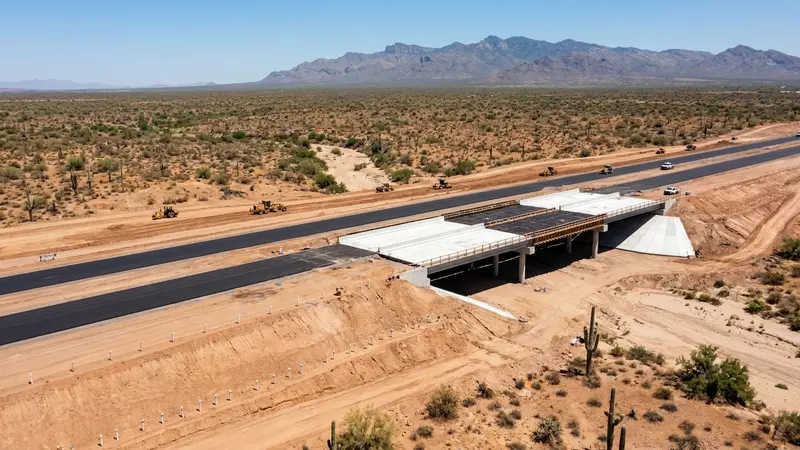
Ohio’s DOT is calling its 2026 program a record-breaking season, with $3.4 billion in work spread across 977 new projects. The agency plans to improve 739 bridges and approximately 4,562 miles of roadway statewide. Major contracts include a $280 million job on I-90 in Cuyahoga County covering pavement replacement and five bridge replacements, and a $274 million expansion of 25 miles of U.S. Route 33 between Athens and the Ohio River from two to four lanes. Other notable Ohio projects include a $157 million bridge replacement on State Route 8 in Summit County and a $47.2 million rehabilitation on State Route 16 in Licking County.
Minnesota’s DOT is running more than 200 road and bridge projects this construction season, with an additional 51 jobs tied to airports, water ports, rail crossings, and transit. The flagship project is a $195 million Highway 65 reconstruction in Blaine, a four-year effort to build four new interchanges. Supporting that are a $114.8 million underpass project in Moorhead, a $76 million I-94 expansion between Albertville and Monticello, and the final year of $67 million in improvements at the I-94 and I-394 interchange in Minneapolis.
Texas, as expected, is also in the mix. TxDOT’s I-35 Capital Express Central project in Austin continues to move forward, a multi-billion dollar corridor overhaul that is one of the largest active highway projects in the country.
Analysis
The concentration of mega-projects in Ohio and Texas is notable, but the story for subcontractors isn’t just about the headline dollar figures. It’s about project type and duration.
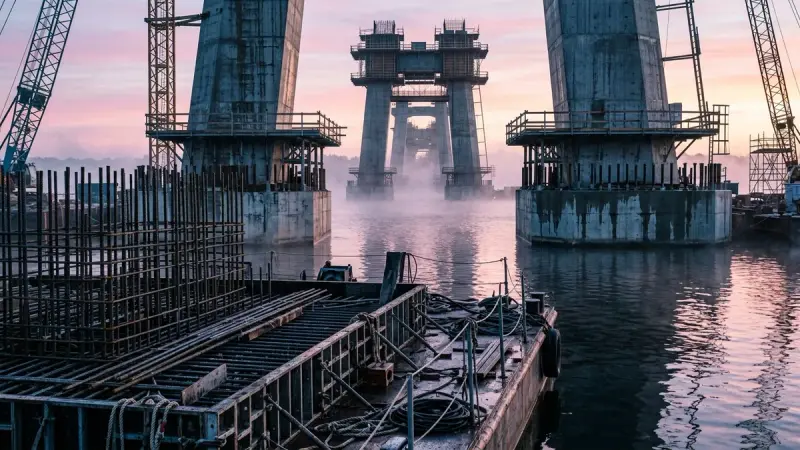
Ohio’s program is heavily weighted toward bridge work, with 739 bridges in the improvement queue. Bridge projects typically require specialized subcontractors including structural steel erectors, concrete forming crews, geotechnical drilling firms, and traffic control specialists. A state running that volume of bridge work in a single season creates real demand pressure on those specialty trades, which means subcontractors with bridge-specific capabilities are in a strong position to negotiate rates and secure backlog heading into summer.
Minnesota’s multi-year projects tell a different story. A four-year highway reconstruction like the Highway 65 work in Blaine creates sustained revenue opportunity, not just a one-season spike. Subcontractors who lock into the prime contractor’s supply chain early on projects like that can plan manpower and equipment utilization well into 2028 and 2029. In a market where forward visibility is hard to come by, that kind of duration is worth pursuing aggressively.
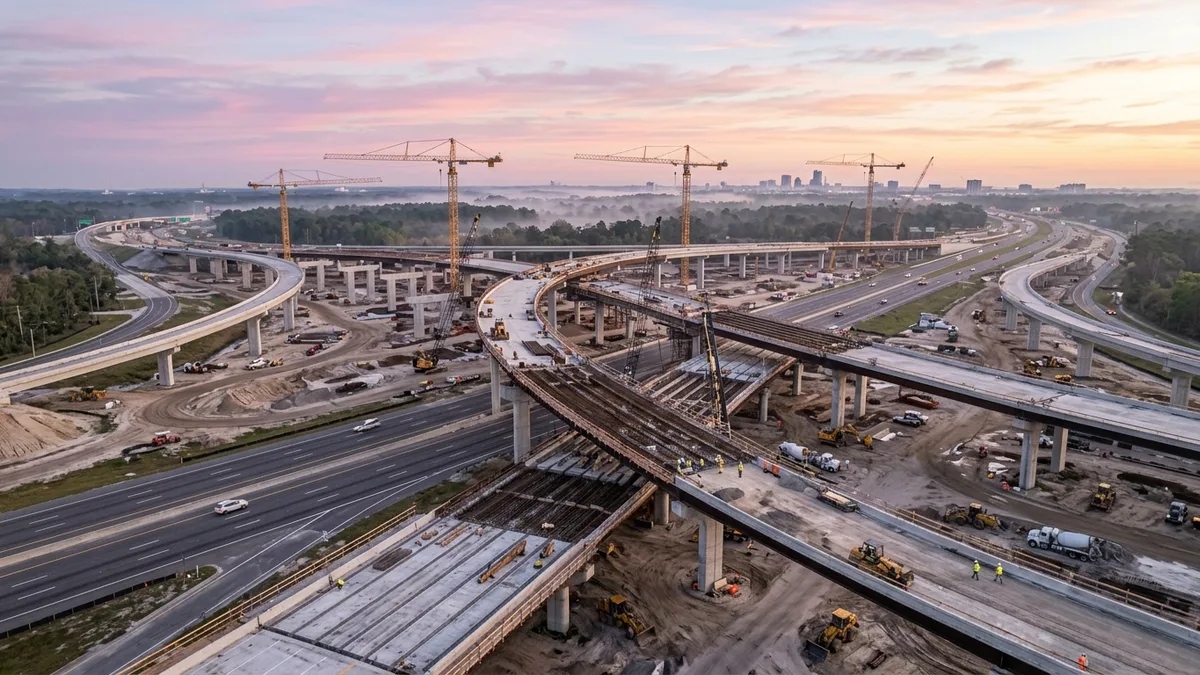
The Texas angle is harder to quantify from this reporting alone, but TxDOT consistently operates one of the largest DOT construction programs in the country. The Austin I-35 project is a particularly important one to watch because its urban corridor complexity drives demand for traffic management firms, utility relocation contractors, and smaller civil specialty crews who can operate in tight, congested environments. That’s a different skill set from a rural interstate expansion, and firms positioned for urban civil work have a distinct advantage there.
More broadly, the volume of IIJA-funded work entering the construction pipeline in 2026 reflects the reality that federal infrastructure dollars authorized in late 2021 have taken several years to move through planning, environmental review, and procurement. The peak of that spending is arguably arriving now, which means subcontractors who haven’t yet built relationships with the prime contractors active in these states need to move quickly.
What It Means for Subcontractors
-
Ohio is the highest-volume market right now. A $3.4 billion single-season program across 977 projects means a large number of prime contracts hitting the street. Subcontractors in the Midwest with bridge, paving, or traffic control capacity should be actively pursuing prequalification with ODOT and reaching out to primes already awarded work on I-90, Route 33, and Route 8.
-
Minnesota’s multi-year projects offer backlog stability. The Highway 65 Blaine reconstruction runs four years. Firms that can secure subcontract positions on projects like this gain planning certainty that single-season jobs don’t provide. Reach out to primes before mobilization, not after.
-
Texas urban corridor work requires specific capabilities. The I-35 Capital Express project in Austin is not a typical greenfield highway job. Firms experienced in urban reconstruction, utility coordination, and phased traffic management are best positioned. If that’s your profile, TxDOT’s procurement page and the Austin District should be on your radar now.
-
Bridge specialty trades are in high demand. Ohio alone is targeting 739 bridge improvements. Structural subcontractors, concrete forming crews, and geotechnical firms with bridge experience should expect strong leverage in negotiations this season. If you’ve been underpricing to stay competitive, this is a market where that may no longer be necessary.
-
IIJA funding is peaking, not beginning. Don’t assume this level of DOT spending continues indefinitely. The current volume reflects years of delayed project delivery finally hitting construction. Firms should treat 2026 and 2027 as the window to build relationships and backlog, not a permanent baseline.
-
Prequalification timing matters. State DOT prequalification processes can take months. If your firm isn’t already prequalified in Ohio, Minnesota, or Texas, start that process now to avoid missing mid-season bid opportunities.