DOE's $1.9B Transmission Push Signals Near-Term Work for Line Crews
The Department of Energy’s latest transmission funding round points to a wave of reconductoring and grid-tech installation work that will need boots on the ground long before any new steel goes up, Utility Dive reports. DOE said Thursday it plans to offer $1.9 billion to fund 31 grid-improvement projects expected to add 23 GW of capacity to the transmission system, with sponsors covering roughly $3.4 billion of their own money for a combined $5.3 billion in spending.
Background
The funding runs through DOE’s SPARK program, short for Speed to Power through Accelerated Reconductoring and other Key Advanced Transmission Technology Upgrades, which draws its money from the Infrastructure Investment and Jobs Act. According to Utility Dive, the selections came out of a mid-March DOE solicitation focused on grid resilience, smart grid and grid innovation programs.
DOE expects project sponsors to reconductor or rebuild more than 1,500 miles of transmission lines and add grid-enhancing technologies across nearly 21,000 miles of existing lines. DOE Office of Electricity Assistant Secretary Catherine Jereza said in a press release that the selected projects “modernize critical infrastructure, maximize the capacity of existing lines, and unlock more than 20 GW of additional grid capacity.” The department framed the approach as a way to avoid the decades-long timelines of new transmission corridors, saying advanced grid technologies will deliver upgrades in “record time” by maximizing existing rights-of-way and cutting congestion bottlenecks.
Utilities named in DOE’s project summary include Alabama Power, Duke Energy Carolinas, Eversource Energy, Kit Carson Electric Cooperative and PPL Electric. Two of the larger awards target interregional links: the Colorado Energy Office is sponsoring a $1.2 billion project meant to expand transfer capability across Colorado, Texas and neighboring regions, and the Oklahoma Office of Management and Enterprise Services is the lead recipient on an $832 million project called the Three Corners Connector, which would tie the Southwest Power Pool in Oklahoma to the Western Electricity Coordinating Council in Colorado. Grid United is developing that project, per Utility Dive’s report.
Analysis
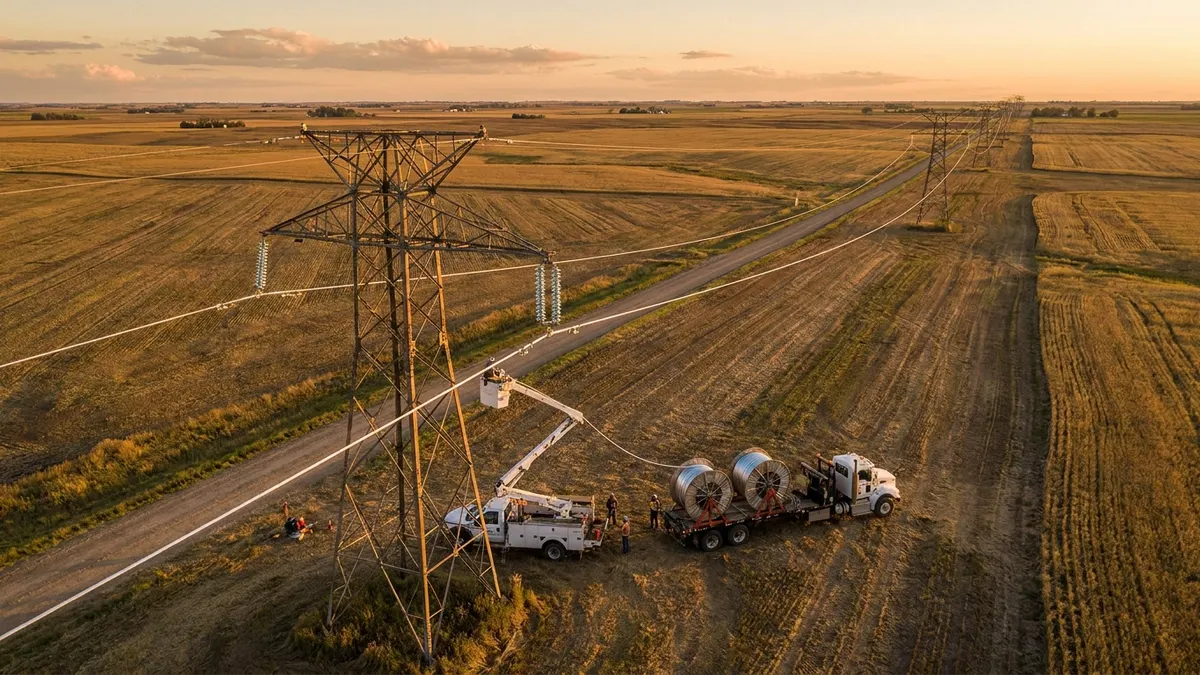
The dollar figures matter less to subcontractors than the work type they signal. Reconductoring and grid-enhancing technology deployment are fundamentally different jobs than greenfield transmission builds. Instead of years of siting, permitting and right-of-way acquisition, these projects work within existing corridors, which typically means a faster path from award to construction mobilization. For crews that specialize in live-line reconductoring, dynamic line rating installation and substation upgrades, that compressed timeline could translate into subcontract packages hitting the street sooner than a typical greenfield transmission project would allow.
The scale here is also notable. Nearly 21,000 miles of lines getting grid-enhancing technology and over 1,500 miles slated for reconductoring or rebuild is a large geographic footprint spread across multiple utility territories rather than concentrated in one region. That spread means the work will likely be parceled out through many separate subcontract packages tied to each sponsor’s own procurement process, not a single centralized bid.
The two interregional projects, the Colorado-anchored $1.2 billion effort and the Oklahoma-based Three Corners Connector, stand out because they involve multi-state coordination between grid operators. Projects that cross interconnection seams tend to require more substations, more interconnection equipment and more civil work to tie in new switching stations, which historically means larger scopes for electrical and civil subs compared with straight reconductoring jobs on a single utility’s system.
DOE’s press language about avoiding “expensive greenfield construction” is worth reading carefully. It suggests these sponsors are prioritizing labor and technology costs over land acquisition and long permitting fights. For subcontractors, that shifts the competitive question away from environmental review timelines and toward crew availability, equipment access and pricing for specialized grid-tech installation work like dynamic line rating sensors, the kind Ameren has already been installing on congested lines, based on the DOE-supplied photo accompanying the announcement.
What It Means for Subcontractors
- Confirm exposure to the named utilities directly: Alabama Power, Duke Energy Carolinas, Eversource Energy, Kit Carson Electric Cooperative and PPL Electric are the sponsors DOE listed, so subs working those territories should reach out to utility procurement contacts now to ask when subcontract packages for reconductoring and grid-tech installation will open.
- Price line crew and reconductoring capacity for the two largest projects: the $1.2 billion Colorado Energy Office project spanning Colorado, Texas and neighboring regions, and the $832 million Three Corners Connector linking Oklahoma’s Southwest Power Pool territory to Colorado’s WECC territory, both developed by Grid United on the Oklahoma project.
- Document current crew and equipment capacity for grid-enhancing technology installs, since DOE’s plan covers nearly 21,000 miles of existing lines getting sensor and dynamic-rating upgrades rather than new construction, a scope that favors electrical subs and instrumentation techs over heavy civil crews.
- Certify crews now for live-line reconductoring work on the more than 1,500 miles slated for rebuild, since DOE’s stated goal of delivering upgrades in “record time” suggests sponsors will move quickly from award to construction mobilization compared with typical greenfield transmission timelines.
- Track DOE’s forthcoming award summary for exact project names and sponsor contacts beyond the two interregional projects named in this release, since 29 of the 31 selected projects were not detailed in the source material and their locations remain unconfirmed pending DOE’s full project list.