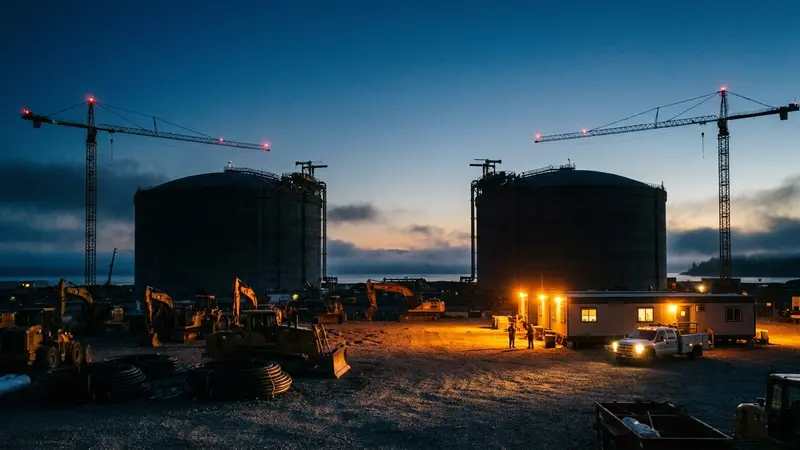
Data Center Construction Spending Surges 28% While the Rest of the Market Stalls
According to Construction Dive, spending on data center construction has surged 28.1% over the past year, reaching a seasonally adjusted annual rate of $50.7 billion in April. That figure comes from an analysis by Associated Builders and Contractors (ABC), and it stands in sharp contrast to the rest of the nonresidential construction market, where momentum is, in the words of ABC chief economist Anirban Basu, “difficult to find.”
For subcontractors trying to read where the work is headed, this divergence is one of the clearest signals in years.
Background
The ABC report covering April construction spending shows that nonresidential construction overall ticked up just 0.1% month over month. Public projects and data centers accounted for nearly all of that nominal growth. Private construction spending, by contrast, fell for the seventh consecutive month in April.
The manufacturing construction sector took the hardest hit. Spending on manufacturing projects dropped 1.2% month over month in April and is down 18.4% over the past year, according to the ABC report. Commercial construction also slipped, falling 0.5% in April compared to March.
Public construction was a relative bright spot, rising 0.4% month over month and 3.7% higher than a year earlier. Highway and street construction, the largest public category, increased 0.4% month over month and 4% over the past year. However, that segment faces a near-term risk: federal surface transportation funding expires September 30, and lawmakers have yet to act on renewal. The Associated General Contractors of America has warned that any lapse would force contractors to sideline workers and delay equipment and materials purchases, calling the funding renewal “critical to maintain momentum in highway construction.” AGC CEO Jeffrey Shoaf put it plainly: “That would be a significant setback for the economy overall.”
So the market, stripped down to its core, looks like this: data centers up sharply, public infrastructure holding steady but at risk, and most private nonresidential work in retreat.
Analysis
The 28.1% spending increase in data center construction is not a blip. At $50.7 billion annualized, this is a structural shift in where private capital is flowing in the built environment. Hyperscale cloud providers, AI infrastructure build-outs, and colocation demand have collectively turned data center work into one of the most active construction categories in the country, at a moment when most other private sector activity is contracting.
Basu acknowledged that data center projects have “buoyed the ABC Construction Backlog Indicator and kept ABC members confident about their outlooks, at least on the whole.” That’s notable because backlog is a leading indicator. It means the data center pipeline isn’t just supporting today’s revenue for contractors who have positioned there — it’s underwriting their near-term future.
But Basu also issued a caution worth taking seriously: “Rising materials prices and a lack of momentum in many commercial segments may eventually weigh on contractor sentiment.” In other words, the data center tailwind is real, but it isn’t infinite, and it doesn’t cure the broader market’s problems. A contractor who has diversified away from commercial and manufacturing work may be well-positioned today. One who remains over-exposed to those segments, and hasn’t built capabilities relevant to data center work, is running out of time to adjust.
The seven consecutive months of declining private construction spending is particularly telling. That’s not a seasonal correction. That’s a prolonged reallocation. Capital that once moved into commercial and manufacturing projects is either sitting on the sidelines or flowing into digital infrastructure instead.
The highway funding cliff adds another layer of risk. If Congress fails to renew surface transportation funding before the September 30 deadline, one of the few remaining stable public spending categories could stall abruptly. Subcontractors with significant highway and civil exposure should be monitoring that deadline closely.
What It Means for Subcontractors
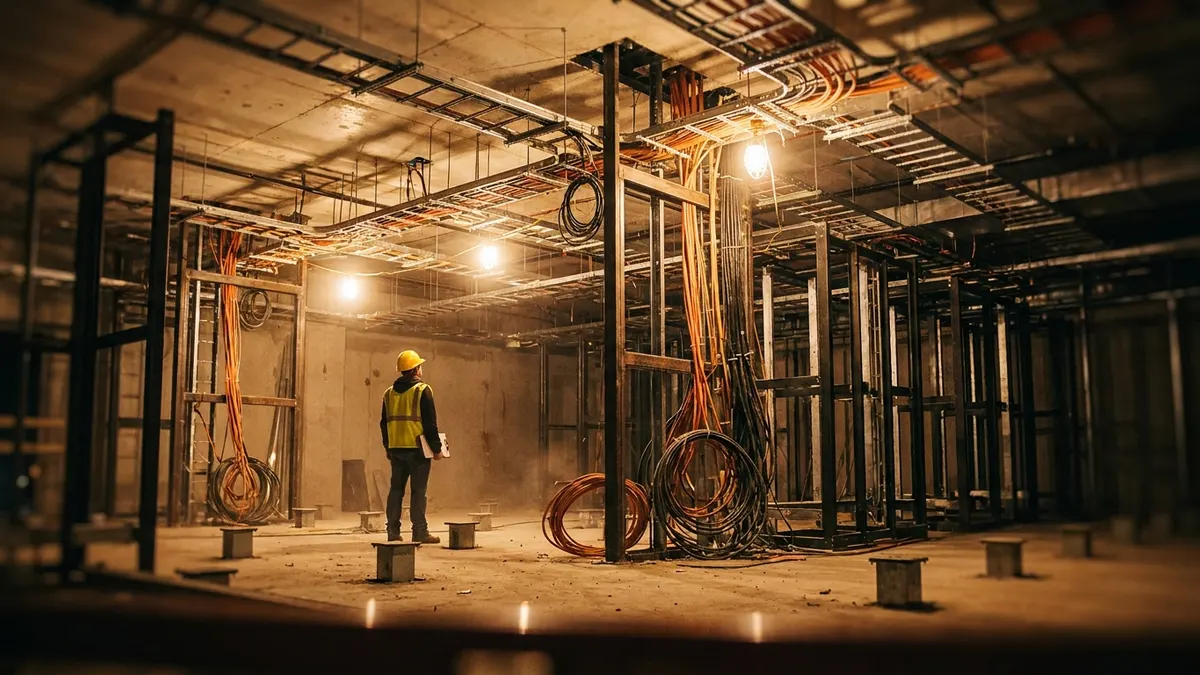
- Data center work is where private capital is moving. If your trade, whether electrical, mechanical, concrete, or steel, is relevant to data center construction, this is the moment to pursue those relationships aggressively. The $50.7 billion annual run rate signals sustained demand, not a one-quarter spike.
- Manufacturing and commercial sectors are contracting. An 18.4% year-over-year drop in manufacturing construction spending is severe. If your backlog is heavily weighted toward those segments, plan for thinner pipelines ahead.
- Public infrastructure is a stabilizer, but not a guarantee. Highway and street construction is up 4% year over year, but federal surface transportation funding expires September 30. Watch the legislative calendar and have contingency plans if federal funding lapses.
- Materials costs are a rising threat. Basu flagged rising materials prices as a potential drag on contractor sentiment. Build escalation clauses into bids where possible and revisit materials procurement strategies now, before cost pressures compound.
- Backlog health is uneven across the market. ABC’s Construction Backlog Indicator is being carried largely by data center projects. If your company isn’t participating in that segment, your backlog picture may look weaker than industry-wide averages suggest.
- Specialization and repositioning take time. Breaking into data center work, whether through new client relationships, certifications, or bonding capacity, is not a quick pivot. Firms that start that process now are better positioned than those waiting for their current segments to recover on their own.