Dallas Fed Survey: Oil Execs Flag Iran Conflict and Rising Service Costs as Top 2026 Risks
According to World Oil, the Dallas Fed’s second-quarter 2026 Energy Survey found that oil and gas activity across the U.S. Southwest strengthened significantly, but executives are sounding alarms over geopolitical risk, cost inflation, and unpredictable policy signals heading into the second half of 2026.
Activity Surges, but Services Costs and Geopolitical Risk Cloud the Outlook
The survey’s business activity index jumped from 21.0 in Q1 to 46.1 in Q2, its strongest reading since mid-2022. Nearly half of respondents reported increasing capital investment, and oil production posted modest gains, though natural gas output stayed mostly flat.
The Iran conflict emerged as the dominant source of uncertainty. “Under the current conditions with the Iranian war, it is hard to predict the price of crude oil with any amount of certainty,” one executive told the Dallas Fed. A separate respondent flagged a new kind of market risk: “Markets can price risk, but they can’t price a tweet. The whiplash from diplomacy-by-social-media has become the single most unpredictable input in our planning.”
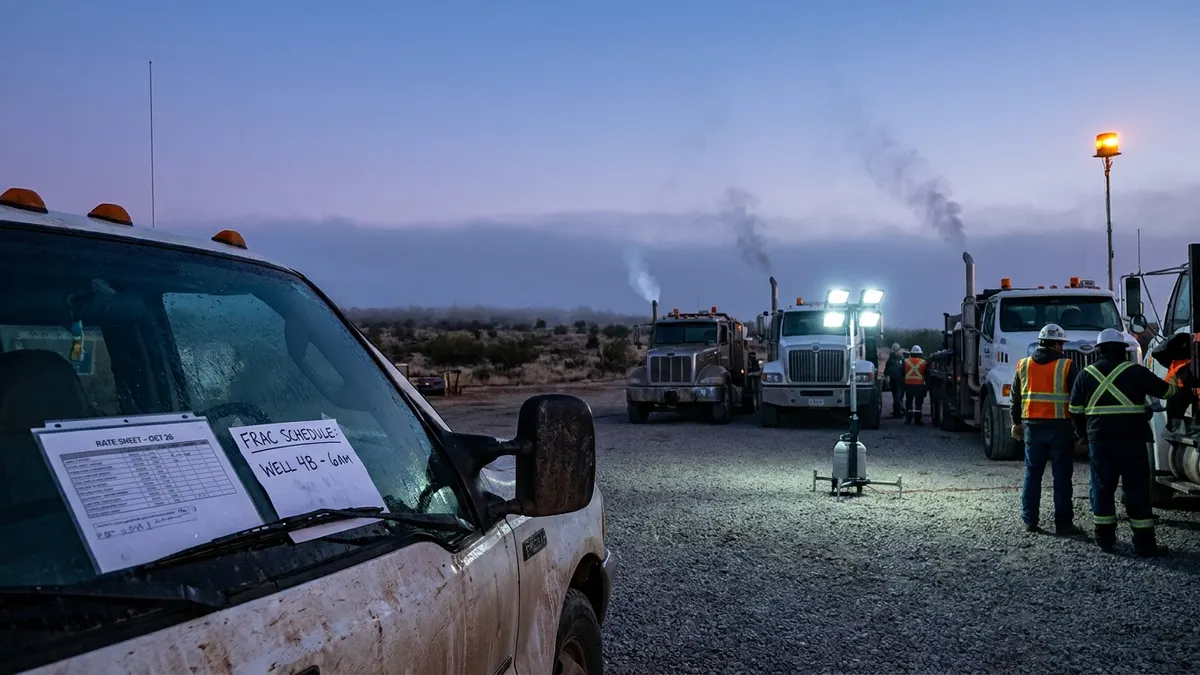
On the cost side, oilfield services firms reported sharp input cost increases, with diesel fuel, pressure pumping, and labor leading the pressure. The survey’s oilfield services input cost index reached 64.4 for the quarter, and supplier delivery times lengthened. One operator described an unusual situation: a pressure pumping company approached him asking how much above the proposed rate he would pay just to lock in a frac date.
What It Means for Subcontractors
- Pricing power is shifting. Service providers are successfully pushing through rate increases, but at least one E&P executive noted this is already discouraging development plans for 2027. Higher prices may win in the short term but could reduce demand later. Where possible, subcontractors should explore locking in multi-year contracts now rather than relying on continued spot-market leverage.
- Lock in work now. With activity at its strongest since mid-2022 and frac crews actively negotiating above posted rates, subcontractors and field service companies are in a position to firm up contracts before any geopolitical or price correction.
- Diesel and supply chain costs remain a squeeze. The cost index at 64.4 and lengthening delivery times signal continued margin pressure. Subcontractors should revisit fuel surcharge clauses and material escalation terms in any contracts being negotiated or renewed.
- Plan for volatility, not stability. E&P operators are explicitly saying crude price forecasting is unreliable right now. Subcontractors tied to operator capex should build flexibility into their own forward planning and avoid overcommitting fixed costs.