Corona Interchange Job Swapped 55-Hour Shutdown for Overnight Work
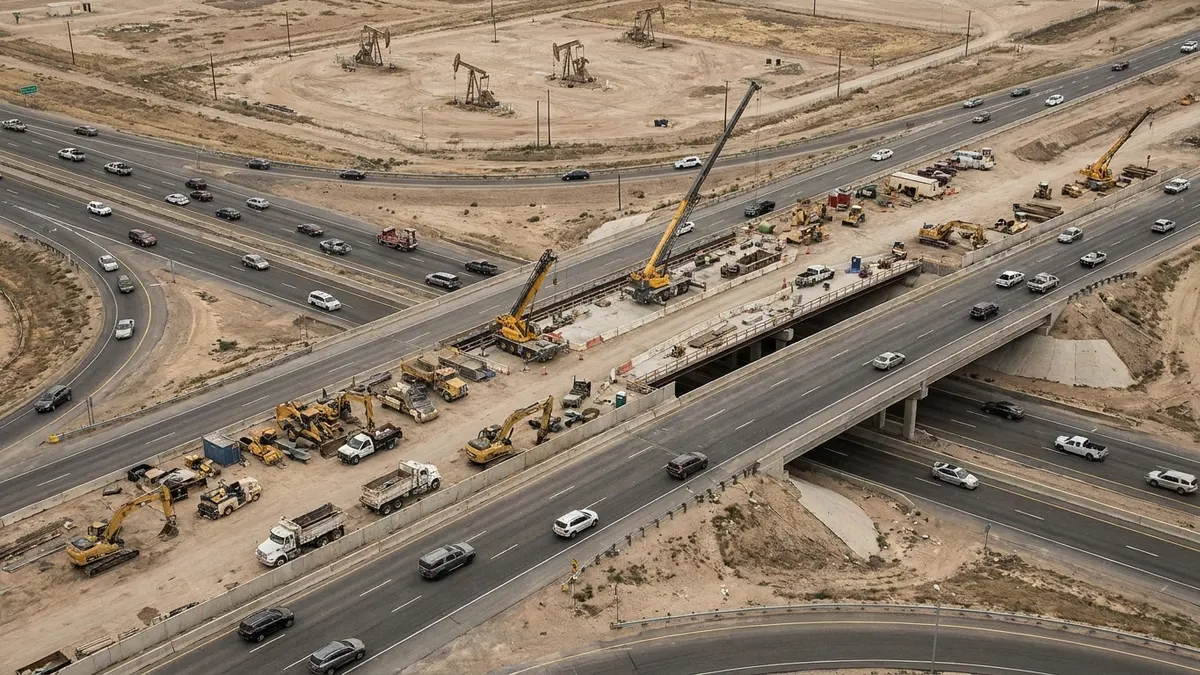
A planned 55-hour weekend shutdown of the SR-71/SR-91 interchange in Corona, Calif., gave way to staged work beside live lanes and repeatable overnight windows. ENR reports the project won a West Best Projects Award of Merit.
What Happened
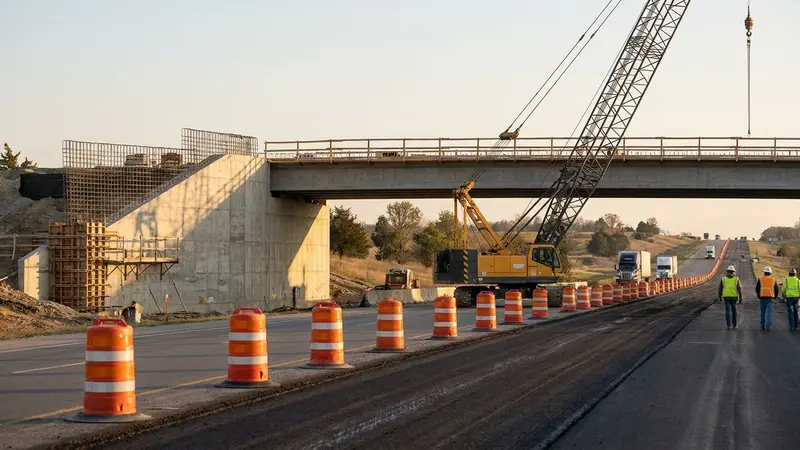
The interchange is a gateway shared by Riverside, Orange and San Bernardino counties, and carries both commuters and freight. The closure plan drew objections from the city of Corona. In response, the team redrew traffic control limits, staged work beside live lanes and broke critical operations into repeatable overnight windows, according to ENR. That included setting a 15-ft-dia reinforcement cage with a 350-ton crane.
The below-grade work cost the most time. Differing site conditions turned up at four bents, and two more produced obstructions that weren’t on any drawings. A sign foundation sat directly in the Bent 4 drilled shaft, and riprap with a drainage headwall sat at Bent 7. Higher-than-expected groundwater at Bent 5 complicated permanent casing. Foundations planned for around six months took nearly a year. Crews cored through the obstructions, rewrote work plans for wet drilling and kept other fronts moving.
Each casing came in six sections of about 45,000 lb. Instead of assembling a 270,000-lb unit and lifting it, crews set the first section, secured it and welded the rest on in sequence from engineered platforms. A lock-off and load-transfer system took the load progressively. The $137.45 million project opened in August 2025, with $1.3 million (roughly 1% of the total) returned through value engineering.
Project stage: complete and open. ENR does not report shift counts, premium labor costs or subcontract values for the overnight approach.
Owner is Riverside County Transportation Commission. Skanska USA Civil West was GC, Parsons was civil engineer, Condon-Johnson handled deep foundations and CHA Solutions was construction manager.
What It Means for Subcontractors
- Drilled shaft and deep foundation firms: The shaft schedule ran from about six months to nearly a year, roughly double. Before your next urban interchange bid, ask the GC for utility, sign and drainage as-builts at each bent location. Carry a coring and wet-drilling allowance in your price.
- Crane, rigging and welding crews: The casing method relied on six sections at about 45,000 lb each, welded in sequence from engineered platforms. Build your lift and weld plan around sequential section sets, not a single 270,000-lb pick. Ask the GC’s engineer for a lock-off and load-transfer design early in submittals.
- Traffic control and night-shift trades: With full closures off the table, work moved to overnight windows and zones beside live lanes. Price repeatable night cycles into your bids: setup and teardown each shift, crew rotations and staged lane limits. Confirm with the GC whether the owner’s closure restrictions are in the contract before you commit crew counts.
- Rebar and cage setters: A 15-ft-dia cage was set with a 350-ton crane inside a limited work window. Confirm your cage-handling picks fit one overnight window before bidding.
- Value engineering: The job returned $1.3 million through VE. Bring your GC a closure-avoidance or sequencing idea during the bid phase, when it can still change scope.