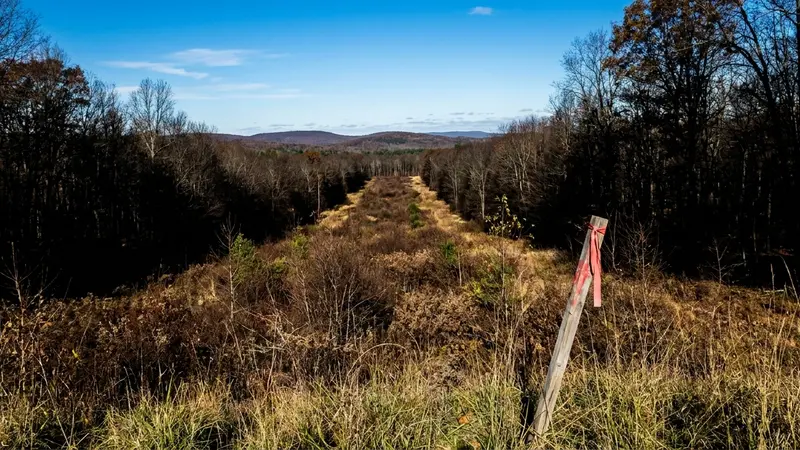
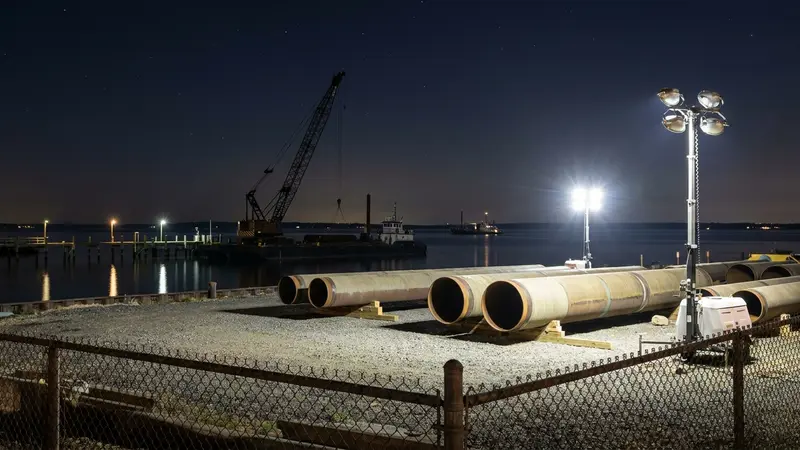
Constitution Pipeline Clears Federal Hurdle, But NY Fight Signals More Delay
The Constitution Pipeline’s decade-long saga just cleared another federal checkpoint, but Engineering News-Record’s reporting makes clear this project is nowhere near shovel-ready. On Aug. 26, the Federal Energy Regulatory Commission (FERC) moved toward reauthorizing the 125-mile, roughly $1 billion natural gas line from Pennsylvania into upstate New York, finding in an environmental assessment that the revived project would not significantly affect the environment. That finding leans heavily on a 12-year-old environmental impact statement, a decision New York’s Dept. of Environmental Conservation is actively fighting.
For subcontractors watching the Northeast gas market, Constitution is the test case. If Williams Cos. and its partners can push this through federal review and past New York’s objections, it reopens a playbook for other stalled Northeast pipeline projects. If not, it confirms that New York remains close to unbuildable for interstate gas infrastructure, regardless of federal sign-off.
Background
According to ENR, FERC published notice of the environmental assessment in early August, incorporating much of the original 2014 review while checking for changed conditions along the route. That review flagged 330 waterbody crossings, revised stream classifications, and nine new potential landslide areas. It also found a roughly 200,000-square-foot Amazon distribution facility under construction directly in the pipeline’s path near milepost 120 in Schoharie County, where about 2,000 linear feet of pipeline would cross the site’s parking area and stormwater pond. FERC said building through that conflict is feasible but would require “extensive coordination” with the facility’s owner.
New York’s environmental agency disagrees with FERC’s overall conclusion. In Aug. 13 comments cited by ENR, the department told FERC it “must prepare a new Environmental Impact Statement,” pointing to changes in the project footprint, environmental conditions, governing law, and air-modeling guidance since 2014. The state estimates the pipeline would affect more than 300 streams, including at least 87 supporting trout or trout spawning, more than 80 acres of freshwater wetlands, and roughly 500 acres of forest around streams and wetlands.
The comment period on FERC’s assessment runs through Sept. 21, with a federal authorization deadline of Nov. 19. Separately, Constitution is asking FERC to reaffirm that New York waived its Clean Water Act Section 401 authority by not acting on the company’s original water-quality certification within a year, a dispute FERC says it will resolve in a later order. Williams told ENR in May 2025 it was reviving the project after abandoning it in 2020, having already sunk more than $350 million into it. Constitution and its partner Iroquois are targeting a May 2028 in-service date, with initial clearing possibly starting in the fourth quarter of 2026 if approvals come through.
Analysis
The gap between FERC’s technical conclusion and New York’s legal position is the whole story here. FERC’s staff-level finding that no new environmental impact statement is required is not the same as a green light to build. New York has shown for a decade that it can slow-walk or outright block interstate pipelines it opposes, and the state’s Aug. 13 comments read like an opening argument for exactly that kind of resistance again. The agency also flagged that Constitution deferred updated environmental information until after certificate reinstatement, calling that sequencing backwards. That’s a procedural objection state regulators can use to justify further delay even after FERC acts.
Layered on top of that is active litigation. Stop the Pipeline, the landowner group opposing the project, has already challenged FERC’s handling of the revival at the federal appeals court in New York, arguing FERC is relying on dockets a court ordered dismissed in 2021. FERC calls the challenge premature, but the group’s attorney told ENR she expects the fight to ultimately halt the project again, even if FERC issues a new certificate. That is not a fringe prediction. It is the same group that helped stop Constitution the first time.
For contractors, this means the Nov. 19 federal authorization deadline is not the real milestone. The real signal will be whether New York either grants a water-quality certification, gets overruled on its Section 401 waiver claim, or loses its legal challenges outright. Any of those outcomes would be new. None of them have happened yet in this project’s history.
What It Means for Subcontractors
- Pipeline, civil, and HDD crews eyeing Constitution work should treat Q4 2026 clearing estimates as conditional, not scheduled. Constitution has already sunk more than $350 million into this project once before stopping. A second stoppage is a real scenario per the landowner group’s own attorney.
- Contractors near milepost 120 in Schoharie County, particularly those with site access or logistics ties to the Amazon distribution facility under construction there, should expect “extensive coordination” requirements FERC itself flagged, including possible temporary disruption to truck and vehicle movement across roughly 2,000 linear feet of the site.
- Firms with wetland, stream restoration, or environmental mitigation expertise should watch New York’s Sept. 21 comment deadline and the state’s insistence on a full new Environmental Impact Statement. That dispute could generate additional mitigation and permitting subcontract packages if New York prevails.
- Companies with prior bids or scopes tied to the original 2014 Constitution project should check whether earlier route surveys, wetland delineations, or landslide assessments need updating given FERC’s identification of nine new potential landslide areas and revised stream classifications.
- Track the Nov. 19 FERC authorization deadline and the pending New York City federal appeals court ruling on Stop the Pipeline’s challenge. Either could reset the timeline again before any construction subcontracts move forward.