Canada Moves to Fast-Track Three Major Infrastructure Projects Under Building Canada Act
According to a CNW wire report via BOE Report, Canada’s federal government announced on June 24, 2026 that it is initiating the process to potentially list three major infrastructure projects as projects of national interest under the Building Canada Act.
Projects on the Table
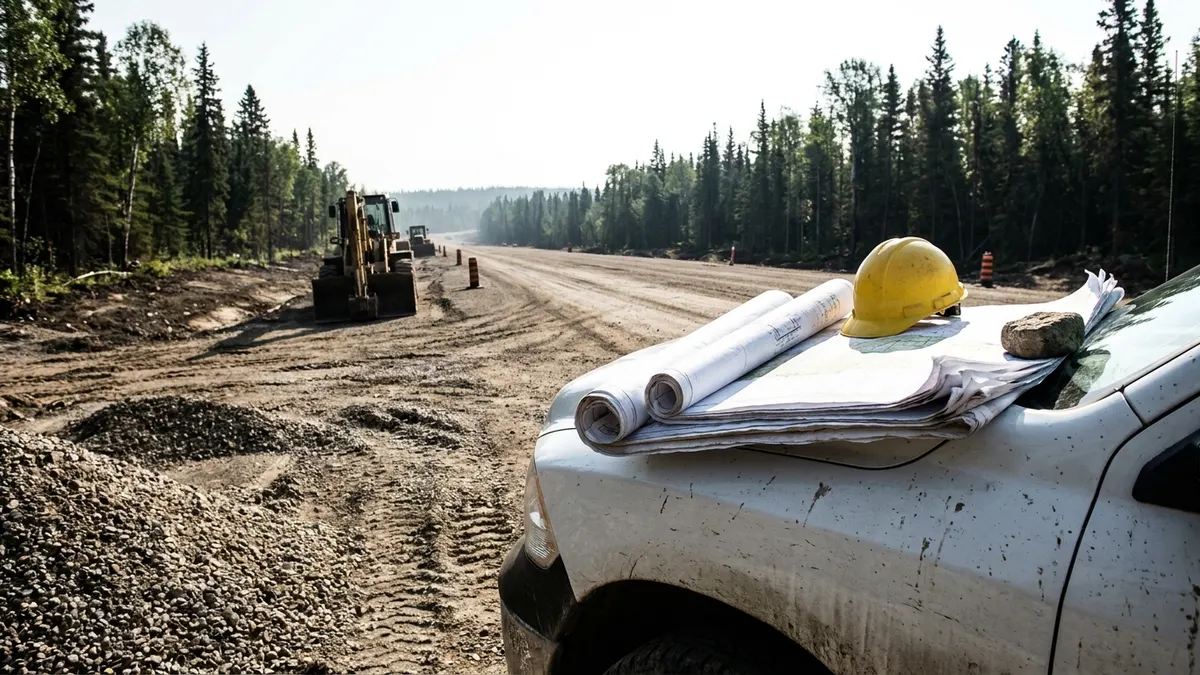
The three projects entering the listing process are the Mackenzie Valley Highway Project, the Grays Bay Road and Port Project, and the Nuclear Waste Management Organization’s Deep Geological Repository (DGR). The Mackenzie Valley Highway and Grays Bay Road and Port projects were referred to the Major Projects Office (MPO) in March 2026, while the DGR referral was announced alongside today’s listing initiation.
The DGR is located in northwestern Ontario, near Wabigoon Lake Ojibway Nation and the Township of Ignace. According to the announcement, it is intended to provide long-term storage for all used nuclear fuel from Canada’s existing reactor fleet, consistent with the federal government’s Nuclear Energy Strategy.
Under the Building Canada Act, listing a project as a national interest project streamlines and consolidates federal permits and authorizations. The practical effect, according to the announcement, is a regulatory shift from debating “whether” a project should proceed to focusing on “how” it will proceed. Consultations with Indigenous rights holders, provinces, and territories are set to begin in the coming weeks, with listing decisions targeted for fall 2026. For the highway and port projects, listing is contingent on completing treaty-based impact assessment and regulatory processes.
What It Means for Subcontractors
- Position now, not later. A fall 2026 listing decision is approaching fast. Canadian subcontractors in civil construction, road building, port infrastructure, and nuclear services should begin identifying prime contractors and procurement contacts on each project before awards are structured.
- Indigenous partnership is a prerequisite. The government has made clear that Indigenous community support is critical to moving forward. Subcontractors pursuing work on the Mackenzie Valley Highway or Grays Bay projects should be developing Indigenous partnership or joint venture arrangements as part of their bid strategy, not as an afterthought.
- Nuclear waste infrastructure is a real market. The DGR project represents a long-duration, technically specialized construction program. Subcontractors with experience in geotechnical, underground construction, or nuclear-adjacent work should be watching the NWMO procurement pipeline closely.
- The MPO changes the approval timeline. With federal permits and authorizations consolidated under the Act, project timelines on listed projects are expected to compress compared to traditional regulatory processes. That means earlier mobilization, tighter bid windows, and less buffer time for subcontractors to prepare.