Burns & McDonnell Tops $1 Billion in Texas and Southeast Revenue, Driven by Data Centers and Power
According to Engineering News-Record, Burns & McDonnell generated more than $1 billion in revenue across the Texas and Southeast region last year, marking a record financial performance for the firm. Roughly 75% of that total came from the Texas and Louisiana subregion alone. The milestone, recognized by ENR Texas & Southeast with its Texas & Louisiana Design Firm of the Year award, reflects where the largest engineering and construction dollars are concentrating right now: data centers, power generation and transmission, and energy export infrastructure.
Background
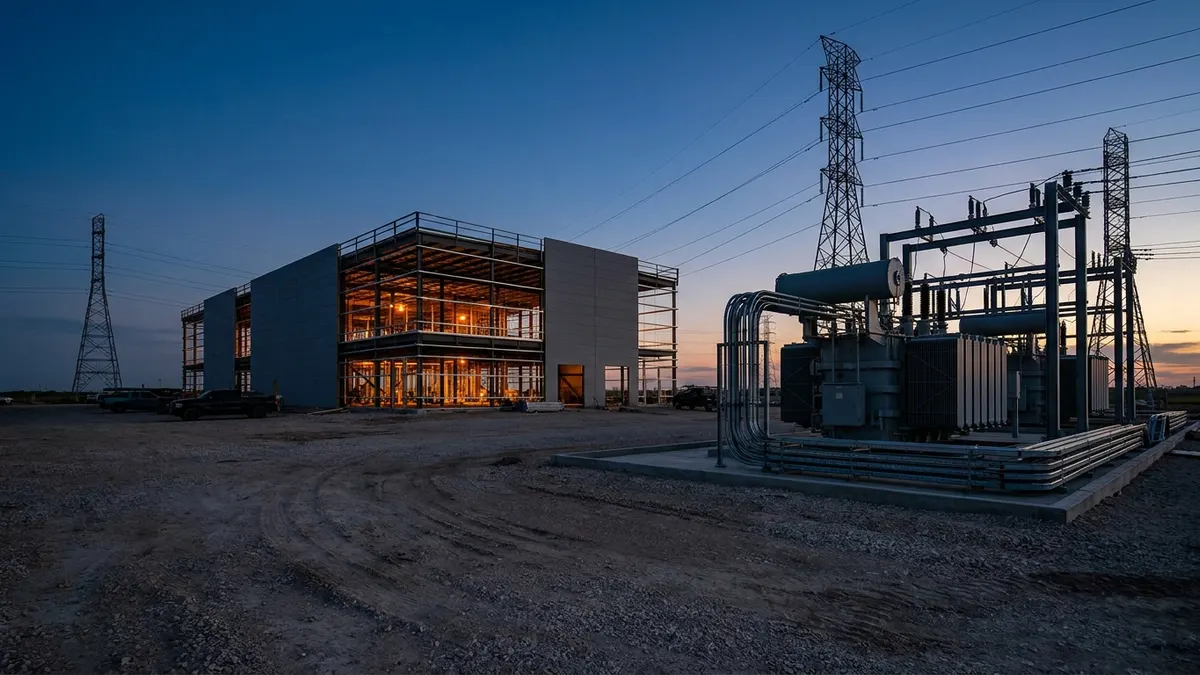
Burns & McDonnell’s growth in the region didn’t happen overnight. According to ENR, the firm launched its mission critical practice nearly a decade ago, when fewer design firms were active in the data center space. That early entry gave it a head start with hyperscale clients and tier-two data center operators alike. Today, the firm’s Dallas office alone has 100 staff dedicated to mission critical work and serves as the company’s global Center of Excellence for that sector.
The power sector has been an equally significant driver, particularly out of the firm’s Houston, Austin, and San Antonio offices. Karen Bray, senior vice president and general manager for Burns & McDonnell’s South Central region, cited generation, battery storage, solar, transmission, distribution, substations, and grid interconnection as active areas. Population growth in Texas is contributing to demand, and so is energy export, including liquefied natural gas infrastructure along the Gulf Coast.
The firm has also leaned into integrated delivery models, working alongside its own construction arm, and has pursued progressive design-build contracts. One example cited by ENR is the Everman Parkway extension for the city of Fort Worth, described as the city’s first progressive design-build transportation project.
Analysis
What Burns & McDonnell’s numbers reveal is less about one firm’s success and more about a structural shift in where construction volume is landing in the southern United States. The combination of hyperscale data center buildout, grid hardening, and LNG export expansion has created a dense cluster of large, complex, multi-discipline projects in Texas and Louisiana. For a firm that can offer civil, structural, mechanical, electrical, fire protection, and commissioning services under one roof, this is an ideal moment. For the subcontractors who execute that work in the field, it’s an equally significant signal.
Scott Clark, vice president and North Texas region general manager at Burns & McDonnell, described mission critical projects as needing “mass grading, roadways, electric substations, water treatment plants, and power,” adding that it covers “civil sitework, architecture, structural, mechanical, electrical, fire protection, commissioning. It’s the full gamut.” That description is essentially a procurement map for field service companies. Every item Clark listed represents a discrete scope of work that engineering firms like Burns & McDonnell routinely subcontract.
The integrated delivery model the firm favors also has implications for how subcontractors get work. When a firm brings its own construction arm to a project, the subcontractor pool is often selected earlier in the process and expected to participate in design-phase collaboration. Progressive design-build, in particular, rewards subcontractors who can engage before drawings are finalized, offer constructability input, and hold pricing through a development phase. Firms still operating purely as bid-day price takers are at a disadvantage on these delivery structures.
The concentration of activity in the Texas and Louisiana subregion, which accounts for roughly three-quarters of Burns & McDonnell’s billion-dollar regional performance, also has geographic implications. The Permian Basin, DFW metroplex, Houston Ship Channel, and Gulf Coast LNG corridor are not evenly distributed markets. Subcontractors with established presence and bonding capacity in those corridors are positioned to capture a disproportionate share of what is clearly a sustained upcycle, not a single-year spike.
What It Means for Subcontractors
- Data center projects require a wide range of simultaneous trade scopes. Civil sitework, electrical, mechanical, fire protection, and commissioning are all active concurrently on large mission critical builds. Subcontractors with multi-trade capabilities or strong relationships across trades are better positioned on these projects.
- The Texas and Louisiana subregion is where the money is concentrating. Firms with bonding capacity, equipment, and crews positioned in DFW, Houston, and the Gulf Coast corridor have the clearest path to this work.
- Burns & McDonnell’s use of progressive design-build signals that early engagement matters. Subcontractors who can participate in pre-construction collaboration and hold pricing through a development phase are more attractive partners on these delivery models than those who only engage at bid time.
- Power infrastructure, including generation, storage, transmission, and substations, is cited alongside data centers as a major growth driver. Electrical and civil subcontractors serving the energy sector should be tracking both the hyperscaler buildout and the broader grid investment cycle in Texas.
- LNG and energy export infrastructure along the Gulf Coast adds another active market. Subcontractors with industrial construction experience in that corridor have additional opportunities beyond the data center and traditional power sectors.