Autonomous Construction Equipment Is Moving From Trade Show Floor to Job Site
According to Construction Executive, autonomous construction technology is moving past the concept stage and onto active job sites, with this year’s construction expos featuring high-profile rollouts of AI-powered equipment that could fundamentally change how field crews are structured and deployed.
The source content available for this article is limited to article previews, which prevents full attribution of specific data points, company details, and direct quotes. The analysis below draws on what was accessible.
Background
Construction Executive’s June 2026 cover story, written by Taylor Telford, reports that autonomous technology is “poised to reshape construction, expanding the workforce, redefining roles and giving early adopters a competitive edge.” The piece highlights activity at CONEXPO-CON/AGG, the industry’s largest equipment expo, as a bellwether for where the technology stands today.
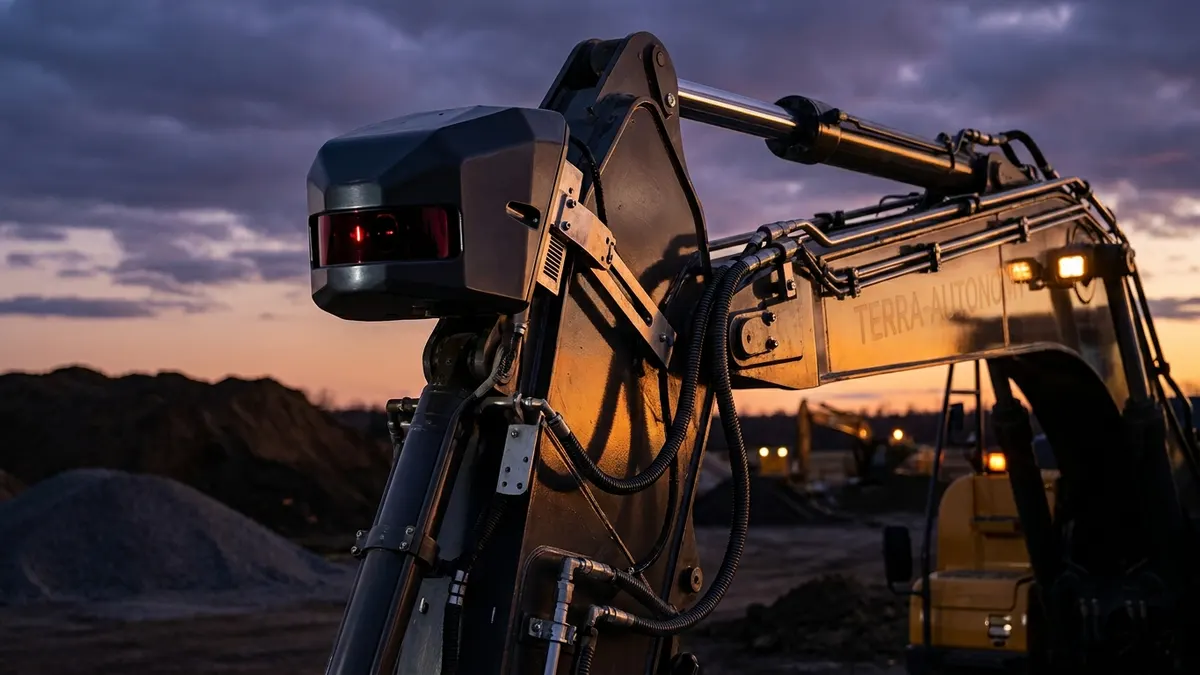
One company featured is Bedrock Robotics, which is developing autonomous systems starting with excavators. According to the article, the company is prioritizing excavators for specific operational reasons, and its platform is designed to give contractors real-time visibility into machine performance and job progress. Komatsu’s chief digital officer, Michael Gidaspow, is also quoted, indicating the heavy equipment giant is active in this space.
The article notes several converging forces driving adoption: declining costs for critical sensors, leaps in edge computing capability, improvements in vision-based AI that allow machines to navigate complex terrain, and an influx of funding into autonomous heavy equipment development. The integration of AI into equipment software systems is identified as a separate but related shift, distinct from full machine autonomy.
The labor shortage angle comes through clearly in the reporting. The practical driver, as the article frames it, is straightforward: when qualified equipment operators are unavailable, autonomous and teleoperated machines offer a way to keep projects moving. Labor shortages, not technology enthusiasm alone, are pushing this transition forward.
Analysis
The framing in Construction Executive’s coverage is notable: autonomous technology is described as “expanding the workforce,” not replacing it. That distinction matters for how field service companies should be thinking about this shift.
The labor shortage angle is the most credible accelerant here. The construction industry has struggled for years to find qualified equipment operators. If autonomous and teleoperated machines can extend the productive capacity of the operators a company already has, or allow a single skilled worker to oversee multiple machines remotely, that changes the math on project bids and crew deployment. A subcontractor who can run three excavators with one remote operator has a structural cost advantage over a competitor who needs three operators on-site.
Teleoperation, where a human operator controls a machine from a remote station rather than a cab, is an intermediate step that’s already in commercial use in mining and is moving into construction. It doesn’t eliminate the operator role, but it does decouple the operator from the physical site. That has implications for safety (removing workers from hazardous zones), scheduling (operators can theoretically move between sites without travel time), and workforce geography (skilled operators don’t need to be located near the project).
The sensor cost decline noted in the article is a genuine structural shift. When LiDAR and other perception hardware were prohibitively expensive, autonomy was limited to high-margin applications. As those costs fall, the economics start working for mid-sized equipment on standard commercial and infrastructure projects, exactly the work that subcontractors in grading, excavation, and site prep are doing every day.
The competitive edge framing is also worth taking seriously. Early adopters in any technology cycle tend to capture disproportionate gains, whether in efficiency, bidding power, or client preference. Owners and general contractors managing large infrastructure projects have strong incentives to award work to subs who can demonstrate technology-driven reliability and schedule performance.
What It Means for Subcontractors
- Labor shortages are driving adoption faster than technology enthusiasm. If your crews are stretched thin, autonomous and teleoperated equipment may become a practical solution before it becomes a competitive luxury.
- Excavation and grading are the early target applications. Subcontractors in earthwork and site prep should be tracking Bedrock Robotics and similar companies closely, as these are the initial deployment categories.
- Operator roles are changing, not disappearing. Investing in training your equipment operators to work alongside and supervise autonomous systems may be more valuable than hiring additional operators in the near term.
- Watch sensor and hardware costs. Falling costs for LiDAR and edge computing are what’s making this technology commercially viable. Price points that seemed out of reach two years ago may be in range now.
- GCs and owners will start asking about technology capability. Early-adopter subcontractors gain a bidding advantage. Being able to demonstrate autonomous or remote-operated capacity may become a differentiator in pre-qualification.
- Remote operation opens workforce geography. If teleoperation becomes standard, skilled operators don’t need to be physically present on-site, which could reshape how you recruit, retain, and deploy talent across multiple projects.
- OSHA compliance considerations are still evolving. As autonomous and teleoperated equipment moves onto active job sites, subcontractors should monitor OSHA guidance on machine guarding, exclusion zones, and operator certification requirements, since regulatory frameworks have not yet fully caught up with the technology.